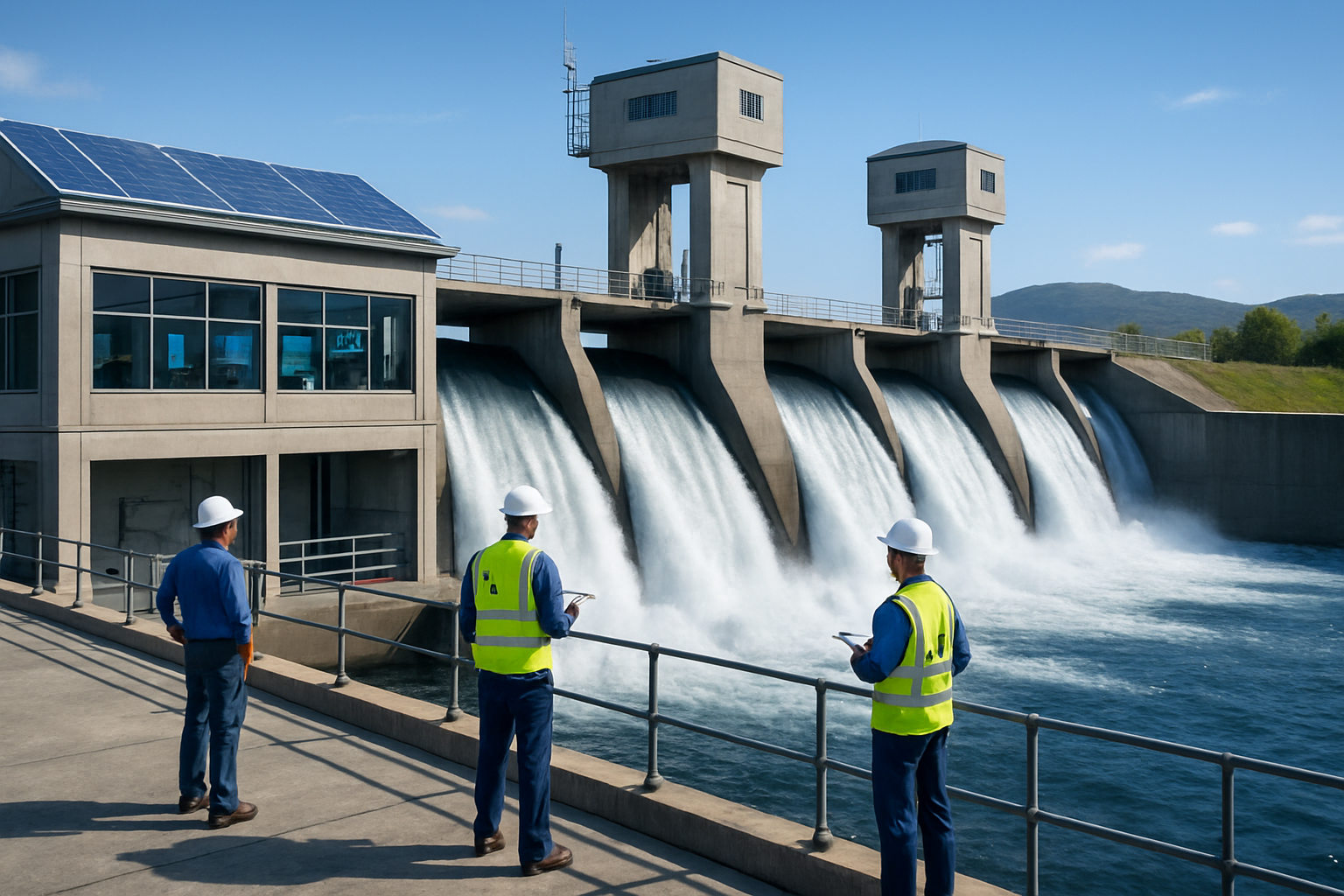
A comprehensive water infrastructure transformation is sweeping across Africa and beyond, with coordinated development projects spanning three continents as nations grapple with mounting climate pressures and population demands. From Mozambique's ambitious rural water expansion to Namibia's strategic supply interruptions and Portugal's record reservoir management, February 2026 marks a pivotal moment in global water security initiatives.
Mozambique's Rural Water Revolution
Mozambique has achieved a significant milestone in water accessibility through the completion of the "Água Segura para Vilas e Zonas Rurais" (Safe Water for Towns and Rural Areas) project, directly benefiting 195,305 people across Nampula and Zambézia provinces. The Direcção Nacional de Abastecimento de Água e Saneamento (DNAAS) successfully constructed 296 water sources equipped with manual pumps, representing a substantial investment in rural infrastructure resilience.
The project's scope demonstrates remarkable coordination: 135 sources in Zambézia province serving 61,408 people, and 161 installations in Nampula reaching 133,901 residents. The strategic distribution across districts including Lalaua, Mossuril, Malema, Angoche, Mogovolas, Moma, Mecuburi, Eráti, Muecate, Rapale, and Murupula in Nampula, alongside Inhassunge, Luabo, Derre, Namarrói, Mulevala, Ile, and Mocubela in Zambézia, reflects comprehensive planning addressing rural water security systematically.
This achievement occurs against the backdrop of Mozambique's recent recovery from devastating floods that affected over 724,000 people across multiple provinces. The timing underscores the critical importance of resilient water infrastructure in climate-vulnerable regions, where extreme weather events can disrupt traditional water sources and sanitation systems.
Namibia's Strategic Water Management
The Namibia Water Corporation (NamWater) exemplifies proactive urban water management through scheduled supply interruptions affecting parts of Windhoek and surrounding areas. While seemingly disruptive, these planned interruptions represent sophisticated water system maintenance essential for long-term supply security in one of the world's most arid countries.
Namibia's approach to water management has evolved into a model of efficiency and sustainability, with NamWater implementing advanced monitoring systems and strategic conservation measures. The nine-hour interruption demonstrates the complex balance required in water-scarce environments, where short-term inconvenience ensures long-term supply stability.
This strategic approach aligns with broader Southern African water security initiatives, particularly relevant given the region's vulnerability to climate variability. Namibia's water management strategies provide crucial lessons for other arid and semi-arid regions globally, where proactive planning can prevent more severe shortages.
Portugal's Reservoir Abundance
Portugal presents a contrasting but equally significant water management challenge, with the national environmental agency (APA) predicting record-breaking reservoir levels throughout February 2026. The president of APA indicates that reservoirs are not at 100% capacity only because authorities have implemented controlled water releases, demonstrating sophisticated flood management protocols.
This abundance follows the devastating storm sequence that overwhelmed European emergency systems in early February 2026, including Storms Kristin, Leonardo, Marta, and Nils. Portugal deployed 26,500 personnel in its largest peacetime rescue operation, highlighting how water management encompasses both shortage and excess scenarios.
The southern region's water supply security for "two or three years" represents a remarkable recovery from previous drought conditions, showcasing the effectiveness of integrated water storage and flood management systems. However, this abundance comes with its own challenges, requiring careful balance between flood prevention and water conservation.
Global Context: Climate Adaptation Imperative
These water infrastructure developments occur during what has been confirmed as the 18th consecutive month of global temperatures exceeding 1.5°C above pre-industrial levels. January 2026 marked the hottest month in recorded history, demonstrating how climate change is fundamentally altering water availability patterns worldwide.
The memory of previous water crises informs current initiatives. The European weather emergency of February 2026 required unprecedented international coordination, with Sweden and Denmark providing €246 million in assistance. Meanwhile, the ongoing African infrastructure renaissance includes major water projects like Uganda's Katosi expansion benefiting millions of Kampala residents through network improvements addressing urbanization and climate variability.
International cooperation has evolved significantly, with the African Union's 39th Summit emphasizing "Ensuring Sustainable Water and Sanitation Access for All by 2030" as a continental priority. This theme reflects the urgent recognition that water security underpins economic development, health outcomes, and climate resilience.
Technology Integration and Innovation
Modern water infrastructure projects incorporate sophisticated technology integration, from digital monitoring systems to renewable energy-powered pumping stations. The Mozambique project's manual pumps represent appropriate technology solutions for rural contexts, while urban systems like those in Namibia and Portugal leverage advanced automation and predictive maintenance.
The integration of climate adaptation measures has become standard in water infrastructure design. Projects now incorporate flood management capabilities, drought resistance features, and renewable energy integration as baseline requirements rather than optional additions. This represents a fundamental shift from reactive crisis management to proactive resilience building.
Smart water management systems enable real-time monitoring of supply quality, distribution efficiency, and system performance. These technologies provide essential data for adaptive management, allowing operators to respond quickly to changing conditions and optimize resource allocation.
Economic and Social Impact
Water infrastructure development functions as both economic stimulus and social equity advancement. The Mozambique project creates local employment opportunities while improving health outcomes and educational attendance rates, particularly for women and children who previously spent significant time collecting water.
Economic multiplier effects extend beyond direct infrastructure investment. Reliable water access enables agricultural productivity improvements, supports small business development, and reduces healthcare costs associated with waterborne diseases. These projects demonstrate how infrastructure investment creates sustainable development dividends.
The regional integration aspect is particularly significant, with projects like the African Continental Free Trade Agreement (AfCFTA) enabling cross-border water infrastructure cooperation. Shared river basins and aquifer systems require coordinated management approaches that transcend political boundaries.
Implementation Challenges and Success Factors
Successful water infrastructure development faces consistent challenges across diverse contexts. Funding sustainability remains critical, particularly for developing nations where immediate economic pressures can override long-term infrastructure investments. Technical capacity building requires sustained investment in education, training, and institutional development.
Climate change disrupts traditional project timelines and design parameters, requiring adaptive management approaches that can respond to rapidly changing environmental conditions. The success of projects like Mozambique's rural water expansion depends on community ownership, transparent governance, and integration with existing social structures.
International cooperation has proven essential, with successful projects combining global expertise with local implementation capacity. The diversity of approaches—from high-tech urban systems to community-managed rural installations—provides resilience against single-solution dependencies.
Future Trajectory and Strategic Significance
February 2026 represents a critical juncture in global water infrastructure development. The tools and knowledge exist for comprehensive water security, but success depends on sustained international cooperation, enhanced coordination across sectors and scales, and increased financial commitments recognizing water infrastructure as essential for human prosperity and planetary sustainability.
The window for effective action is narrowing as climate impacts intensify and population pressures increase. However, the coordinated response demonstrated across Africa and internationally provides hope that water challenges can be addressed through innovative technology, traditional knowledge integration, and unprecedented cooperation.
The strategic significance extends beyond water access to broader questions of climate adaptation, regional integration, and sustainable development. Countries implementing comprehensive water infrastructure demonstrate economic resilience and attract sustainable investment, creating models for global replication.
Success in water infrastructure development may determine whether communities can maintain prosperity and stability in an era of increasing climate volatility. The initiatives documented in February 2026 provide essential templates for scaling successful approaches globally, representing humanity's capacity for coordinated response to planetary challenges.