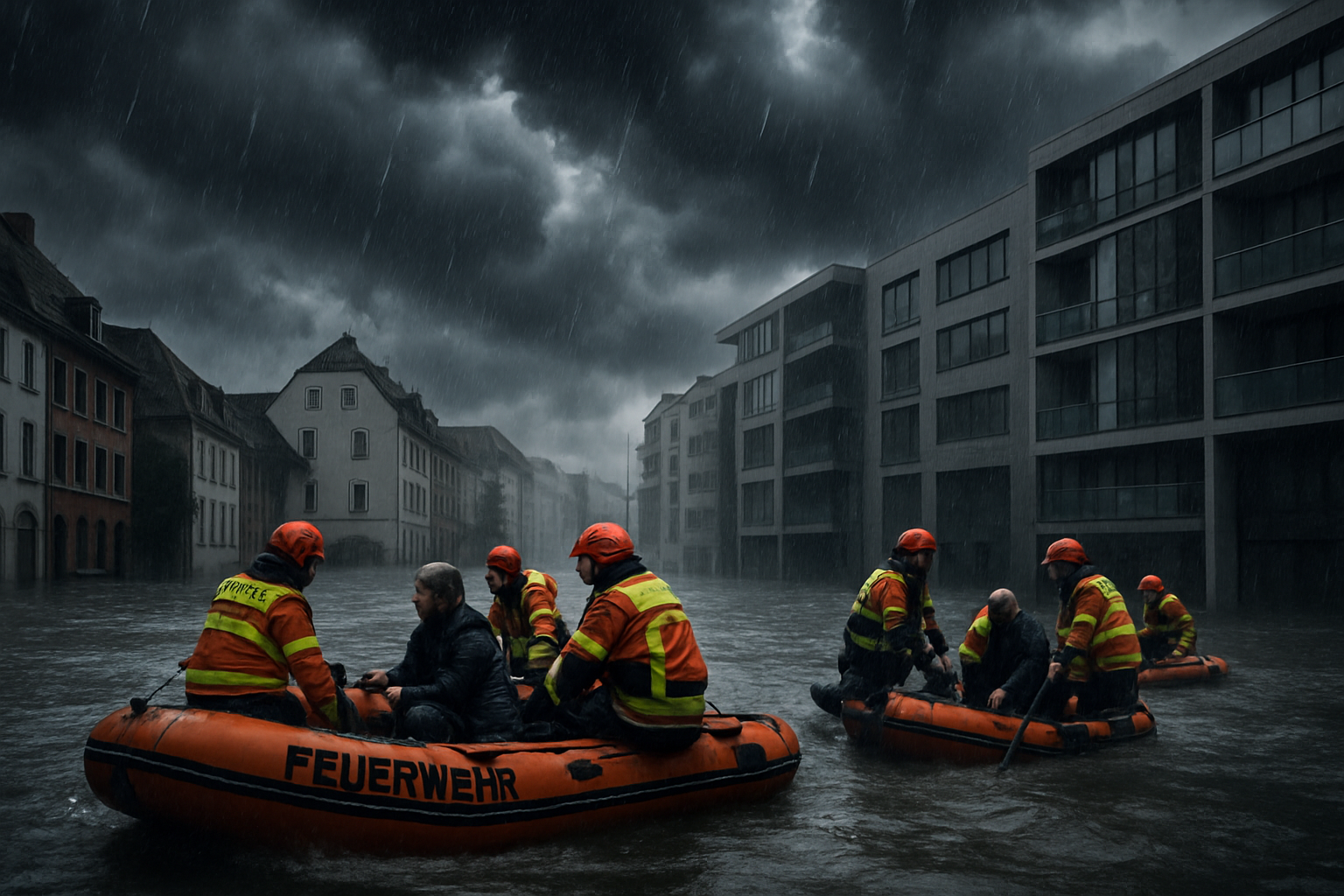
Storm Oriana swept across the Mediterranean with devastating force on February 14, 2026, bringing hurricane-force winds up to 140 km/h and torrential rainfall that overwhelmed European emergency services already strained by unprecedented weather patterns across five continents.
The latest storm represents the eighth major weather system to strike the Iberian Peninsula in February alone, part of an extraordinary succession that has killed more than 20 people and displaced hundreds of thousands across Europe, while similar extreme weather emergencies simultaneously affect New Zealand, Scandinavia, and the Balkans.
Storm Oriana's Devastating European Impact
Spanish authorities placed Castellón province under red alert Saturday for "hurricane-force wind gusts" as Storm Oriana unleashed its fury across eastern Spain. The storm has already claimed at least three lives, including a 46-year-old woman killed in a Barcelona warehouse collapse and two fatalities in France from falling trees and ladder accidents.
Portugal continues its largest peacetime rescue operation in national history, with 26,500 personnel including 1,975 military and 30 naval vessels responding to more than 1,800 weather incidents since February 1. The nation's A1 highway viaduct near Coimbra collapsed from catastrophic Mondego River flooding, severing the critical Lisbon-Porto transportation corridor for what Infrastructure Minister Miguel Pinto Luz confirms will be "several weeks."
"The situation on the Garonne downstream of Agen must be monitored particularly closely: significant and major overflows are ongoing or expected in the next twenty-four hours."
— Vigicrues Flood Warning Service
France maintains red alerts across southwestern regions with 450,000 households without power, representing one of the largest weather-related electrical disruptions in recent history. The Garonne River system faces what officials describe as "generalized flooding" with "all soil saturated" across the national territory.
Transportation Networks Paralyzed
The crisis has effectively paralyzed transportation across Europe. French aviation authorities ordered airlines to reduce flights by 30% at Paris-Charles-de-Gaulle Airport and 20% at Paris-Orly Sunday due to predicted snow and ice conditions. Spain closed 66 roads due to flooding and damage, while Catalonia suspended all education, healthcare, and sports activities.
In Portugal, the Castanheira-Alvarca railway line remains indefinitely suspended, affecting thousands of Lisbon commuters daily. The historic city of Coimbra faces potential "centennial flooding" that threatens its UNESCO World Heritage center, while the Douro River reached critical 1997 flood levels in Porto.
Global Pattern of Extreme Weather
The European crisis unfolds against a backdrop of simultaneous extreme weather across multiple continents. New Zealand's Ōtorohanga District declared a week-long state of emergency after severe thunderstorms left residents in waist-deep water, with one confirmed death when a man's car became submerged on State Highway 39.
Local farmer Murray Orr, with 70 years of regional experience, told authorities he had "never seen rain like yesterday's deluge" while helping stranded motorists on Te Kawa Road. The flooding severely damaged the region's museum cultural heritage collection, including irreplaceable taonga artifacts.
Scandinavia faces its own extreme conditions, with Sweden's SMHI issuing yellow warnings for hard winds across the southern Jämtland and Härjedalen mountains. Poland confronts severe frost and heavy snow delivery, while Bosnia and Herzegovina prepares for up to 30mm of rainfall in northeastern and central regions, with 10-30cm of new snow forecast for mountainous areas.
Historic Climate Context
This crisis occurs during what meteorologists confirm as January 2026 being the 18th consecutive month to exceed 1.5°C above pre-industrial levels—a stark demonstration of how global warming now overrides natural climate variability, even during what should be cooling La Niña conditions.
The European storm succession—Kristin, Leonardo, Marta, Nils, and now Oriana—has killed at least 16 people across Portugal and Spain alone. This unprecedented frequency and intensity of Atlantic storm systems represents what scientists warn is becoming the "new normal" for European weather patterns.
"We are witnessing climate volatility where global warming enables extreme regional events while overriding natural cooling cycles."
— Climate Research Assessment
Agricultural and Economic Devastation
The economic toll continues mounting across affected regions. Portuguese vineyards report more than 1,000 hectares submerged in the Tejo River basin, with vineyard pruning delayed and wine bottling operations compromised. Spanish agricultural sectors face billions in losses, with olive groves and citrus operations across the Iberian Peninsula severely damaged.
Spanish reservoirs have surged to 67.3% capacity, with 31 facilities at 100% capacity, creating additional flood risks downstream. The agricultural devastation extends beyond immediate crop losses to fundamental infrastructure damage that will require years to fully restore.
Emergency Response Overwhelmed
Emergency services across multiple nations report operating at capacity limits. The EU Civil Protection Mechanism has been activated, with Sweden and Denmark providing a €246 million assistance package—the largest coordinated European weather response in recent history.
In Greece, the Epirus region faces renewed problems with successive storms causing road closures and new landslides requiring immediate intervention. Italian authorities in Calabria's southern region have requested a new national state of emergency declaration after days of heavy rains caused flooding and mudslides.
The crisis exposes critical infrastructure vulnerabilities designed for historical rather than future climate conditions. Power transmission networks, transportation systems, and communication networks struggle to maintain functionality under conditions they were never designed to handle.
Democratic Institutions Under Stress
The weather emergencies have created unprecedented challenges for democratic processes. Portugal's February 8 presidential election proceeded despite the crisis, with 36,000 voters unable to participate due to infrastructure damage—demonstrating both institutional resilience and the growing intersection between climate change and governance.
This represents a concerning template for future climate-democracy challenges as extreme weather increasingly disrupts electoral processes, governance systems, and basic public services that democratic institutions depend upon.
International Coordination and Recovery
The scope of simultaneous disasters has strained traditional regional aid mechanisms, as multiple nations require assistance concurrently. International cooperation has become essential, with military deployments for weather emergencies reaching historic peacetime levels across Europe.
Recovery timelines extend far beyond previous norms, with authorities projecting months to years rather than weeks for full restoration. This necessitates fundamental shifts toward "build back better" approaches that prioritize climate resilience over simply restoring previous infrastructure.
Scientific Warnings and Future Implications
Climate scientists emphasize that current conditions represent a preview of routine 2030s circumstances without significant climate action and adaptation investment. The simultaneity of extreme events across continents prevents the regional compensation mechanisms that historically helped nations cope with localized disasters.
The crisis provides crucial templates for future emergency management as extreme weather frequency and intensity continue increasing. Enhanced international coordination frameworks, climate-adaptive infrastructure, and transformative rather than reactive approaches become essential for societal resilience.
As Storm Oriana continues its destructive path and additional Atlantic systems develop, European leaders face critical decisions about whether to pursue reactive crisis management or invest in transformative adaptation infrastructure for long-term climate resilience. The human cost—families losing generational homes, businesses facing extinction, vulnerable populations requiring extended emergency support—underscores the urgent need for comprehensive climate adaptation strategies.
With emergency services at capacity limits globally and infrastructure vulnerabilities exposed across power, transportation, and communication networks, the February 2026 weather crisis represents a watershed moment forcing fundamental reconsideration of how societies prepare for and respond to an era of permanent climate volatility.