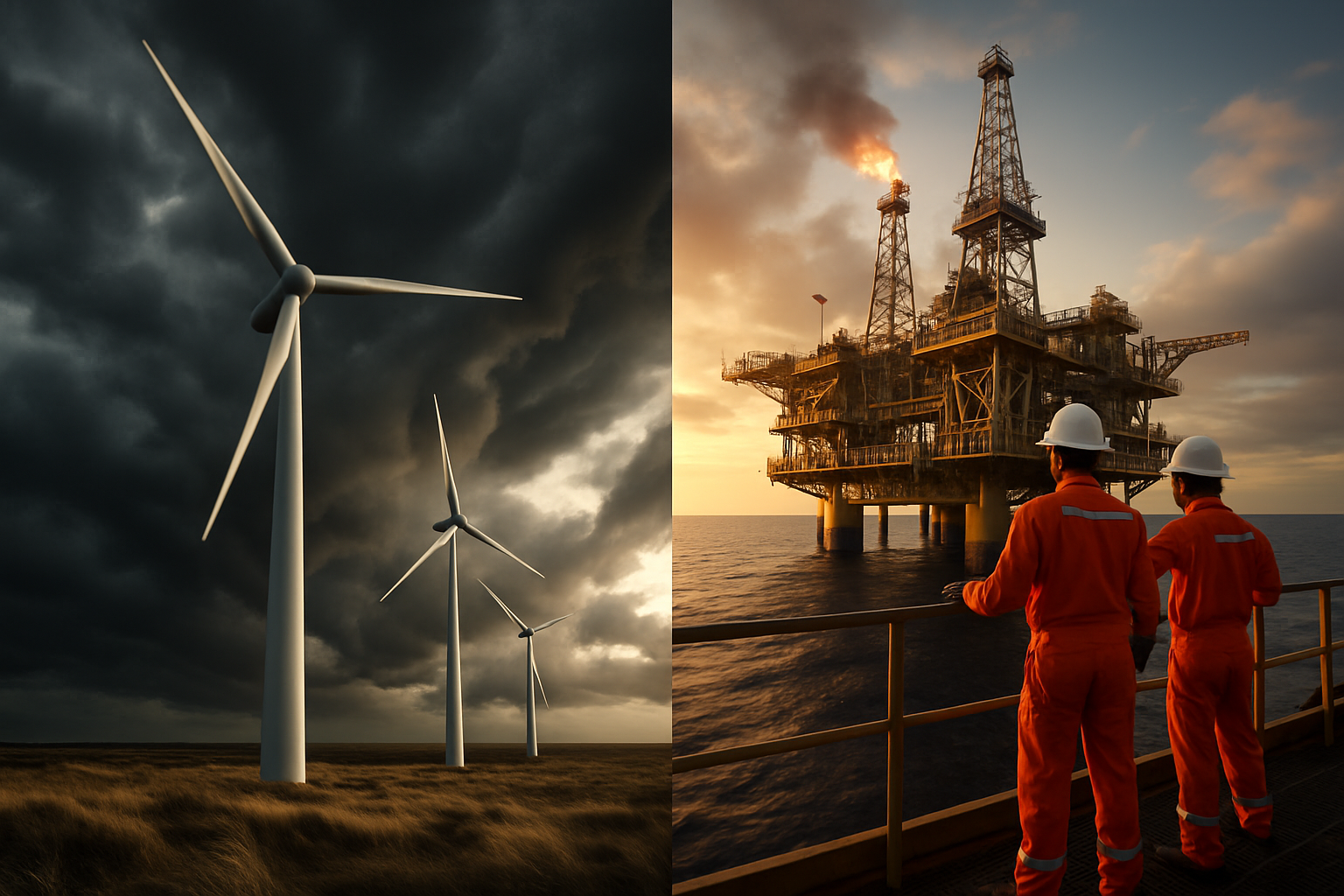
Europe's renewable energy infrastructure delivered dramatic cost savings to consumers this weekend as strong winds across Denmark and Northern Europe drove electricity prices down to near-zero levels, while Azerbaijan reported stronger-than-expected oil and gas revenues for the first quarter of 2026.
The stark contrast between renewable energy abundance and continued fossil fuel demand underscores the complex dynamics of the global energy transition, occurring against the backdrop of recent energy market volatility and supply chain challenges that have reshaped international energy policies.
Wind Power Delivers Weekend Relief
Danish meteorological services recorded sustained high winds across Scandinavia and the Baltic region over the weekend, generating unprecedented electricity production from offshore and onshore wind installations. The surge in renewable generation pushed spot electricity prices in Nordic markets below €10 per MWh for extended periods, with some hours showing negative pricing as grid operators paid consumers to absorb excess clean energy.
"We're seeing the maturation of Europe's renewable infrastructure delivering tangible benefits to households and businesses," explained energy analyst Krisztian Horvath, noting that similar weather patterns would have created supply shortages just a decade ago. "The scale of wind capacity now online means favorable weather translates directly to consumer savings."
The price reductions provided welcome relief to European consumers still recovering from the energy crisis that peaked in March 2026, when oil prices reached $119.50 per barrel following the Iranian closure of the Strait of Hormuz. During that crisis, electricity prices surged across the continent, with Sweden alone experiencing increases of 10-20 öre per kWh.
Azerbaijan's Oil Sector Maintains Momentum
Meanwhile, Azerbaijan's Ministry of Economy reported that oil and gas sector revenues contributed 854.9 million manats (approximately $503 million) to state coffers in Q1 2026, representing 21% of total budget revenues and slightly exceeding government forecasts despite global market volatility.
The performance reflects Azerbaijan's position as a key energy coordinator between East and West, a role that gained strategic importance during recent geopolitical tensions. The country has successfully diversified its energy portfolio while maintaining robust hydrocarbon exports, with the US Chamber of Commerce recognizing Azerbaijan as a critical player in international energy security.
Energy revenues flowed primarily through the tax authority system, demonstrating the continued importance of traditional energy exports to Azerbaijan's fiscal stability. The country's Sangachal terminal continues processing up to 1.2 million barrels daily from the Shah Deniz gas-condensate field and ACG oil fields, reinforcing the South Caucasus region's role as a crucial energy hub.
Market Dynamics in Transition
The weekend's contrasting developments highlight the evolving energy landscape, where renewable abundance can drive prices toward zero while traditional energy sources maintain strong revenues. This dynamic reflects the broader transformation occurring across global energy markets following recent supply chain disruptions and geopolitical tensions.
Estonia continues to lead European renewable integration with 88% renewable electricity generation and the continent's largest battery storage facility serving 90,000 households. The Baltic nation's energy independence model proved particularly valuable during the March 2026 crisis when countries with diversified energy portfolios demonstrated greater resilience.
However, the transition faces significant challenges, particularly in supply chain vulnerabilities. China maintains control over 60% of critical mineral production and 90% of refining capacity for lithium, cobalt, and rare earth elements essential to renewable infrastructure. Memory chip shortages have driven semiconductor prices up sixfold, affecting smart grid systems until new fabrication facilities come online in 2027.
Infrastructure Investment Accelerating
The US-EU-Japan Critical Minerals Partnership, encompassing 55 countries and seven African suppliers, represents a coordinated response to supply chain dependencies. The initiative aims to diversify renewable energy supply chains while maintaining the rapid deployment necessary for climate goals.
Recent infrastructure investments demonstrate the scale of transformation underway. Austria has doubled its electric vehicle charging capacity with 1,000 additional stations, while New Zealand committed $50 million to expanding public charging networks through ChargeNet and Meridian Energy partnerships.
These developments occur as the International Energy Agency requires tripling renewable capacity by 2030 to meet climate targets, with January 2026 marking the 19th consecutive month of global temperatures exceeding 1.5°C above pre-industrial levels.
Regional Cooperation Models
The success of renewable integration depends increasingly on regional cooperation frameworks. Nordic countries have pioneered cross-border electricity trading that enables Danish wind surpluses to benefit consumers across Scandinavia. Similar models are emerging in Central Asia, where Kazakhstan has ratified green energy partnerships with Azerbaijan and Uzbekistan.
Energy experts emphasize that such cooperation becomes essential as renewable generation creates more variable supply patterns. Advanced forecasting systems now provide 30-minute solar and wind predictions, enabling grid operators to balance supply and demand while maintaining stability.
"The transformation we're witnessing requires unprecedented coordination between traditional energy producers and renewable leaders," noted energy security analyst Samuel Ciszuk. "Countries like Azerbaijan that maintain both hydrocarbon exports and renewable development are positioned to bridge this transition effectively."
Looking Ahead: Balancing Act Continues
The weekend's energy developments illustrate the complex balancing act facing global energy markets. While renewable abundance can dramatically reduce costs for consumers, the transition period requires maintaining traditional energy infrastructure and international cooperation to ensure security of supply.
Azerbaijan's sustained oil and gas revenues, combined with growing renewable capacity across Europe, suggest that the energy transition will involve parallel systems rather than immediate replacement. This hybrid approach allows for gradual adaptation while maintaining energy security during geopolitical uncertainties.
Market analysts expect continued volatility as renewable capacity expands and weather patterns create supply variability. However, the weekend's demonstration of wind power's cost-reduction potential, combined with traditional energy sector stability, provides a template for managing the transition toward cleaner energy systems.
The developments underscore the importance of diversified energy portfolios and international cooperation in navigating the complex challenges of decarbonization while maintaining economic stability and energy security in an increasingly interconnected world.