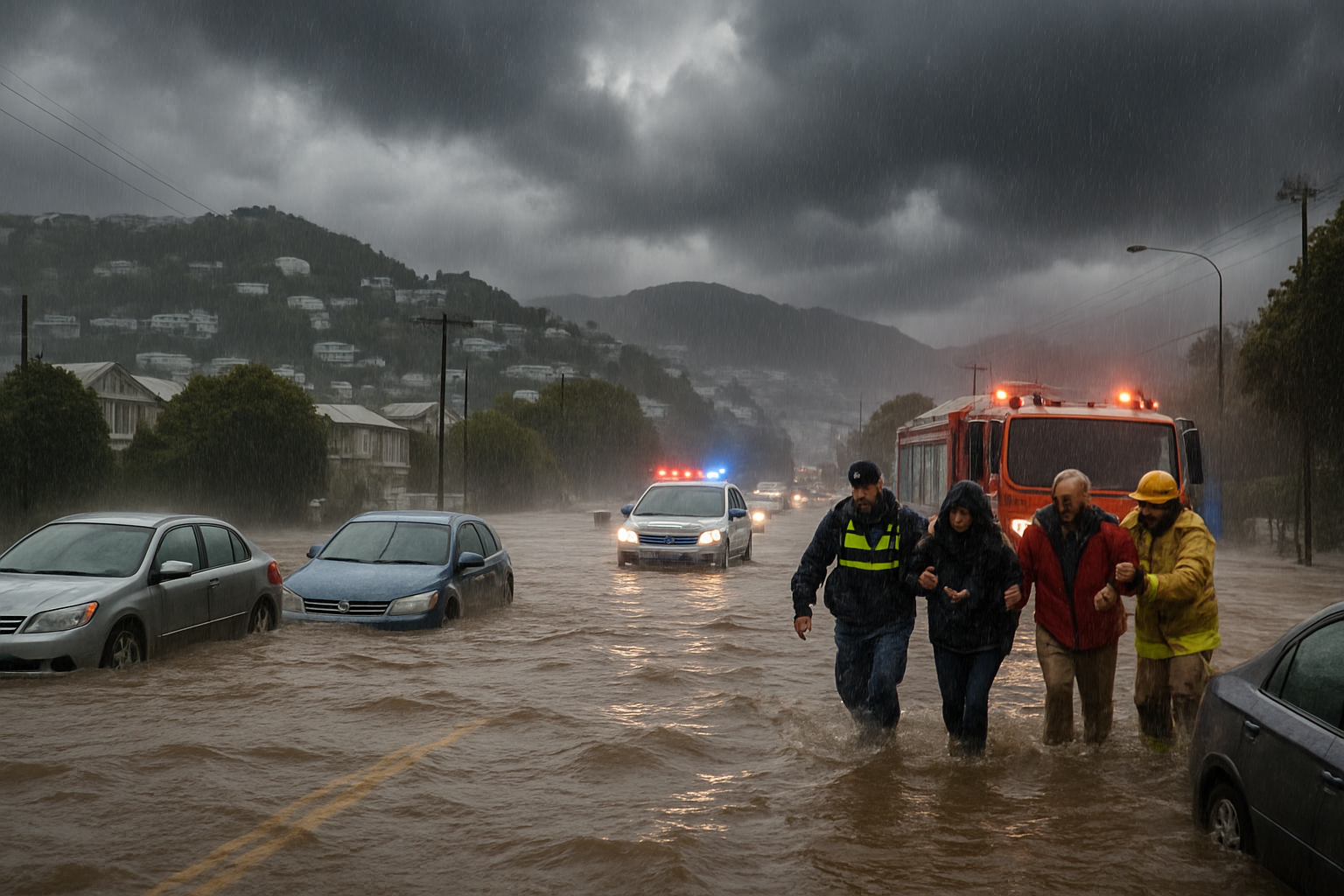
Wellington residents woke to a catastrophic weather emergency as 77mm of rain fell in just one hour, triggering flash flooding that saw landslips burst into bedrooms and streets transformed into raging rivers across New Zealand's capital region.
The extreme weather event has forced widespread evacuations and emergency responses as the country confronts yet another devastating storm during what meteorologists describe as an unprecedented period of climate volatility. Reports emerged of people escaping chest-deep floodwater in the early hours of Monday morning, with some carrying young children across rail bridges to reach safe ground.
Landslips and Emergency Evacuations
In a dramatic demonstration of the storm's intensity, one Wellington resident was awakened by a landslip that crashed directly into their bedroom. The incident highlights the severe geological risks posed by the torrential downpour, which has saturated hillsides across the region and triggered numerous slope failures.
Emergency services responded to multiple rescue operations throughout the night, with local mayors describing harrowing scenes of families wading through chest-high floodwaters while carrying small children to safety. "People were chest high in floodwater taking young children out and crossing rail bridges to get to safe ground, and this was 2 or 3 o'clock in the morning," one mayor reported.
The Mount Cook area of Wellington has been particularly severely affected, with torrential rain moving cars and causing significant damage to properties. Local residents have begun assessing the extensive damage left in the wake of the flooding, with many roads remaining impassable.
Infrastructure Under Strain
The flash flooding has exposed critical vulnerabilities in Wellington's urban infrastructure, with drainage systems overwhelmed by the unprecedented rainfall intensity. Streets across the capital have been transformed into waterways, making travel dangerous and disrupting essential services.
Transportation networks have been severely impacted, with numerous road closures and public transport services suspended. Emergency services are working around the clock to assess damage and coordinate rescue operations, while utility companies report power outages affecting thousands of residents.
"Better warnings needed. This was 2 or 3 o'clock in the morning when people were escaping through chest-deep water."
— Local Mayor
Part of Unprecedented Climate Pattern
This latest emergency comes as New Zealand experiences what climate scientists describe as an extraordinary period of weather volatility. The country has faced multiple severe weather events throughout 2026, including devastating flooding in the Ōtorohanga District in February that claimed at least one life, and the isolation of Banks Peninsula in March after receiving 10 times its monthly rainfall in just 48 hours.
The current crisis occurs during what may be the 24th consecutive month of global temperatures exceeding 1.5°C above pre-industrial levels – the longest sustained period of extreme warming in recorded human history. This unprecedented warming has created what climatologists term a "climate volatility paradox," enabling both record heat and devastating regional weather extremes through disrupted atmospheric patterns.
Emergency management experts note that traditional mutual aid mechanisms designed for sequential disasters are proving inadequate when multiple regions face concurrent emergencies. This shift toward "compound disasters" is fundamentally challenging emergency response capabilities across New Zealand and globally.
Community Response and Resilience
Despite the severity of the emergency, Wellington communities have demonstrated remarkable resilience. Enhanced preparedness measures implemented after previous weather disasters have proven valuable, with many households now equipped with backup communications systems and emergency supplies.
Social media platforms have become essential for emergency coordination when traditional communication systems are overwhelmed. Neighbors have mobilized to assist with evacuations and provide shelter for displaced families, showcasing the community solidarity that has characterized New Zealand's response to the increasing frequency of extreme weather events.
However, mental health services report increasing demand as families face the prospect of losing homes multiple times within a single decade. The psychological toll of repeated climate disasters is becoming a significant concern for emergency planners.
Calls for Enhanced Warning Systems
The early-morning timing of the most dangerous flooding conditions has raised serious questions about the adequacy of current warning systems. Local officials are calling for improved early warning capabilities that can better alert residents to rapidly developing dangerous conditions, particularly during overnight hours when people are most vulnerable.
The MetService has indicated that additional severe weather systems continue to threaten the North Island, with complex weather patterns creating ongoing risks of dangerous flooding conditions. Meteorologists warn that the convergence of multiple weather fronts is creating a cascade of emergency management challenges.
Economic and Social Impact
The economic implications of Wellington's weather emergency extend far beyond immediate emergency response costs. The disruption to the capital's business district affects national commerce, while damage to residential properties represents significant financial hardship for affected families.
Tourism operators face cancellations during what should be a peak revenue period, while agricultural communities in surrounding regions report potential crop losses during critical growing seasons. The cumulative impact of repeated weather emergencies is placing unprecedented strain on insurance systems and government emergency funding.
Looking Forward: Adaptation Imperative
Climate experts describe the current period as a watershed moment requiring a fundamental choice between reactive crisis management and transformative infrastructure adaptation. The traditional approach of "building back" to previous standards is proving inadequate for the reality of permanent climate volatility.
Infrastructure systems designed for historical climate patterns are operating beyond their intended parameters, with recovery timelines permanently shifted from weeks to months or years. The concept of "building back better" with climate-resilient infrastructure has evolved from an optional enhancement to an essential survival strategy.
As additional weather systems develop across the Pacific, authorities maintain high alert status. The persistence of extreme weather conditions may establish a "new normal" characterized by unprecedented frequency and intensity of storms, permanently challenging traditional emergency response frameworks.
The choice facing New Zealand – and nations worldwide – is whether humanity can organize and implement solutions rapidly enough to maintain habitability during what scientists describe as Earth's most environmentally challenging period in recorded history. The tools, knowledge, and cooperation frameworks exist, but success depends on unprecedented speed of coordination and sustained international cooperation during this decisive climate action decade.