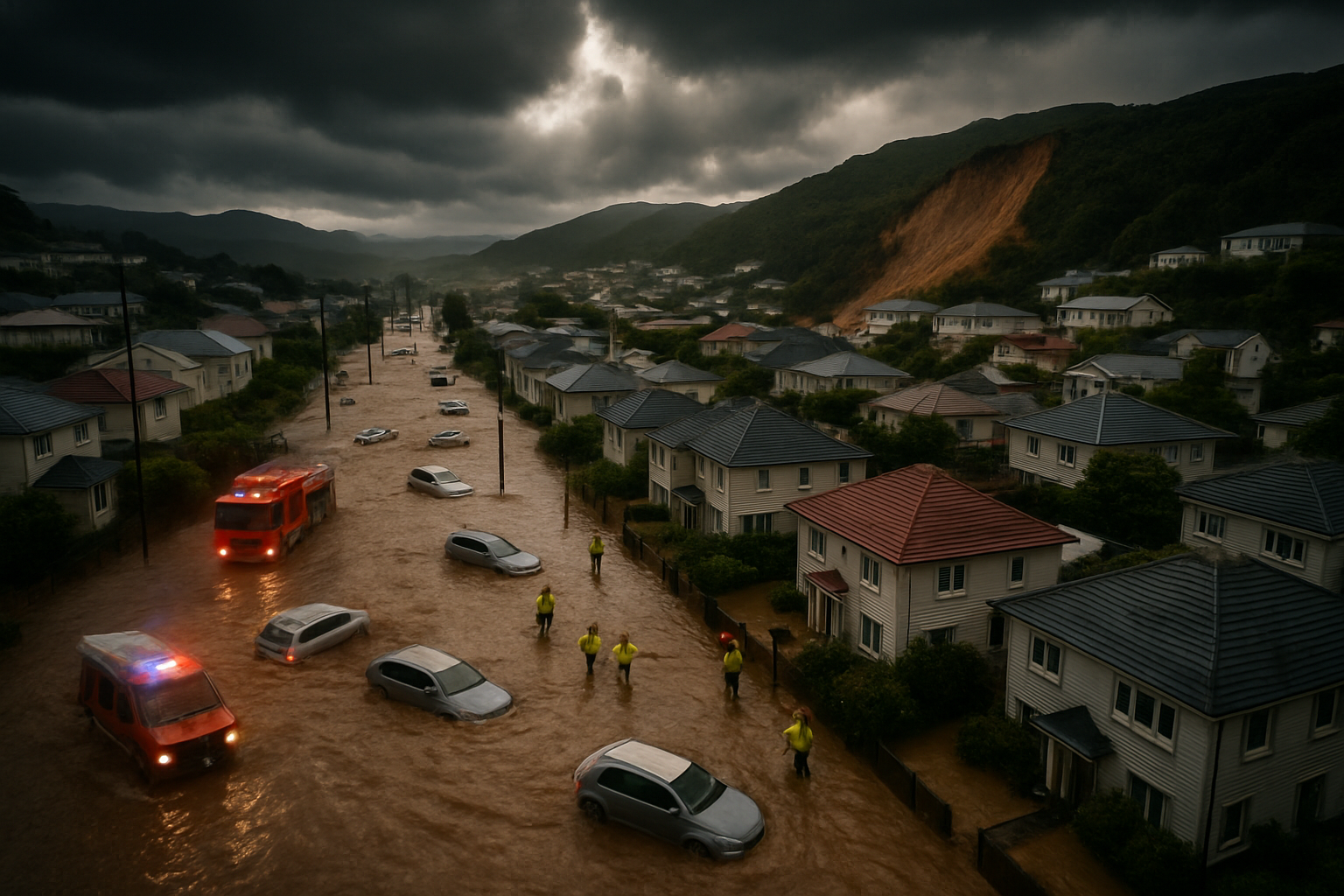
Wellington and the North Island are reeling from a catastrophic flash flooding emergency that struck with deadly force in the early morning hours of April 20, dumping a staggering 77mm of rainfall in just one hour and transforming suburban streets into raging torrents that sent cars floating like toys.
The unprecedented deluge, which emergency officials describe as "life-threatening," has triggered widespread evacuations, prompted desperate search and rescue operations, and exposed the vulnerability of New Zealand's infrastructure to increasingly volatile weather patterns. Police are actively searching for a missing person as floodwaters continue to threaten communities across the lower North Island.
Flash Flooding Overwhelms Wellington Suburbs
The crisis reached its peak in Wellington's Mount Cook suburb, where residents woke to an apocalyptic scene of half a dozen cars floating past their windows on Wright Street. One woman described looking outside to see "water everywhere" as the normally quiet residential area transformed into a churning river in minutes.
In nearby Vogeltown, Jimmy McLauchlan watched helplessly as floodwaters invaded his property, damaging vintage 1920s Chevrolets and a stamp collection worth thousands of dollars. The swift-moving waters gave residents no time to protect their most precious possessions, leaving families to watch decades of memories disappear beneath muddy torrents.
"It's definitely a big event…you wouldn't have wanted to be under it, it wouldn't have been survivable."
— Emergency Official, describing the massive landslide
Devastating Landslides Strike Wellington Hills
The extreme rainfall triggered a massive landslide that crashed into a residential area, with emergency officials confirming the slide was of such magnitude that anyone caught beneath it "wouldn't have been survivable." The landslide represents one of the most serious geological threats to emerge from this weather emergency, highlighting how the saturated ground conditions have made Wellington's steep terrain extremely unstable.
Multiple reports of landslides and slips across the region have prompted authorities to conduct comprehensive safety assessments before allowing residents to return to their homes. The combination of intense rainfall and already saturated soils from previous weather events has created ideal conditions for further ground instability.
Regional Emergency Response Stretched to Limits
The crisis extends far beyond Wellington, with flooding documented across multiple parts of the North Island over the weekend. Emergency services are coordinating responses across numerous districts simultaneously, stretching resources and highlighting the compound nature of New Zealand's evolving weather challenges.
Photos emerging from affected areas show the devastating scope of infrastructure damage, with roads cut off, bridges overwhelmed, and transportation networks severely disrupted. The timing of the overnight flooding – striking between 2-3 AM when most residents were asleep – created particularly dangerous conditions for emergency evacuations.
Part of Unprecedented Weather Pattern
This latest emergency occurs during what climate experts describe as the 24th consecutive month of global temperatures exceeding 1.5°C above pre-industrial levels – the longest sustained warming period in recorded history. New Zealand has been particularly vulnerable, experiencing a devastating series of weather emergencies throughout 2026, including the February Ōtorohanga flooding that claimed at least one life and the March Banks Peninsula isolation when the region received ten times its monthly rainfall in just 48 hours.
Emergency management experts identify this as part of a "compound disasters" paradigm, where multiple emergency types occur simultaneously rather than sequentially, fundamentally challenging traditional response frameworks designed for isolated regional events. The frequency and intensity of these events is testing New Zealand's emergency management capabilities beyond their design parameters.
Infrastructure Vulnerabilities Exposed
The rapid flooding has exposed critical vulnerabilities in Wellington's urban drainage systems, which proved inadequate when confronted with such extreme rainfall rates. Transportation networks ground to a halt as key routes became impassable, while power outages affected thousands of residents during the height of the emergency.
Climate adaptation experts warn that current infrastructure, designed for historical weather patterns, is proving insufficient for the new reality of extreme weather volatility. The concept of "building back better" with climate-resilient infrastructure has evolved from an optional enhancement to an essential survival strategy for communities facing repeated extreme weather events.
Community Response and Preparedness
Despite the devastating impact, community resilience has been demonstrated through enhanced preparedness compared to previous years. Many households were equipped with backup communications systems, emergency supplies, and community networks strengthened through successive weather events. Social media platforms have become essential for emergency coordination when traditional communication systems become overwhelmed.
However, mental health services report increased demand for support related to climate anxiety, as families face the prospect of losing their homes multiple times within a decade. The psychological toll of repeated disasters is creating long-term challenges that extend far beyond the immediate physical damage.
Economic and Agricultural Impact
The economic implications extend across multiple sectors, with agricultural communities facing crop and livestock losses during critical growing seasons. Tourism, a vital component of New Zealand's economy, faces cancellations and infrastructure damage during what should be peak revenue periods.
Recovery timelines have fundamentally shifted from the traditional expectation of weeks to months or even years, representing a permanent change in disaster response approaches. The insufficient time between successive impacts means communities often lack the opportunity to fully recover before facing the next emergency.
Government and Emergency Response
Emergency Minister Mark Mitchell has acknowledged that the storm's intensity, while less than initially feared, demonstrates the stretched nature of emergency response capabilities as authorities manage recovery from previous disasters while preparing for new threats. The government's emphasis on immediate preparation reflects recognition of the system's limitations when facing multiple concurrent emergencies.
The National Emergency Management Agency has warned that "later on is too late" when it comes to preparation, urging residents to have comprehensive emergency plans including shelter preparations, power backup, and evacuation routes clearly identified.
Climate Science Context
The World Meteorological Organization reports a 50-60% probability of El Niño conditions developing between July and September 2026, which could drive unprecedented temperatures by combining baseline global warming with natural climate cycle amplification. This "climate volatility paradox" enables both sustained global warming and devastating regional extremes through disrupted atmospheric circulation patterns.
Traditional seasonal patterns that have guided infrastructure design, agricultural planning, and emergency preparedness for centuries are becoming unreliable frameworks for current conditions, which many scientists warn represent a preview of routine conditions in the 2030s without comprehensive climate adaptation investment.
Looking Forward: Adaptation vs Crisis Management
Climate experts describe April 2026 as a critical watershed moment requiring New Zealand to choose between reactive crisis management and transformative infrastructure adaptation. The window for effective climate action is narrowing as ecological systems approach critical thresholds that could trigger irreversible changes affecting global food security, climate stability, and human settlements.
Environmental challenges transcend national boundaries, with atmospheric and ocean systems operating regardless of political borders. The success of adaptation strategies requires unprecedented international cooperation, enhanced coordination, and sustained financial commitments to treating environmental protection as essential infrastructure rather than regulatory burden.
The current crisis demonstrates both the urgent need for transformative action and the tools, knowledge, and cooperation frameworks that exist to implement comprehensive solutions. The question facing New Zealand and the international community is whether humanity can organize and implement these solutions rapidly enough to maintain planetary habitability during what scientists describe as Earth's most environmentally challenging period in recorded history.