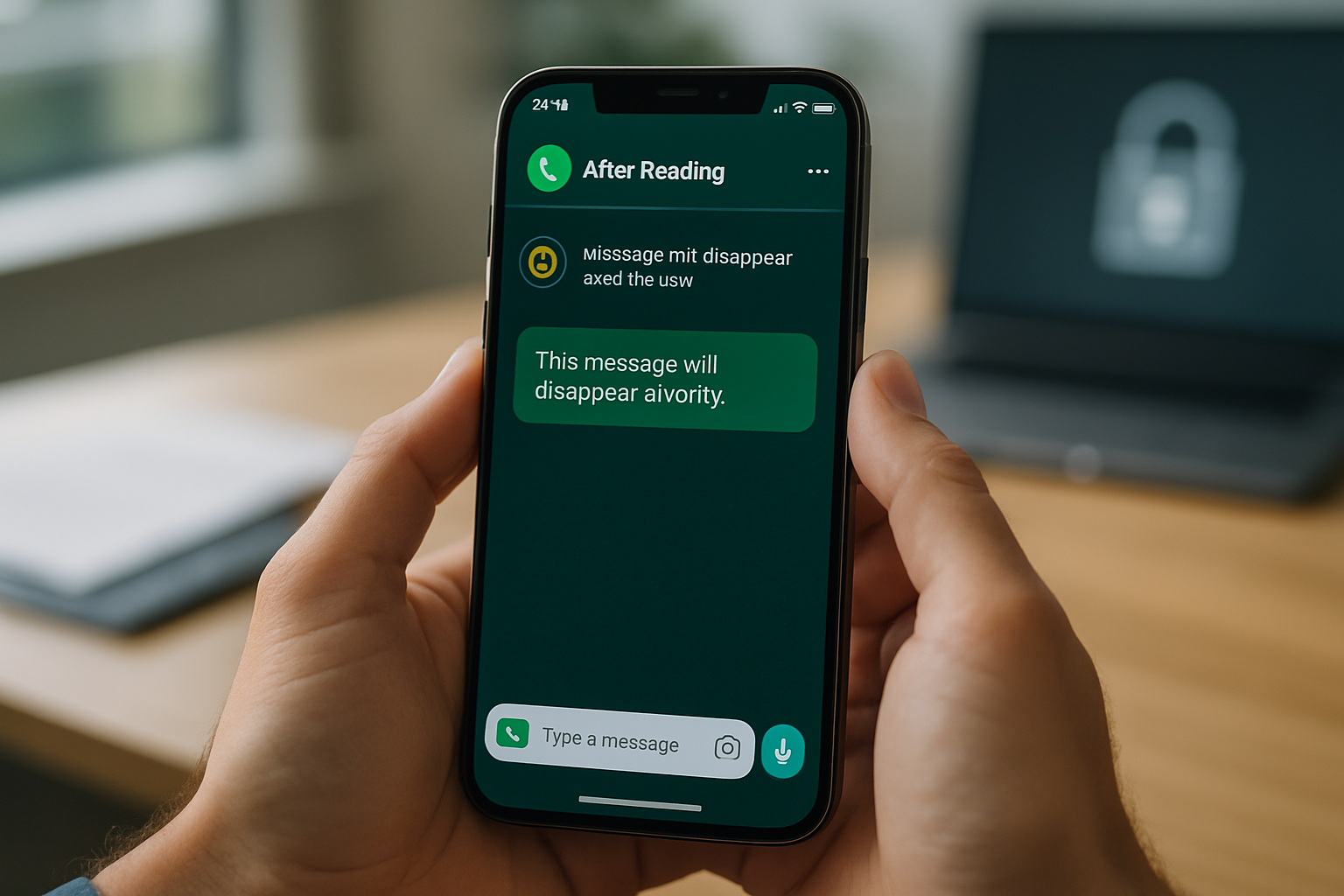
WhatsApp is testing a revolutionary new privacy feature called "After Reading" that automatically deletes messages immediately after they are viewed, marking one of the most significant privacy enhancements in the platform's history as digital surveillance concerns intensify globally.
The feature, currently under development according to sources familiar with the testing, would provide users with unprecedented control over their private conversations by ensuring messages vanish completely once read, leaving no digital trail. This development comes at a critical time when messaging platform privacy has become a battleground between user rights and government oversight across multiple jurisdictions.
Technical Innovation and Privacy Enhancement
Unlike existing disappearing message features that delete content after preset time periods, the "After Reading" functionality would immediately remove messages from both sender and recipient devices the moment they are opened and read. This represents a fundamental shift in how digital communications are managed, offering users the highest level of conversational privacy currently possible.
The technical implementation would require sophisticated end-to-end encryption modifications to ensure security while accommodating the new deletion mechanism. Sources indicate that WhatsApp's engineering teams have been developing this capability for months, addressing complex challenges around message synchronization, delivery confirmation, and maintaining the platform's renowned security standards.
The feature would integrate seamlessly with WhatsApp's existing interface, allowing users to toggle the setting on a per-conversation or per-message basis. This granular control ensures that users can maintain different privacy levels for different types of communications, from casual conversations to highly sensitive business or personal discussions.
Global Privacy Context and Regulatory Pressure
The development of this feature occurs against a backdrop of unprecedented global pressure on messaging platforms. Russia has completely blocked WhatsApp access for over 100 million users, forcing them toward state-controlled alternatives lacking end-to-end encryption. Meanwhile, European nations are implementing criminal executive liability frameworks that could hold tech executives personally accountable for platform content and user safety.
Egypt has implemented mandatory government ID verification requirements for all messaging platforms, including WhatsApp and Telegram, requiring users to provide biometric data for account access. This creates comprehensive surveillance databases that privacy advocates warn could be used for broader governmental monitoring of citizens' communications.
The timing of WhatsApp's "After Reading" feature development is particularly significant given Meta's shocking decision to remove end-to-end encryption from Instagram private messages starting May 8, 2026. This stark contrast suggests WhatsApp is positioning itself as the premier privacy-focused platform within Meta's ecosystem, potentially in response to user demands and competitive pressures.
Advanced Security Architecture
The technical sophistication required for the "After Reading" feature extends beyond simple message deletion. The system must coordinate across multiple device states, network conditions, and user behaviors while maintaining WhatsApp's security guarantees. This includes handling scenarios where messages are read offline, during network interruptions, or when devices have different synchronization states.
Cybersecurity experts note that this feature addresses growing concerns about digital forensics and data recovery techniques that can sometimes retrieve "deleted" content from device storage. By implementing immediate post-read deletion at the encryption level, WhatsApp would make message recovery significantly more difficult, even with sophisticated technical analysis.
The feature also responds to increasing awareness about metadata collection and communication pattern analysis. Even when message content is encrypted, the timing, frequency, and participants in conversations can reveal sensitive information. Immediate deletion helps minimize these digital footprints.
Industry Context and Competitive Positioning
WhatsApp's move comes amid what industry analysts are calling the "2026 Digital Privacy Revolution," where platforms are either dramatically enhancing or abandoning privacy protections depending on regulatory and market pressures. Signal has maintained its position as the gold standard for private communications, while Telegram continues to resist European regulatory requirements despite facing service disruptions.
The global semiconductor shortage, with memory chip prices increasing sixfold until 2027, has created infrastructure constraints that affect how platforms implement advanced security features. WhatsApp's ability to deploy the "After Reading" functionality demonstrates significant technical innovation within these constraints, potentially giving the platform a competitive advantage as privacy becomes increasingly valuable to users.
Criminal networks have evolved to use AI-enhanced capabilities for social engineering and data theft, making robust privacy tools essential for ordinary users, not just high-risk individuals. The "After Reading" feature could provide crucial protection against sophisticated attacks that rely on compromised devices or account access.
Global Implementation Challenges
The rollout of such an advanced privacy feature faces significant regulatory hurdles in multiple jurisdictions. Some governments view enhanced privacy tools as obstacles to legitimate law enforcement activities, while others, particularly in authoritarian contexts, explicitly oppose technologies that limit surveillance capabilities.
WhatsApp will need to navigate complex legal frameworks across the 190+ countries where it operates. This includes compliance with data retention requirements in some jurisdictions while providing maximum privacy in others. The platform's global approach to the "After Reading" feature will serve as a test case for how international technology companies balance conflicting regulatory demands.
The feature's success will also depend on user adoption and understanding. Privacy tools are only effective when users actively employ them, requiring comprehensive education about when and how to use the "After Reading" functionality. WhatsApp's challenge will be making this sophisticated technology accessible and intuitive for its diverse global user base.
Future of Digital Privacy
The "After Reading" feature represents more than a single platform enhancement; it signals a broader industry evolution toward privacy-by-design principles. As digital communications become increasingly central to personal and professional life, the ability to control information persistence becomes fundamental to digital autonomy.
Privacy advocates view such features as essential tools for protecting vulnerable populations, including journalists, activists, and dissidents who face persecution for their communications. However, the technology also raises questions about accountability and the balance between privacy and transparency in democratic societies.
The success of WhatsApp's "After Reading" feature could influence similar developments across the technology industry, potentially setting new standards for what users expect from private communication platforms. This could accelerate the broader adoption of ephemeral communication technologies and strengthen arguments for privacy-preserving design in other digital services.
Looking Ahead
As WhatsApp continues testing the "After Reading" feature, the global digital landscape continues evolving rapidly. The platform's ability to deliver this privacy enhancement while maintaining usability and reliability will significantly impact its competitive position and user trust. Early indicators suggest strong user interest in enhanced privacy controls, particularly among younger demographics increasingly aware of digital surveillance risks.
The feature's eventual rollout will likely occur in phases, beginning with select user groups before broader deployment. This approach allows WhatsApp to refine the technology, address any technical issues, and gather user feedback before committing to full implementation across its massive global user base.
The "After Reading" feature represents WhatsApp's commitment to privacy leadership during a period when many platforms are reducing privacy protections under regulatory and commercial pressures. Its success could reinforce WhatsApp's position as the world's leading private messaging platform and demonstrate that enhanced privacy and broad accessibility can coexist in modern digital communication tools.