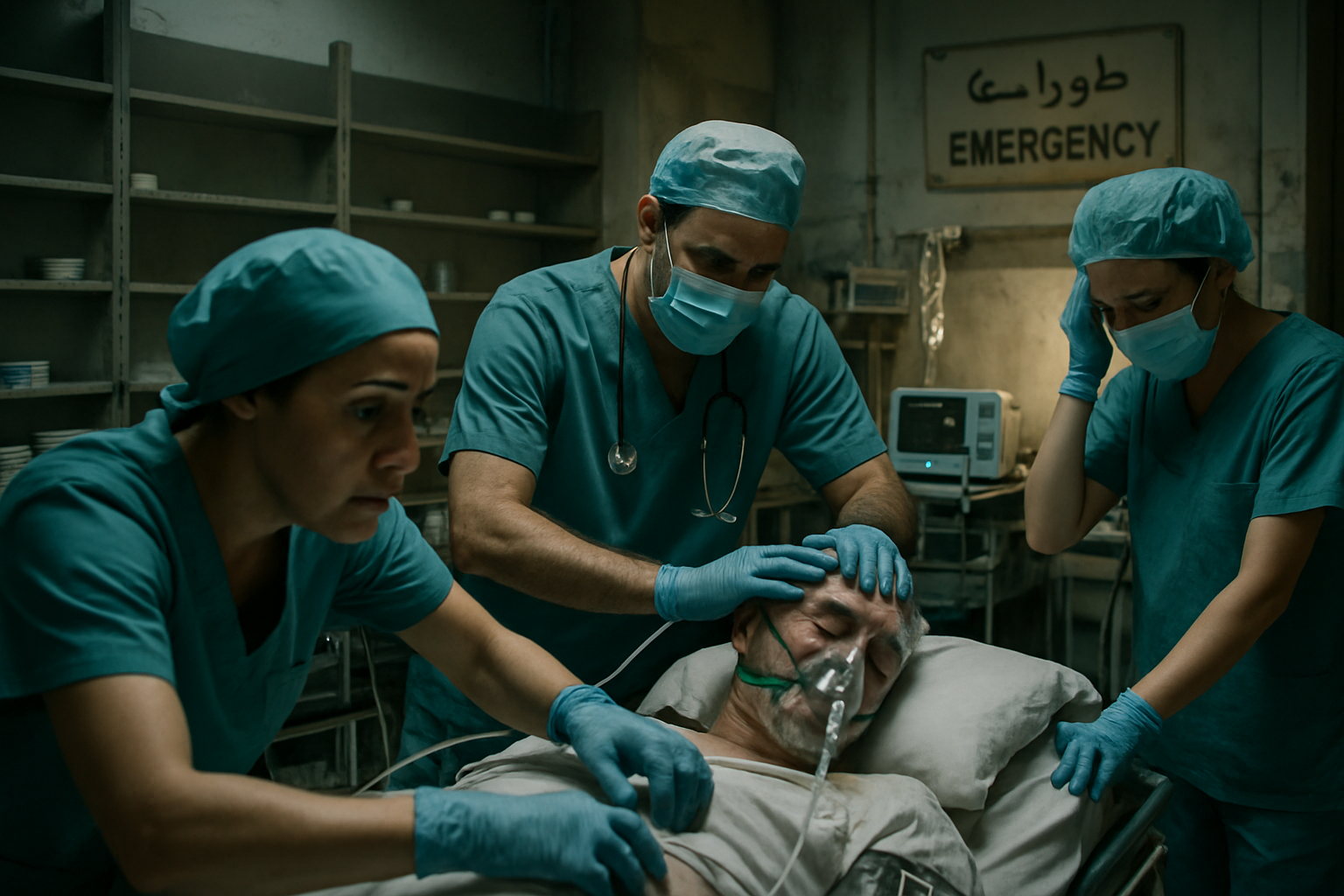
The World Health Organization warned Thursday that Lebanese hospitals are running dangerously low on life-saving medical equipment as the humanitarian crisis deepens, with over 254 people killed in the deadliest day of Israeli strikes since the conflict began.
The stark warning comes as rescue teams searched desperately for survivors under the rubble of destroyed buildings in Beirut, with Lebanon observing a national day of mourning following Wednesday's devastating bombardment that marked the bloodiest 24-hour period since the collapse of the November 2024 ceasefire.
Healthcare System on the Brink of Collapse
According to multiple international sources, the systematic targeting of medical infrastructure has pushed Lebanon's healthcare system to breaking point. The WHO's emergency appeal reflects a crisis that has seen 26 paramedics killed and 51 wounded since March 2, 2026, representing what experts describe as systematic attacks on protected medical personnel.
The deadliest single incident occurred at the Burj Qalaouiyah primary healthcare center in the Bint Jbeil district, where 12 medical workers—including doctors, nurses, and paramedics—were killed in what international observers characterize as potential violations of the Geneva Conventions.
"Hospitals are treating massive casualty influxes while struggling to reach affected areas due to ongoing military operations. The emergency response system has been severely compromised by the targeting of ambulances and medical personnel."
— International humanitarian source
Unprecedented Scale of Civilian Casualties
Israeli military forces launched what sources describe as the heaviest and most coordinated air assault on Lebanon since hostilities escalated in early March, killing more than 254 people in a single day. The strikes proceeded even as Hezbollah had paused its own attacks, reportedly abiding by what sources close to the group understood to be an inclusive truce.
The assault has brought the total Lebanese death toll to over 1,200 civilians since the conflict began, with the humanitarian catastrophe affecting an estimated 1.2 million displaced persons—representing 25% of Lebanon's population. Emergency shelters have been overwhelmed, forcing thousands to sleep on Beirut's streets.
Norwegian sources report that the situation has deteriorated rapidly, with multiple hospitals struggling to cope with the influx of wounded civilians while facing critical shortages of medical supplies and personnel.
International Response and Ceasefire Complications
The escalation has complicated a fragile ceasefire arrangement between the United States and Iran, mediated by Pakistan in what has been termed the "Islamabad Accord." However, Israeli Prime Minister Benjamin Netanyahu has explicitly stated that Lebanon is not covered by the ceasefire agreement, creating a critical loophole that threatens the broader diplomatic framework.
French President Emmanuel Macron and Spanish Prime Minister Pedro Sánchez have insisted that Lebanon must be included for any "credible and durable" ceasefire, while Pakistan continues mediation efforts through what officials describe as a "message relay system."
Iran has threatened to withdraw from negotiations unless the ceasefire violations cease on all fronts, temporarily suspending Strait of Hormuz oil tanker traffic in retaliation—a move affecting 40% of global oil transit.
Systematic Targeting of Medical Infrastructure
International humanitarian law experts have raised serious concerns about what appears to be systematic targeting of medical facilities and personnel. Israeli military spokesperson Avichai Adraee has threatened strikes against ambulances and medical facilities, claiming without evidence that Hezbollah uses "ambulances extensively for military purposes"—allegations that Hezbollah officials have categorically denied.
The pattern of attacks on healthcare infrastructure represents a violation of fundamental international humanitarian law protections. Medical workers, emergency responders, and medical vehicles are explicitly protected under the Geneva Conventions, with deliberate targeting potentially constituting war crimes requiring international investigation.
Collapse of 2024 Peace Agreement
The current crisis stems from the complete breakdown of the November 2024 US-French brokered ceasefire between Israel and Hezbollah, which had held for over a year. The agreement collapsed in March 2026 when Hezbollah faced what sources describe as an "impossible choice" between maintaining the ceasefire and responding to Iranian pressure for retaliation following the death of Supreme Leader Ali Khamenei on March 1.
Hezbollah ultimately chose what officials termed "Iranian solidarity over Lebanese sovereignty," declaring "resistance as the only option" and pulling Lebanon into the broader Iran-Israel confrontation that has since become the most dangerous Middle Eastern crisis since the Cold War.
Global Impact and Energy Crisis
The Lebanese crisis is occurring within the context of a broader regional war that has had unprecedented global implications. Over 18,000 flights have been cancelled worldwide—the most severe disruption since COVID-19—while oil prices have surged past $100 per barrel for the first time since 2014.
The International Energy Agency has announced its largest strategic petroleum reserve release in 50-year history—400 million barrels from 32 countries—in response to the crisis. Natural gas prices have increased 24% in Europe and 78% in the United States, threatening household energy costs globally.
Urgent Call for International Action
UN Secretary-General António Guterres has characterized the situation as "the greatest test of multilateral cooperation in the modern era," emphasizing the need for immediate international intervention to prevent further deterioration of the humanitarian situation.
The WHO's emergency appeal for Lebanon comes as part of a broader $30.3 million initiative to support health systems across five Middle Eastern countries affected by the regional conflict. However, humanitarian organizations note a massive mismatch between international resources and the scale of the crisis.
"The systematic destruction of healthcare infrastructure will have generational impacts, requiring sustained international engagement for decades to rebuild."
— WHO emergency operations official
Template-Setting Crisis for 21st Century
International observers describe the Lebanese crisis as a template-setting moment for civilian protection frameworks and international humanitarian law enforcement in modern conflicts. The systematic targeting of medical facilities and personnel threatens to establish dangerous precedents for 21st-century warfare.
The coming days and weeks are considered crucial in determining whether diplomatic intervention can succeed in containing the crisis or if the trajectory toward broader regional warfare will continue, affecting millions more civilians across the Middle East.
As Lebanon's healthcare system teeters on the edge of complete collapse, the international community faces a critical test of its commitment to upholding humanitarian norms and protecting civilian populations in an increasingly multipolar world where traditional conflict resolution mechanisms are being severely tested.