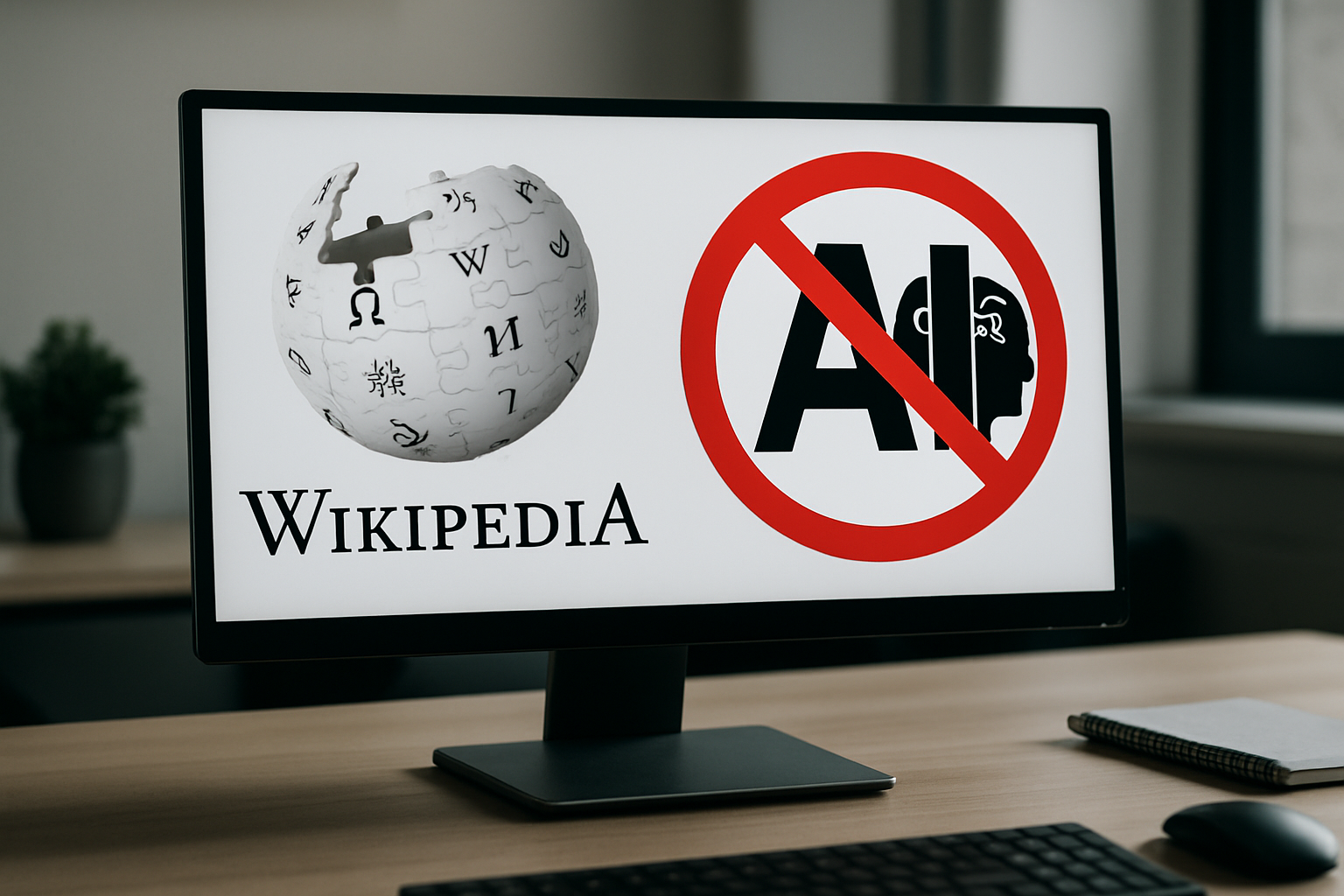
English Wikipedia has implemented a comprehensive ban on using artificial intelligence to write articles on the platform, marking a watershed moment in the ongoing battle between traditional knowledge curation and AI-generated content proliferation.
The decision, reported by The Verge and implemented in March 2026, restricts editors to using AI only for basic proofreading of existing texts where no new content is added. Translation between languages using AI models remains permitted, but all such translations must be verified by human authors before publication.
Fundamental Policy Violations Drive Decision
Wikipedia's editorial community determined that AI-generated texts violate several core principles of the collaborative encyclopedia. The platform's decision comes amid what experts describe as an "authentication crisis" where over 50% of teenagers worldwide now use AI for homework and research assignments, creating unprecedented challenges for volunteer editors who must distinguish human-created content from machine-generated material.
The ban addresses concerns that AI systems can now produce sophisticated citations, cross-references, and footnotes that appear legitimate but reference non-existent sources. Traditional verification processes have proven inadequate for AI-enhanced content, requiring editors to verify not just the accuracy of information but the authenticity of the verification process itself.
"The convergence of AI proliferation and media decline creates a dangerous vacuum where AI-generated content replaces disappeared reliable local sources."
— Wikimedia Foundation Analysis
Global Context of Information Crisis
Wikipedia's decision occurs during what researchers identify as the "2026 Educational Technology Renaissance" - a worldwide phenomenon of AI integration with traditional knowledge systems. However, unlike successful models such as Malaysia's AI-integrated Islamic school or Canada's AI teaching assistants that maintain human oversight, Wikipedia determined that AI content generation fundamentally contradicts its collaborative editing model.
The timing coincides with a global "perfect storm" scenario where local media collapse creates "news deserts" - geographic areas lacking credible local coverage. Thousands of local news outlets have closed in the past decade, directly affecting Wikipedia's sourcing capabilities. Articles about small towns, local politicians, community organizations, and regional events increasingly lack reliable sources meeting editorial standards.
Technical Challenges and Editor Fatigue
The volunteer editor community faces unprecedented challenges in the AI era. "Verification fatigue" has emerged as editors spend increasing time checking source authenticity rather than evaluating reliability. The platform's analysis shows articles from regions with limited local media coverage are more likely to contain unverified claims compared to areas with robust journalism.
Declining new volunteer editors pose additional concerns, as younger users find traditional editing processes cumbersome compared to AI-assisted tools. This creates a generational divide threatening Wikipedia's collaborative editorial model, which relies on community oversight and peer review.
Infrastructure and Economic Pressures
Wikipedia's decision comes amid a global semiconductor crisis that has driven memory chip prices up sixfold, affecting content verification systems. The infrastructure constraints have forced many platforms to seek more efficient content verification approaches, potentially driving innovation in sustainable knowledge management requiring fewer computational resources.
The collapse of traditional media increases the burden on volunteer-maintained platforms to provide reliable information, raising sustainability questions about free knowledge sharing amid increasing information production costs. Societies with strong information ecosystems - combining traditional media, educational institutions, and Wikipedia - demonstrate greater resistance to misinformation and higher civic engagement.
Global Regulatory Context
Wikipedia's AI ban occurs during intensified global technology governance efforts. Spain has implemented the world's first criminal executive liability framework for platform executives, while France conducts cybercrime raids on AI companies. The UN has established an Independent Scientific Panel with 40 experts to provide the first global AI assessment body.
The European Union's intensified tech governance, including potential billions in penalties for platforms that fail to address harmful content, creates additional accountability pressures on knowledge platforms. This regulatory environment influences how platforms approach AI integration and content moderation policies.
Alternative AI Integration Models
While Wikipedia has chosen restriction, other educational platforms demonstrate successful AI integration approaches. Canadian universities use AI teaching assistants while maintaining critical thinking standards. Malaysia operates the world's first AI-integrated Islamic school, combining technology with traditional learning. Singapore's WonderBot 2.0 provides conversational AI for heritage education.
These success models treat AI as enhancement tools rather than replacement mechanisms, preserving human oversight and cultural authenticity while leveraging computational advantages. They provide templates for other knowledge platforms considering AI integration.
Long-term Implications for Knowledge Sharing
Wikipedia's decision represents a critical juncture for free collaborative knowledge creation in the digital age. The platform's response to AI proliferation and media decline will influence global access to reliable information for generations. Success in navigating these challenges while maintaining editorial integrity could establish templates for knowledge-sharing initiatives worldwide.
The ban reflects broader questions about the future of information democracy versus algorithmic control. As AI capabilities advance, platforms face increasing pressure to balance technological innovation with fundamental principles of accuracy, transparency, and community accountability.
Community Response and Future Adaptations
Wikipedia is developing AI detection tools, enhanced verification processes, and fact-checking partnerships to address the challenges posed by sophisticated AI-generated content. Pilot programs test AI-assisted editing that helps human editors identify problematic content while maintaining human oversight of all editorial decisions.
Community journalism initiatives, local media grants, and citizen journalism projects aim to fill gaps left by traditional media collapse. These efforts seek to preserve the sourcing ecosystem that Wikipedia relies upon for accurate, verifiable information.
The platform's 25th anniversary in 2026 occurs at this pivotal moment, with the community demonstrating that collaborative knowledge creation can adapt to technological challenges while preserving core values. Whether this approach succeeds will determine the trajectory of democratic knowledge sharing in the artificial intelligence age.
As Wikipedia navigates this transformation, its decisions will influence how societies balance technological advancement with the preservation of human judgment, cultural knowledge, and community accountability in the creation and curation of shared knowledge.