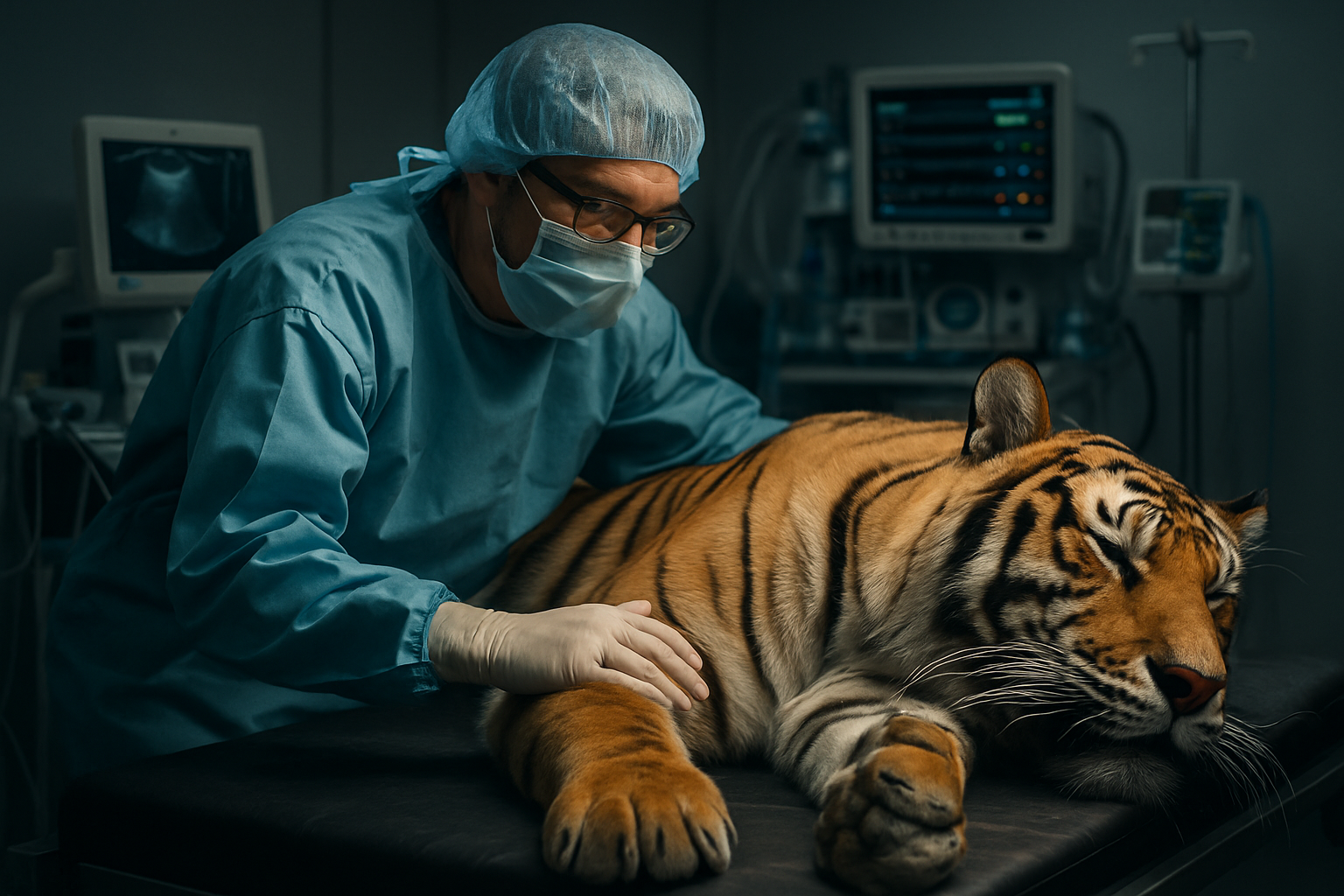
A devastating viral outbreak has claimed the lives of 72 tigers at a Thailand zoological facility, while groundbreaking veterinary advances in Costa Rica offer new hope for animals battling cancer, creating a complex picture of both crisis and innovation in global animal health.
The tragic loss in Thailand represents one of the most significant wildlife health disasters in recent memory, highlighting the vulnerability of captive tiger populations to infectious diseases. The virus, which has not been fully identified in available reports, spread rapidly through the facility, overwhelming containment efforts and raising urgent questions about biosecurity protocols at wildlife facilities worldwide.
Revolutionary Cancer Treatment Breakthrough
In stark contrast to the devastating news from Thailand, Costa Rica has emerged as a pioneer in veterinary oncology, offering advanced cancer treatments previously reserved for human medicine to both domestic and wild animals. Dr. Manuela Mora, medical director and veterinary oncologist at the Center for Veterinary Oncology and Radiotherapy, explained that dogs, cats, and even wild animals such as coyotes can now receive specialized treatments including radiation therapy and chemotherapy.
"Cancer is no longer an immediate death sentence for animals," Dr. Mora stated. "Response rates in many cases allow for a significant prolongation and improvement in the animals' quality of life."
This breakthrough represents a paradigm shift in veterinary medicine, moving from palliative care to aggressive treatment protocols. The decision to use radiotherapy or chemotherapy depends on multiple factors including tumor type, location, and the animal's overall health status. The expansion of these treatments to wild animals marks an unprecedented commitment to conservation medicine.
Malaysia Faces Crocodile Safety Crisis
Meanwhile, Malaysia is grappling with increasing human-wildlife conflict as crocodile populations expand into populated areas. A two-meter crocodile was recently spotted basking along the banks of Sungai Padas at Kampung Melati in Beaufort, raising serious safety concerns among residents and local anglers.
Local resident Fetty, who first reported the sighting, described the reptile as "quite large" and warned that it posed a significant danger to fishing enthusiasts who frequent the riverbank. The situation has become more concerning as many adults and children have been using the area for recreational fishing, creating potential for dangerous encounters.
In a separate incident in Membakut, a villager reported that a three-meter crocodile attacked and killed chickens in Kampung Selian, demonstrating the expanding range of human-crocodile conflicts in the region. These incidents reflect broader environmental pressures that are forcing wildlife into closer contact with human populations.
Global Context of Animal Health Challenges
These regional incidents occur within the broader context of the "2026 Therapeutic Revolution," which has seen unprecedented advances in both human and veterinary medicine. The global response to animal health crises has evolved significantly, with countries implementing prevention-first healthcare strategies that extend beyond human medicine to encompass comprehensive ecosystem health approaches.
The Thailand tiger crisis highlights the interconnected nature of wildlife health and conservation. Large captive populations, while crucial for breeding programs and public education, present unique challenges for disease management. The rapid spread of infectious agents through these populations can devastate genetic diversity and conservation efforts built over decades.
Innovation in Veterinary Oncology
Costa Rica's veterinary oncology advances represent a significant leap forward in comparative medicine. The treatments being offered parallel those available in advanced human cancer centers, including sophisticated radiation delivery systems and targeted chemotherapy protocols adapted specifically for animal physiology.
The expansion of these treatments to wild animals addresses a critical gap in conservation medicine. Previously, wild animals diagnosed with cancer faced euthanasia as the only humane option. The new treatment protocols offer the possibility of returning recovered animals to their natural habitats, contributing to population stability and genetic diversity.
"The decision to use radiation therapy or chemotherapy depends on the type of tumor, its location, and the animal's overall health."
— Dr. Manuela Mora, Veterinary Oncologist
Wildlife Management and Safety Protocols
The crocodile incidents in Malaysia underscore the growing challenge of wildlife management in rapidly developing regions. As human populations expand and alter natural habitats, traditional wildlife corridors and territories become fragmented, forcing animals into closer proximity with human activities.
The Malaysian authorities' response involves multiple approaches including public education about wildlife behavior, improved warning systems for areas known to harbor dangerous species, and enhanced monitoring of wildlife population movements. The presence of large crocodiles in areas frequented by families and children represents an immediate public safety concern requiring coordinated management strategies.
International Cooperation and Best Practices
These diverse challenges highlight the need for enhanced international cooperation in animal health management. The Thailand crisis demonstrates how quickly disease can spread through animal populations, while the Costa Rica advances show how medical innovations can transform treatment possibilities. Malaysia's wildlife management challenges reflect issues faced by many developing nations balancing conservation with public safety.
The global animal health community has responded by developing more sophisticated surveillance systems, sharing best practices for disease prevention, and accelerating the development of veterinary medical technologies. These efforts are part of broader recognition that animal health, human health, and environmental health are interconnected components of a single system.
Economic and Conservation Implications
The economic implications of these animal health developments are substantial. The loss of 72 tigers in Thailand represents not only a conservation tragedy but also significant economic losses for tourism and breeding programs. Each tiger in a breeding program can represent decades of investment in genetic management and conservation efforts.
Conversely, Costa Rica's investment in veterinary oncology positions the country as a regional leader in advanced animal care, potentially attracting medical tourism for valuable animals and contributing to the country's reputation for environmental stewardship and innovation.
Malaysia's crocodile management challenges require ongoing investment in monitoring systems, public education, and safety infrastructure. However, the presence of healthy crocodile populations also represents successful conservation efforts and ecosystem health indicators.
Future Directions and Prevention
The events of February 2026 in wildlife health management point toward several crucial developments for the future. Enhanced disease surveillance systems are being implemented across zoological facilities worldwide, incorporating advanced diagnostic technologies and rapid response protocols.
The expansion of advanced medical treatments to wildlife populations represents a new frontier in conservation medicine, potentially allowing for the treatment and recovery of animals that would previously have been lost to disease. This development could prove crucial for endangered species management and genetic diversity preservation.
Wildlife management strategies are evolving to address the reality of increasing human-wildlife interface zones. Rather than simply creating barriers between human and animal populations, new approaches focus on coexistence strategies that acknowledge the permanent nature of these boundary regions.
The integration of these diverse approaches - advanced medical care, sophisticated disease surveillance, and adaptive wildlife management - represents a maturation of global animal health systems. Success in addressing these challenges requires sustained political commitment, adequate resources, continued international cooperation, and community engagement at all levels.
As the "Therapeutic Revolution of 2026" continues to unfold, the animal health sector stands at a critical juncture. The tools and knowledge exist to address many of the challenges facing wildlife populations, but implementation requires coordinated action across multiple sectors and sustained commitment to both innovation and conservation principles.