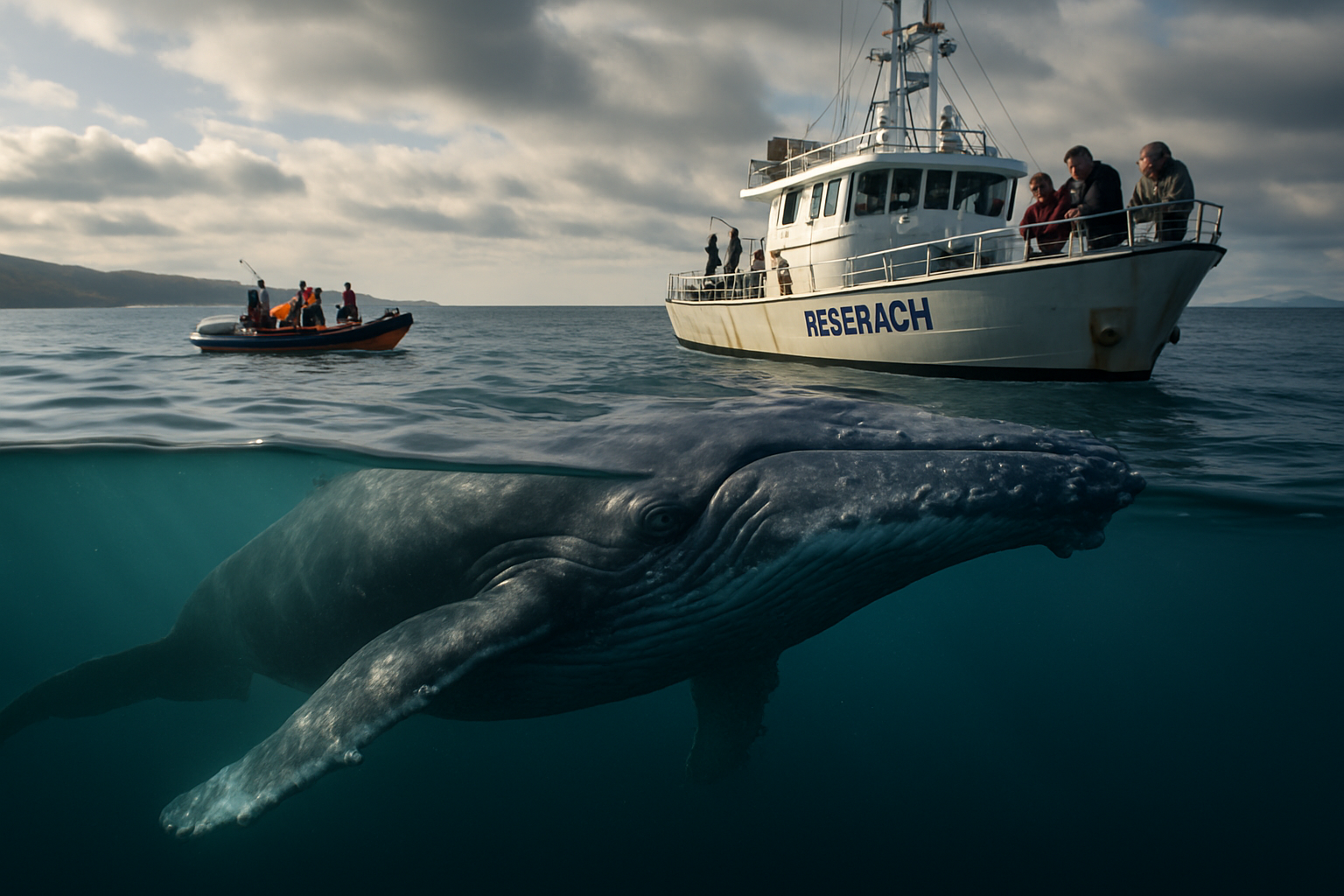
A coordinated international rescue operation to save stranded humpback whales in the Baltic Sea has become the latest symbol of an unprecedented global conservation renaissance, marking a critical juncture in humanity's relationship with the natural world.
The dramatic three-day operation unfolded across German and Swedish waters, where rescue teams deployed innovative techniques including excavators to create drainage channels and specialized net-cutting equipment to free two separate humpback whales. The German teams worked tirelessly at Timmendorfer Strand, where a humpback whale had been trapped on a sandbank for days before rescuers dug a channel to allow the massive marine mammal to reach deeper waters.
International Collaboration Redefines Marine Rescue
The Baltic Sea operations represent more than individual rescue efforts—they showcase an evolution in international environmental cooperation that conservation experts are calling the "global conservation renaissance of 2026." Swedish media reported that the stranded whale near Lübeck successfully freed itself during the night, with drones now monitoring its progress toward the Atlantic Ocean.
"This level of international coordination for marine mammal rescue was unthinkable just a decade ago," explains marine conservation researcher Dr. Helena Martinsson. "What we're seeing is sophisticated integration of cutting-edge technology with traditional maritime knowledge, all coordinated across national boundaries in real-time."

Beaver Renaissance Transforms English Countryside
While marine rescue operations captured headlines, equally significant conservation victories are unfolding on land. In Dorset, England, the first beavers to be officially reintroduced to the wild in 400 years are not just surviving—they're thriving. According to the National Trust, the animals released one year ago have been "breathing new life" into their ecosystem by constructing dams and enhancing biodiversity.
The success story extends beyond mere survival. Wildlife managers report the beavers are enriching habitats throughout their territory and may be preparing to have kits this summer, representing a remarkable conservation milestone for a species once hunted to extinction in England.
"These beavers are ecosystem engineers," explains National Trust conservation manager Sarah Williams. "Their dam-building activities are creating wetland habitats that support countless other species while providing natural flood management services."
— Sarah Williams, National Trust Conservation Manager
Technology Meets Tradition in Conservation Revolution
The current conservation renaissance is characterized by sophisticated integration of cutting-edge technology with traditional ecological knowledge. The Baltic whale rescue operations employed environmental DNA sampling, satellite tracking, and AI-powered behavioral analysis combined with centuries of maritime expertise.
This technology-tradition synthesis represents a fundamental evolution in conservation methodology, moving beyond the previous either-or approach toward comprehensive, culturally sensitive frameworks that respect local knowledge while leveraging global technological capabilities.
Economic Engine of Environmental Protection
Contrary to outdated narratives portraying environmental protection as an economic burden, the 2026 conservation renaissance demonstrates that wildlife protection functions as a powerful economic development strategy. Countries implementing comprehensive conservation programs consistently show greater economic resilience and attract sustainable investment across multiple sectors.
The German and Swedish whale rescue operations enhance both nations' reputations as marine conservation leaders, attracting sustainable investment and positioning them as environmental technology innovators. Meanwhile, England's beaver reintroduction supports a multi-billion-pound conservation economy that includes eco-tourism, environmental technology development, and sustainable research partnerships.
Climate Crisis Context Amplifies Conservation Urgency
These conservation victories are unfolding against an unprecedented climate backdrop. January 2026 marked the hottest month in recorded history, extending a 21-consecutive-month streak of temperatures exceeding 1.5°C above pre-industrial levels—the longest sustained warming period in human history.
This climate context makes conservation successes particularly significant, as traditional approaches struggle to address the compound environmental effects of sustained warming. Rising sea levels threaten coastal ecosystems, changing precipitation patterns affect forest regeneration, and increased extreme weather disrupts marine food chains and terrestrial migration patterns.

Global Conservation Renaissance Takes Shape
The current conservation momentum extends far beyond European waters and English countryside. Historical memory analysis reveals this period as part of an extraordinary global surge in wildlife protection initiatives spanning multiple continents.
Recent months have witnessed Ecuador's historic reintroduction of 158 giant tortoises to the Galápagos' Floreana Island after a 150-year absence, Zimbabwe's world-first DNA forensic prosecution of wildlife poachers, and China's remarkable success with Yangtze River restoration following a decade-long fishing ban that has seen critically endangered finless porpoise populations stabilize for the first time in decades.
Proactive Ecosystem Service Management
Conservation experts identify a fundamental shift from reactive crisis management to proactive ecosystem service management as the defining characteristic of the 2026 conservation renaissance. Rather than simply responding to environmental emergencies, governments and conservation organizations are implementing comprehensive strategies that anticipate challenges and build resilient systems.
This proactive approach emphasizes community participation, technological innovation, and economic viability as essential components of sustainable conservation. The German excavator approach to whale rescue, for instance, represents innovative infrastructure intervention, while England's beaver program demonstrates long-term ecosystem planning that delivers multiple environmental and economic benefits.
Critical Action Window
Despite these remarkable successes, conservation scientists emphasize that the environmental action window is narrowing rapidly. Ecological systems are approaching critical thresholds that could trigger potentially irreversible changes affecting global food security, climate stability, and human settlements.
However, the tools, knowledge, and cooperation frameworks exist for comprehensive environmental protection. The diverse conservation initiatives across Europe and globally demonstrate that coordinated international action can achieve extraordinary results even during the most environmentally challenging period in recorded history.
Implementation Success Factors
Analysis of successful conservation programs reveals consistent success factors: community ownership and engagement, transparent governance frameworks, economic incentives that make protection financially viable, and sophisticated integration of traditional ecological knowledge with modern conservation science.
The Baltic whale rescue succeeded through community reporting, government response capabilities, international cooperation, and scientific monitoring. England's beaver program thrived through local community support, scientific planning, economic incentives, and adaptive management responding to changing conditions.
Future Implications
The environmental developments of 2026 may prove decisive for conservation approaches in the decades ahead, potentially marking a turning point in humanity's adaptive capacity to protect the environmental systems upon which all life depends.
Success depends on sustained international cooperation, enhanced multi-sector coordination, and increased financial commitments that recognize environmental protection as essential infrastructure for human prosperity and planetary sustainability. The integration of cutting-edge technology with traditional ecological wisdom offers pathways for maintaining planetary habitability, but requires immediate coordinated global action at maximum urgency.
"We are witnessing a conservation renaissance that demonstrates what's possible when science, community engagement, and political will converge," notes Dr. Martinsson. "The question now is whether we can scale these approaches rapidly enough to match the pace of environmental change."
— Dr. Helena Martinsson, Marine Conservation Researcher
As rescue boats continue monitoring the Baltic whale's journey toward the Atlantic, and as beaver dams reshape English waterways, the wildlife conservation renaissance of 2026 offers both hope and urgent templates for the coordinated global effort required to maintain a habitable planet during the most environmentally challenging period in human history.