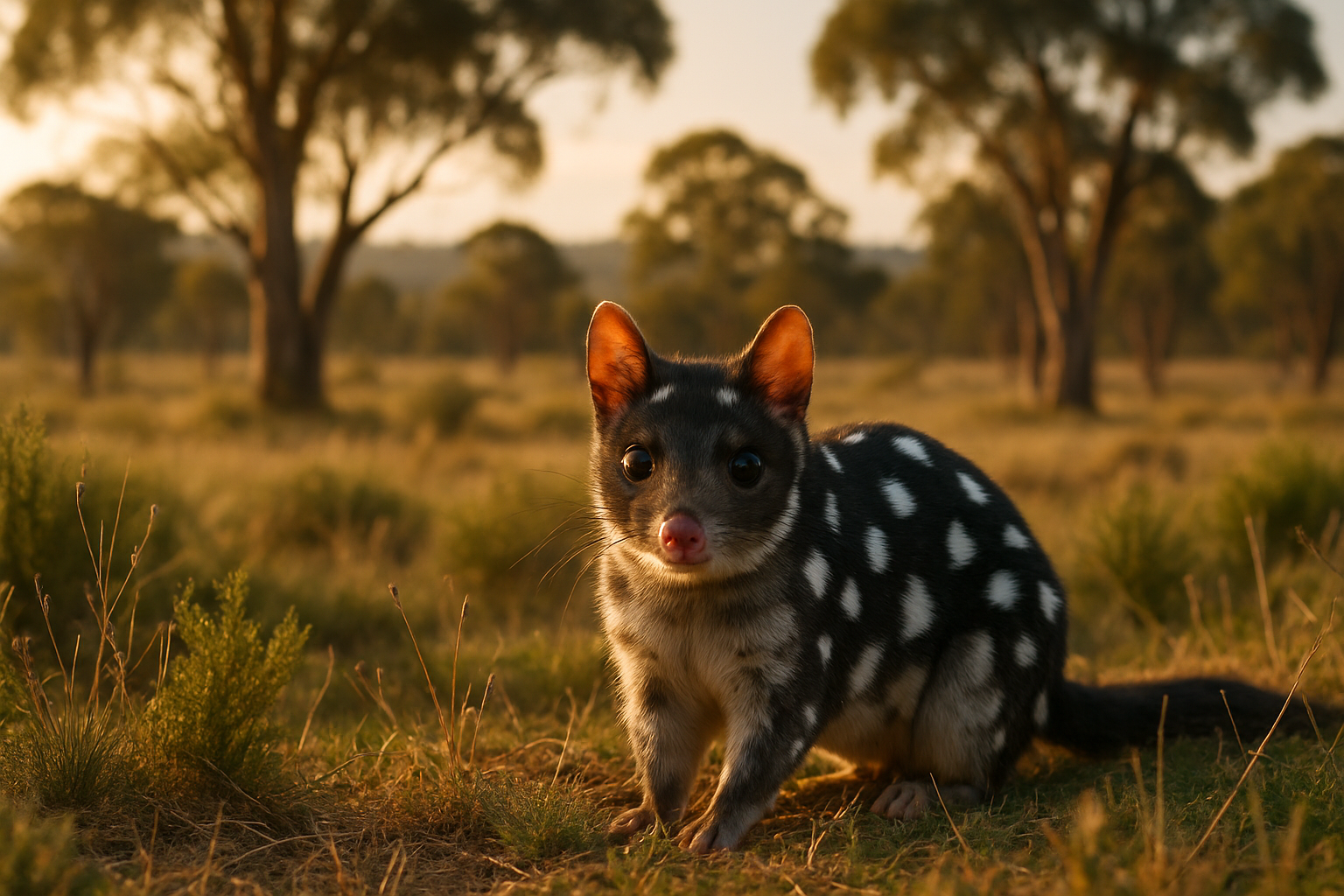
Australia is witnessing a remarkable renaissance in wildlife conservation as eastern quolls successfully establish breeding populations on the mainland for the first time in over 150 years, while groundbreaking 3D printing technology revolutionizes turtle rescue operations across Victoria.
These dual conservation triumphs represent a pivotal moment in Australia's environmental protection efforts, demonstrating how combining traditional ecological knowledge with cutting-edge technology can reverse biodiversity loss and restore species to their historical ranges.
Eastern Quolls: The Return of the "Native Cat"
Once dubbed the Australian "native cat," the eastern quoll was abundant across mainland Australia before being completely wiped out over a century ago. Now, survey results confirm that these distinctive spotted marsupials are not only surviving but thriving in their reintroduced habitats across western Victoria.
The successful reintroduction program marks a historic conservation milestone, representing one of the most significant species recovery achievements in Australian mammal conservation. Eastern quolls, which survived only in Tasmania after their mainland extinction, are now establishing sustainable breeding populations in carefully selected release sites.
These cat-sized marsupials play crucial ecological roles as both predators of small mammals and insects, and as prey for larger native carnivores. Their return helps restore natural ecosystem balance that has been missing for generations, with cascading benefits for vegetation management and biodiversity recovery.
Scientific Precision Drives Success
The reintroduction program exemplifies modern conservation methodology, combining genetic analysis to ensure population diversity, satellite monitoring of individual animals, and comprehensive habitat assessment to optimize release locations. Each quoll is carefully selected based on genetic markers that maximize the founder population's long-term viability.
Advanced tracking technology provides real-time data on survival rates, territorial establishment, breeding success, and ecosystem integration. This scientific approach allows researchers to make adaptive management decisions, fine-tuning the program based on actual field performance rather than theoretical projections.
"This represents more than just bringing back a single species – we're restoring ecosystem function that has been absent for over 150 years."
— Conservation Scientist involved in the program
Revolutionary 3D Turtle Rescue Technology
In Victoria's east, wildlife rescuer innovation is saving turtle lives through sophisticated 3D printing applications. When turtles are struck by vehicles on country roads, their shattered shells traditionally meant certain death. Now, pioneering rescuers are "patching them up and sending them home" using dental supplies, specialized resins, and 3D printing technology.
This turtle "panel beating" operation represents a breakthrough in wildlife medical intervention, transforming what were once hopeless cases into successful rehabilitation stories. The technique involves 3D scanning damaged shell sections, designing custom repair patches, and using biocompatible materials to create permanent fixes that allow turtles to return to their natural habitats.
Medical Innovation Meets Conservation
The rescue process combines veterinary expertise with engineering precision. Injured turtles undergo detailed assessment using digital imaging to map shell damage with millimeter accuracy. 3D printers then create perfectly fitted prosthetic shell sections using materials that integrate naturally with existing shell tissue.
Beyond immediate life-saving intervention, these techniques contribute valuable data to broader turtle conservation efforts. Each rescued individual represents genetic diversity preserved within increasingly fragmented populations, while successful rehabilitation methods can be scaled across Australia's extensive turtle rescue network.
The program demonstrates how technological innovation can transform wildlife medicine, moving from palliative care to comprehensive restoration that returns animals to full ecological function within their natural ecosystems.
Global Conservation Context
These Australian successes emerge during a critical period for global wildlife conservation. Environmental pressures are intensifying worldwide, with January 2026 marking the hottest month on record – the 18th consecutive month exceeding 1.5°C above pre-industrial levels. Climate change compounds traditional conservation challenges, making successful species recovery programs increasingly significant.
Australia's achievements align with international conservation momentum, including recent successes such as the Galápagos giant tortoise reintroduction to Floreana Island after 150 years, Zimbabwe's breakthrough DNA-based poaching prosecutions, and Thailand's innovative elephant contraception programs addressing human-wildlife conflicts.
Technology-Tradition Integration
The most successful contemporary conservation programs demonstrate sophisticated integration of advanced technology with traditional ecological knowledge and community-based management. Australia's quoll program leverages genetic science alongside Indigenous land management practices, while turtle rescue operations combine 3D printing with decades of wildlife rehabilitation experience.
This synthesis represents fundamental evolution in conservation methodology, moving beyond purely technological or traditional approaches toward comprehensive frameworks that are both scientifically rigorous and culturally sensitive. Such integration proves essential for addressing complex environmental challenges spanning biological, technological, and social systems.
Economic Conservation Benefits
These conservation successes demonstrate environmental protection as economic development strategy rather than regulatory burden. Eastern quoll reintroduction supports eco-tourism opportunities, educational programs, and research collaboration attracting sustainable investment to regional Victoria. The program positions Australia as a global leader in species recovery, enhancing international environmental credentials.
Turtle rescue operations create new industries combining veterinary care, 3D printing services, and wildlife education. Local communities benefit from increased environmental awareness, specialized technical skills development, and expanded nature-based tourism opportunities as rescue facilities become educational destinations.
Countries implementing comprehensive wildlife protection consistently demonstrate greater economic resilience and sustainable development outcomes. Environmental protection generates returns through ecosystem services, reduced disaster risk, enhanced agricultural productivity, and improved public health – benefits extending far beyond immediate conservation objectives.
Future Expansion and Challenges
Success with eastern quolls enables expansion to additional mainland locations, with scientists identifying suitable habitat networks across southeastern Australia. Long-term monitoring tracks individual welfare and ecosystem integration, providing templates for similar carnivore reintroductions globally.
Turtle rescue technology faces scaling challenges including equipment costs, technical training requirements, and coordination across vast geographical ranges. However, 3D printing technology continues advancing rapidly, with decreasing costs and increasing accessibility making sophisticated wildlife medical intervention increasingly viable.
Climate Adaptation Requirements
Both programs must account for rapidly changing environmental conditions disrupting traditional habitat patterns and species life cycles. Climate change alters precipitation patterns affecting quoll territory quality, while increased extreme weather events create additional turtle rescue scenarios requiring enhanced response capacity.
Adaptive management approaches enable programs to respond to changing circumstances while maintaining core conservation objectives. Flexibility in release locations, rescue techniques, and monitoring protocols ensures continued effectiveness as environmental conditions evolve.
International Cooperation and Knowledge Sharing
Australia's conservation innovations contribute valuable knowledge to global wildlife protection efforts through international research partnerships, technology transfer, and best practice sharing. Quoll reintroduction methodologies provide templates for carnivore recovery programs worldwide, while turtle rescue techniques offer solutions for reptile conservation across multiple continents.
Collaborative frameworks enable knowledge exchange with conservation programs in New Zealand, North America, and Europe, accelerating innovation and reducing development costs through shared research and coordinated monitoring protocols. International cooperation multiplies conservation impacts while building global capacity for species recovery.
Strategic Conservation Significance
March 2026 marks a critical juncture for global wildlife conservation, with these Australian successes demonstrating that coordinated scientific effort, technological innovation, and community engagement can achieve remarkable species recovery results even under challenging environmental conditions.
The convergence of successful quoll reintroduction with revolutionary turtle rescue technology illustrates conservation's evolution toward proactive ecosystem service management, combining immediate species protection with long-term sustainability strategies. Such comprehensive approaches prove essential for maintaining biodiversity during accelerating environmental change.
Australia's wildlife conservation breakthroughs provide hope and practical templates for reversing biodiversity loss globally. Success factors include sustained scientific commitment, technological innovation, community participation, adaptive management capabilities, and international cooperation – elements that can be adapted across diverse geographical and cultural contexts worldwide.
As conservation action windows continue narrowing amid accelerating climate change, Australia's achievements demonstrate that sophisticated, well-funded, scientifically-based conservation programs can deliver extraordinary results, offering crucial lessons for planetary-scale biodiversity protection efforts in the critical climate action decade ahead.