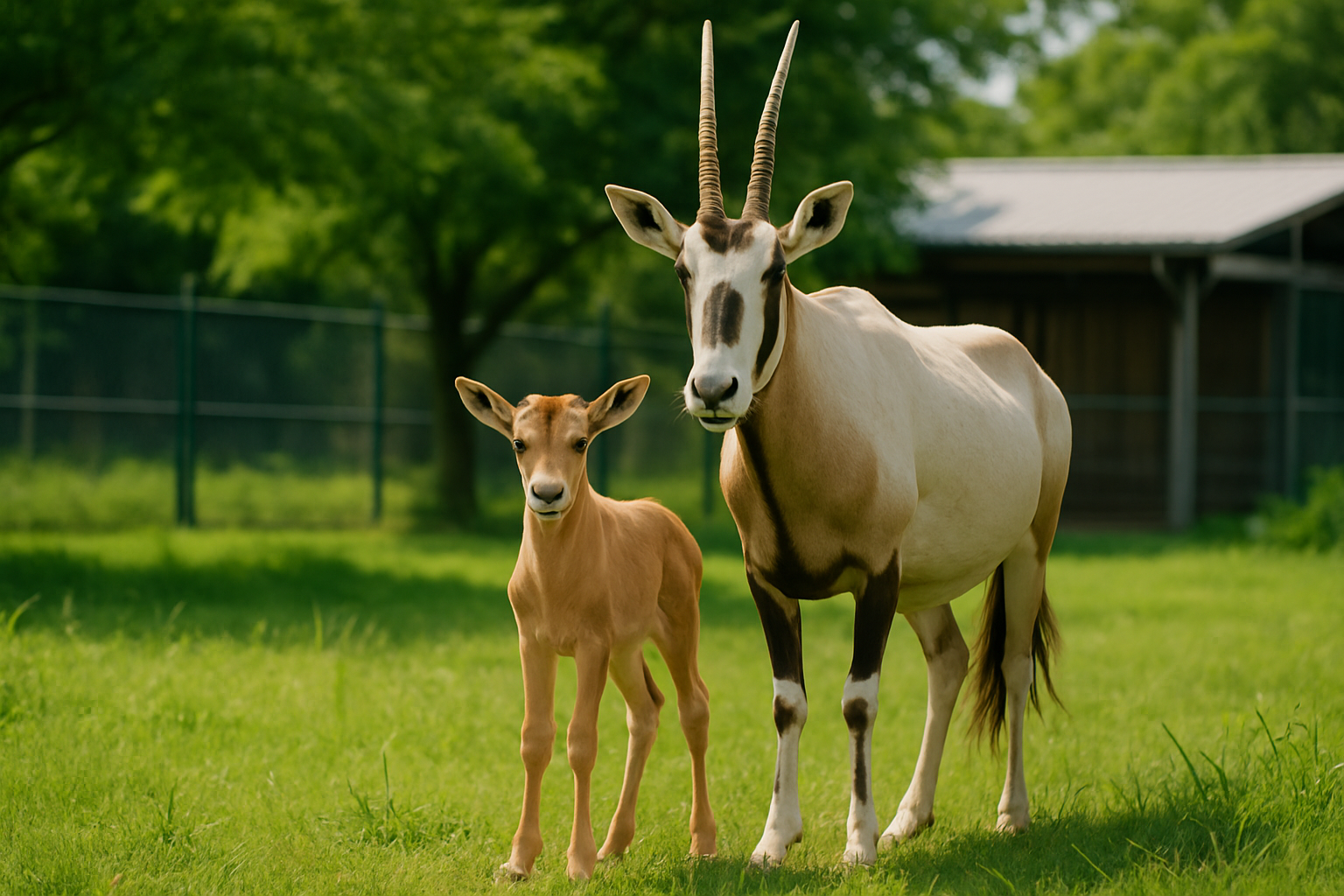
A rare scimitar-horned oryx calf born at Zagreb Zoo and the dramatic rescue of three fox cubs following devastating wildfires in Venezuela represent two striking examples of an emerging global wildlife conservation renaissance that is achieving remarkable results despite unprecedented environmental challenges.
The March 2026 conservation victories come as the world marks its 19th consecutive month of temperatures exceeding 1.5°C above pre-industrial levels, yet demonstrate that coordinated international efforts combining cutting-edge technology with traditional ecological knowledge are yielding extraordinary species recovery successes across multiple continents.
Zagreb Zoo Celebrates Endangered Species Milestone
Zagreb Zoo in Croatia has welcomed a significant addition to its scimitar-horned oryx herd, marking another crucial step in the global effort to restore this critically endangered species. The birth represents part of a broader European conservation network that has been working systematically to rebuild populations of the once-extinct-in-the-wild antelope species.
The scimitar-horned oryx (Oryx dammah) represents one of conservation's most remarkable success stories. Once numbering in the hundreds of thousands across North Africa's Saharan regions, the species was declared extinct in the wild in 2000 due to overhunting and habitat loss. However, coordinated breeding programs at zoos worldwide, including Zagreb's contribution, have maintained genetic diversity and population numbers essential for eventual reintroduction programs.
"Every birth of a scimitar-horned oryx represents hope for an entire ecosystem's restoration. These animals were ecosystem engineers in their native habitat, and their absence has left a profound impact on North African grasslands."
— Leading Conservation Biologist
The success at Zagreb Zoo demonstrates the sophistication of modern zoo-based conservation, which employs advanced genetic analysis to ensure breeding pairs maximize genetic diversity while providing optimal care environments that mirror natural habitat conditions as closely as possible.
Venezuela's Emergency Wildlife Rescue Operations
In stark contrast to the planned success at Zagreb Zoo, Venezuela's recent rescue of three fox cubs represents the crucial role of emergency conservation response teams during environmental disasters. The cubs, barely one week old when discovered, required immediate intensive care following devastating wildfires that swept through Henri Pittier National Park.
Veterinarian Leonel Ovalles, who led the rescue operation, emphasized the delicate nature of caring for such young wildlife. The cubs will require several weeks of intensive veterinary care before they can be evaluated for eventual return to their natural habitat, highlighting the complex logistics involved in emergency wildlife conservation during climate-intensified natural disasters.
Henri Pittier National Park, Venezuela's oldest national park, serves as a critical biodiversity refuge housing hundreds of bird species and numerous endemic mammals. The recent wildfires represent part of a broader pattern of climate-intensified extreme weather events that are challenging traditional conservation approaches worldwide.
Global Conservation Renaissance Context
These individual successes occur within a broader pattern of remarkable wildlife conservation achievements documented throughout 2026. From Ecuador's historic reintroduction of 158 giant tortoises to Floreana Island after a 150-year absence, to Zimbabwe's world-first successful prosecution of wildlife poachers using DNA forensic evidence, the year has witnessed unprecedented conservation momentum.
The conservation renaissance of 2026 represents a fundamental evolution from reactive crisis management to proactive ecosystem service management. Modern programs consistently demonstrate sophisticated integration of cutting-edge technology—including satellite monitoring, environmental DNA sampling, and AI-powered threat detection—with traditional ecological knowledge and community-based management approaches.
Technology Meets Traditional Knowledge
Croatia's oryx breeding program exemplifies this integration, combining advanced genetic screening to optimize breeding pairs with decades of accumulated knowledge about optimal care conditions. Similarly, Venezuela's rescue operations employ modern veterinary techniques while drawing upon traditional understanding of local wildlife behavior and habitat requirements.
The success of both programs demonstrates that effective conservation increasingly requires what experts term "technology-tradition synthesis"—sophisticated frameworks that respect cultural knowledge systems while leveraging global technological capabilities.
Economic Dimensions of Conservation Success
Modern conservation efforts like those seen in Croatia and Venezuela function as economic development strategies rather than regulatory burdens. Zagreb Zoo's successful breeding program enhances Croatia's international environmental reputation, attracts research partnerships, and supports eco-tourism that generates substantial revenue for conservation programs and local communities.
Countries implementing comprehensive wildlife protection demonstrate greater economic resilience and attract sustainable investment across multiple sectors, from green technology manufacturing to environmental services and nature-based tourism.
Climate Crisis Challenges and Adaptations
Both conservation successes occur against the backdrop of accelerating climate change, with January 2026 confirmed as the hottest recorded month in history. This sustained warming is overriding natural climate variability and creating additional ecosystem stress that conservation programs must now incorporate into their long-term planning.
The Venezuela fox rescue operation particularly illustrates how conservation medicine is evolving to address climate-intensified threats. Veterinary teams must now be prepared for more frequent emergency responses as extreme weather events disrupt wildlife populations and traditional habitat boundaries.
International Cooperation Framework
The success of these diverse conservation efforts highlights the critical importance of international cooperation in addressing transnational environmental challenges. Wildlife migrations, climate systems, and ecosystem services cross political boundaries, making coordinated global responses essential for success.
Croatia's oryx program contributes to a continental European breeding network that shares genetic information and coordinates breeding recommendations across dozens of institutions. Venezuela's rescue operations benefit from international veterinary expertise and emergency response protocols developed through global conservation partnerships.
Future Implications for Global Conservation
The conservation achievements of March 2026 provide practical templates for scaling wildlife protection globally. The diversity of approaches—from planned breeding programs to emergency rescue operations—offers multiple pathways for addressing the complex challenges facing wildlife populations worldwide.
Success factors consistently include community ownership and engagement, transparent governance frameworks, economic incentives that make protection financially viable, and integration of traditional ecological knowledge with modern conservation science.
As environmental challenges accelerate, the window for effective conservation action continues to narrow. However, the remarkable successes demonstrated in Croatia and Venezuela, along with similar achievements worldwide, prove that coordinated international efforts combining scientific innovation with community engagement can achieve extraordinary results even during the most environmentally challenging period in recorded history.
"The choice before us is clear: reactive crisis management or proactive ecosystem service management. The successes of 2026 show that with proper coordination, we can build the adaptive capacity needed to protect essential environmental systems for future generations."
— International Conservation Leader
The conservation renaissance emerging across multiple continents represents hope that humanity can develop and implement solutions rapidly enough to maintain planetary habitability during an era of unprecedented environmental challenge. Tools, knowledge, and cooperation frameworks exist for comprehensive environmental protection—success depends on rapid scaling through enhanced international cooperation and sustained financial commitments recognizing environmental protection as essential infrastructure for human prosperity and planetary sustainability.