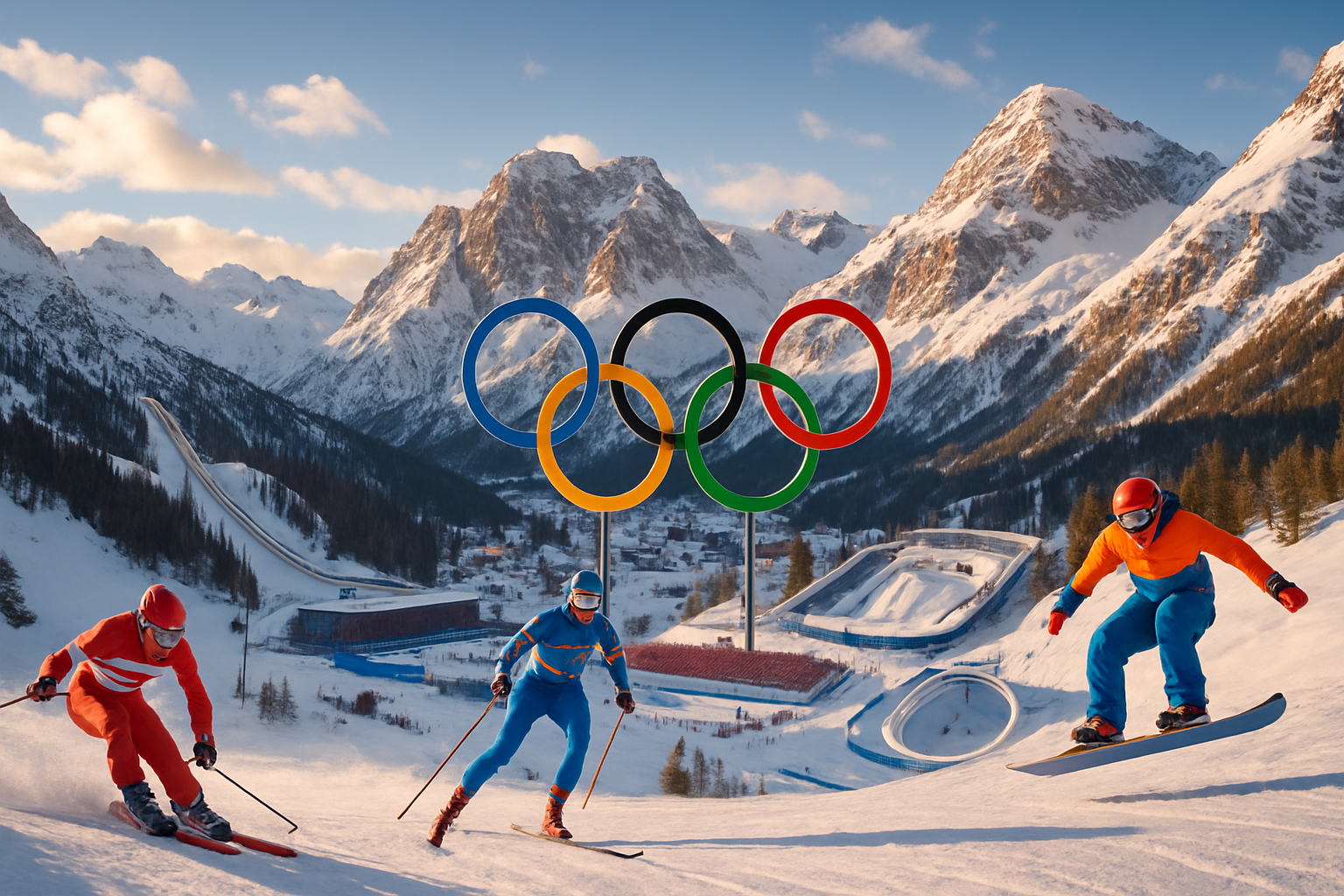
The Milano-Cortina 2026 Winter Olympics continue to deliver extraordinary athletic drama as the most geographically dispersed Winter Games in Olympic history unfold across northern Italy's spectacular Alpine venues, featuring breakthrough performances, historic achievements, and heartbreaking setbacks that embody the essence of Olympic competition.
Slovenian Siblings Make Olympic History
In perhaps the most captivating story of these Games, Slovenia successfully defended their Olympic gold medal in mixed team ski jumping at the 10 February competition, with siblings Domen and Nika Prevc becoming the first brother-sister pair to win Olympic gold together in ski jumping. The Slovenian team, featuring Nika Vodan, Anže Lanišek, and the Prevc siblings, dominated the competition with 1,069.2 points, finishing 30.9 points ahead of silver medallist Norway and 35.2 points ahead of bronze medallist Japan.
Domen Prevc sealed the victory with a commanding 102.0-meter final jump worth 141.5 points, following in the footsteps of the previous generation of Slovenian ski jumping excellence. His sister Nika had already distinguished herself by winning silver in the women's normal hill individual event on February 7, making this family achievement even more remarkable.
"This moment represents everything we've worked for since childhood. To share this with my sister on the Olympic stage is beyond our dreams."
— Domen Prevc, Olympic Champion
American Figure Skating Dominance
The United States showcased their figure skating supremacy with 17-year-old Ilia Malinin leading Team USA to victory in the team event after delivering a near-perfect short program performance. Malinin, competing in his first Olympics, demonstrated remarkable composure under pressure, playfully throwing jabs at a TV camera while skating off the ice after his routine, seemingly having overcome the initial Olympic pressure.
Japan's Yuma Kagiyama finished second in the men's short program, keeping the team competition intensely competitive throughout. The American victory continued their recent dominance in Olympic figure skating team events, with Madison Chock and Evan Bates contributing a spectacular paso doble ice dance routine that earned 133.23 points, the highest competition score of the event.
Skiing Excellence and Tragic Setbacks
The alpine skiing events have provided both triumph and heartbreak. French biathlete Éric Perrot earned silver in the men's 20km individual event, falling just fifteen seconds short of Norwegian Johan-Olav Botn's gold medal performance. The competition highlighted the incredible depth of talent in biathlon, with athletes from multiple nations competing at the highest level.
However, the Games have also been marked by injury concerns affecting several high-profile athletes. The most dramatic story involved American skiing legend Lindsey Vonn's attempted comeback at age 41, competing with a ruptured ACL sustained just days before the Olympics. While her courage captured global attention, several athletes have faced similar challenges in pursuing Olympic glory.
Cross-Country and Biathlon Breakthroughs
The Nordic events have showcased exceptional performances, with Sweden achieving a remarkable sweep in cross-country skiing sprint events. All three podium positions in one women's sprint were claimed by Swedish athletes, marking one of the rarest achievements in Olympic history – a complete national podium sweep.
Norwegian cross-country star Johannes Høsflot Klæbo continues his quest for a record-breaking eighth Olympic gold medal, positioning himself among the greatest Winter Olympic athletes of all time. His performances have consistently demonstrated the technical excellence and endurance that define Nordic skiing at its finest.
Global Winter Sports Expansion
These Games have demonstrated the remarkable global expansion of winter sports, with athletes from diverse backgrounds making significant impacts. The competition has featured breakthrough performances from unexpected nations, reflecting the internationalization of winter sports beyond traditional powerhouses.
The Nordic Combined events have drawn particular attention for being the only Olympic sport without women's events, highlighting ongoing discussions about gender equality in Olympic competition. This issue has put the entire future of Nordic Combined at risk as the Olympic movement continues to emphasize gender parity across all sports.

Infrastructure and Venue Success
Despite early concerns about the geographically dispersed nature of these Games, spanning over 400 kilometers across seven venues from Milan to Cortina d'Ampezzo, the competition infrastructure has largely performed successfully. The revolutionary dual-city hosting model has demonstrated that sustainable Olympic hosting is possible while maintaining world-class athletic competition.
The Games have incorporated groundbreaking technology, including the first Olympic integration of Alibaba's Qwen AI system for broadcasting and spectator services, and OMEGA's AI-powered figure skating analysis system. These innovations represent a new paradigm for Olympic technology integration.
Cultural Innovation and Sustainability
Milano-Cortina 2026 has emphasized cultural inclusion through bilingual place names in the Alto Adige/South Tyrol region, recognizing the area's German-speaking population. The Olympics have featured Milo and Tina, dubbed the first "Gen Z" Olympic mascots, connecting with younger audiences worldwide.
The sustainable Olympic villages showcase innovative design with greenhouse spaces and environmentally responsible construction, setting new standards for future Olympic hosting. These Games represent a potential new model for Olympic organization that balances athletic excellence with environmental responsibility.
Looking Ahead
With competition continuing through February 22, the Milano-Cortina 2026 Winter Olympics have already established themselves as a watershed moment for winter sports. The Games demonstrate how Olympic competition can adapt to 21st-century realities while preserving the fundamental values of athletic excellence, international cooperation, and the Olympic spirit.
As these remarkable Games continue, they showcase winter sports at their finest – combining traditional excellence with innovative approaches to hosting and competition. The stories emerging from these Alps venues will be remembered as defining moments in Olympic history, demonstrating both the triumph and heartbreak that make the Olympic Games uniquely compelling.
"These Games represent the evolution of Olympic hosting while maintaining the core magic that makes the Olympics special – extraordinary athletes pursuing impossible dreams on the world's biggest stage."
— IOC President Kirsty Coventry