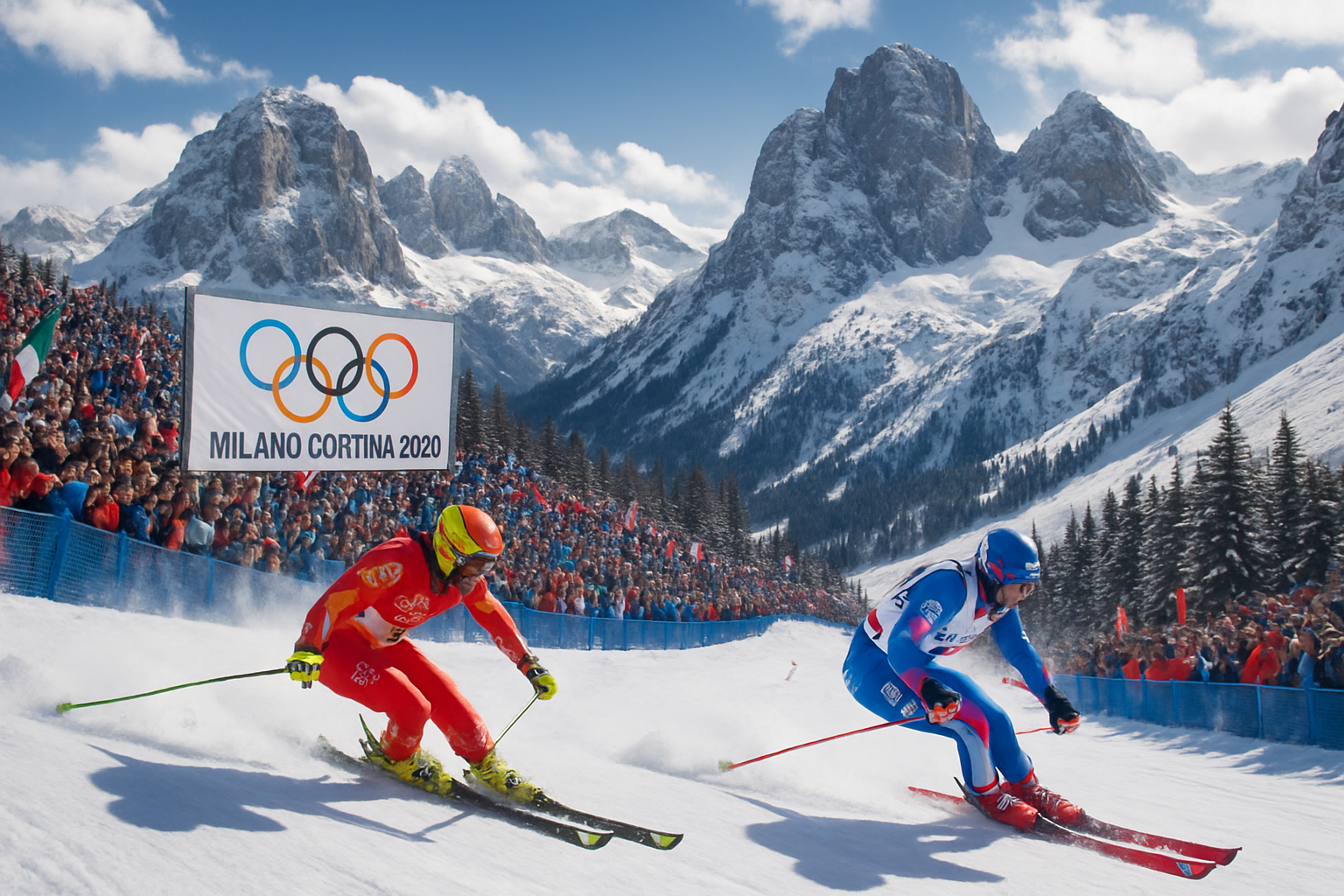
February 11, 2026 marked another extraordinary day at the Milano-Cortina Winter Olympics as personal drama, athletic excellence, and emotional revelations captivated audiences across the most geographically dispersed Games in Olympic history.
The day began with stunning athletic achievements but quickly became defined by unexpected human drama when Norwegian biathlete Sturla Holm Laegreid made an extraordinary confession during his post-race interview after winning bronze in the men's 20km individual event.
Norwegian's Shocking Post-Race Confession
In an unprecedented moment of raw emotion, Laegreid broke down in tears during live television coverage, confessing to infidelity and publicly apologizing to his girlfriend. "I've cheated on my girlfriend, but I still love her," the bronze medalist said through tears, describing it as "the biggest mistake of my life."
"I haven't cried this much in a long time. Committing social suicide is a declaration of love."
— Sturla Holm Laegreid, Norwegian Biathlete
The emotional confession overshadowed what should have been a celebration of his third-place finish, as fellow Norwegian Johan-Olav Botn claimed gold in the same event, dedicating his victory to deceased teammate Sivert Bakken.
Breaking Barriers and Setting Records
While personal drama unfolded in biathlon, other venues witnessed historic achievements. At 52 years old, Austrian snowboarder Claudia Riegler became the oldest participant at the Milano-Cortina Games, inspiring countless athletes and spectators with her determination and mental fortitude.
German athletes continued their impressive showing, with Julia Taubitz claiming emotional luge gold in the women's singles event. "I haven't cried this much in a long time," Taubitz said, echoing the day's theme of raw emotion as she finally captured the Olympic title that had eluded her.
Presidential Presence and Italian Excellence
Italian President Sergio Mattarella made his presence felt at the Games, attending the SuperG events in Cortina where Italian ski stars Sofia Goggia and Federica Brignone competed. The presidential visit to both the Olympic Village and Casa Italia underscored the national significance of these home Games.
The men's SuperG on the challenging Stelvio piste featured four Italian athletes, including veteran Christof Innerhofer and rising star Dominik Paris, competing for glory on home snow before enthusiastic crowds.
International Competitions Heat Up
The day's competition schedule included eight medal events across multiple venues, showcasing the remarkable logistical achievement of hosting events across more than 400 kilometers from Milan to Cortina d'Ampezzo.
Latvian athletes continued their impressive Olympic campaign, with their luge teams competing for additional medals to add to their growing collection. The Baltic nation's 68-athlete delegation, their largest ever, has been one of the success stories of these Games.
Figure Skating Drama Unfolds
American figure skating sensation Ilia Malinin continued to dazzle audiences, dubbed the "show god" by enthusiastic fans. His performances have been a highlight of the Games, generating euphoria among spectators and establishing him as one of the breakout stars of Milano-Cortina 2026.
Hockey Tensions Rise
The women's ice hockey tournament saw intense competition as Team USA defeated Canada 5-0, setting up a quarterfinal matchup against Italy. Despite the heated rivalry on ice, there was notable harmony in the stands between American and Canadian fans, demonstrating Olympic sportsmanship at its finest.
Ukraine's Symbolic Protest
Ukrainian flag bearer Vladislav Heraskevych continued his defiant stance regarding a helmet decorated with photos of fallen Ukrainian athletes, banned by the International Olympic Committee. Despite the prohibition, Heraskevych declared his intention to wear the memorial helmet during competition, highlighting the intersection of sport and geopolitics at these Games.
"I've used it during trials and I will use it on race day."
— Vladislav Heraskevych, Ukrainian Flag Bearer
Infrastructure Successes Amid Challenges
Despite early concerns about the ambitious dual-city hosting model, the Games have largely succeeded in delivering world-class competition across their dispersed venues. The revolutionary approach of staging events across seven locations has proven viable, though challenges remain with transportation logistics and venue coordination.
Weather conditions have been favorable, with Europe's harsh winter providing excellent natural snow conditions that have enhanced competition quality while reducing reliance on artificial snow production.
Looking Ahead
As the Games approach their midpoint, several major storylines continue to develop. Norway maintains its position atop the medal standings, while Germany and Italy battle for podium positions. The United States has shown strength across multiple disciplines, while smaller nations like Latvia and Bulgaria have provided inspiring breakthrough performances.
The success of Romanian athletes competing in biathlon and luge events represents another positive development, with the nation achieving its best Olympic placement in ski jumping team events with a 12th-place finish.
Cultural and Technological Innovation
The Milano-Cortina Games continue to showcase technological innovation, with AI-powered broadcasting services and sustainable venue designs setting new standards for future Olympic hosting. The bilingual place names in the German-speaking Alto Adige/South Tyrol region and the popular "Gen Z" mascots Milo and Tina have added unique cultural dimensions to these Games.
As competition continues through February 22, the Milano-Cortina 2026 Winter Olympics are establishing themselves as a landmark event that successfully combines traditional Olympic values with 21st-century innovation and sustainability practices.
With 13 days of competition remaining, these Games promise more dramatic moments, record-breaking performances, and inspiring human stories that define the Olympic spirit. The revolutionary dual-city hosting model appears to be working, creating a new template for future Winter Olympics that emphasizes geographic distribution, environmental responsibility, and cultural authenticity.