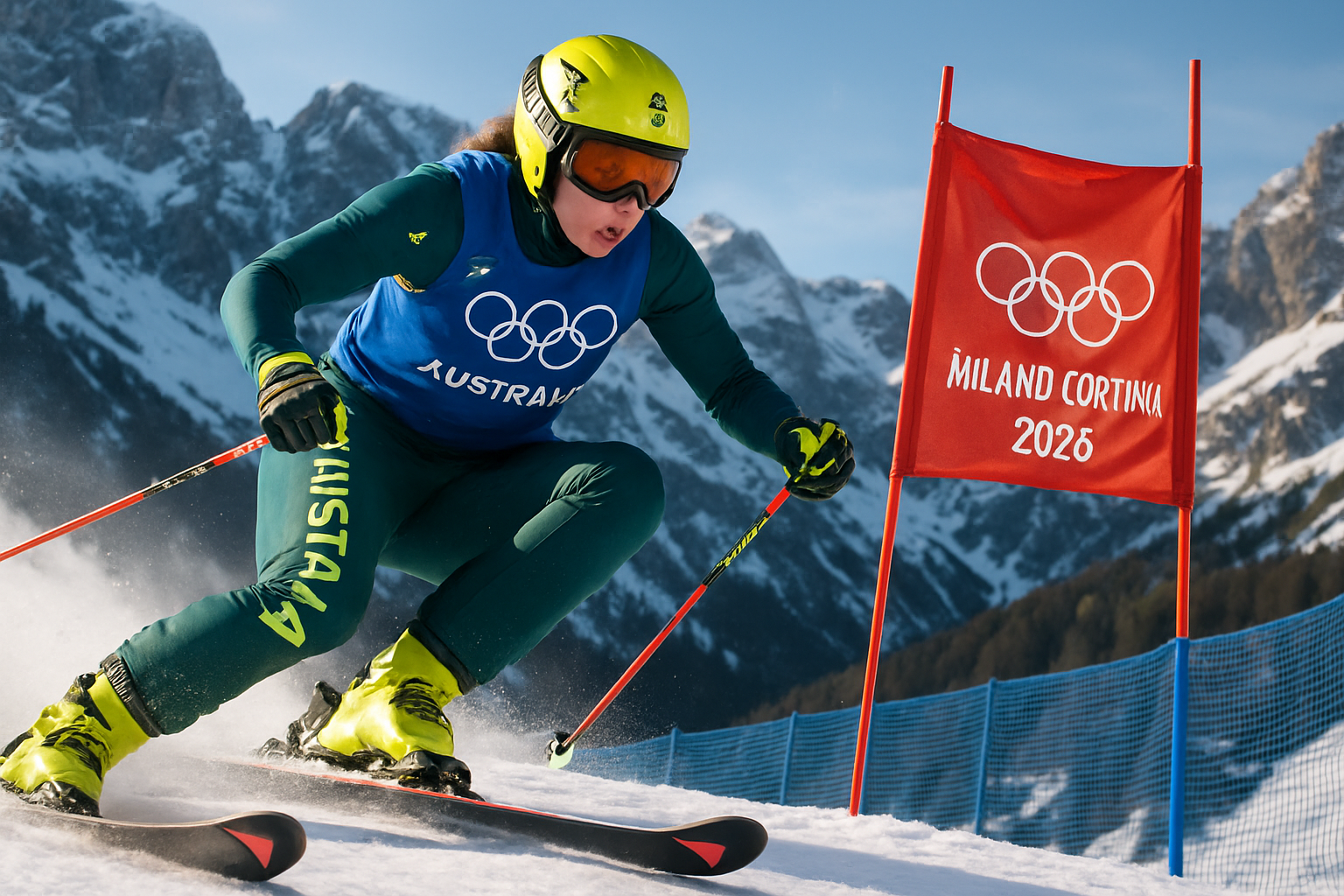
As the Milano-Cortina 2026 Winter Olympics enter their final days, Day 14 delivered a compelling mix of breakthrough performances, emotional comebacks, and the culmination of one of the most revolutionary Olympic Games in history. From Australia's Kyra Wheatley making her Olympic debut in ski cross to Estonia's Nordic combined achievements, the day showcased the global expansion of winter sports.
The most geographically dispersed Olympics in history continues to prove that sustainable, dual-city hosting can maintain the highest standards of competitive excellence while addressing 21st-century environmental concerns. With competitions scattered across 400+ kilometers from Milan to Cortina d'Ampezzo, these Games have established a new paradigm for Olympic hosting.
Australian Ski Cross Breakthrough
Australia's sole ski cross representative, Kyra Wheatley, stepped onto the Olympic stage for her long-awaited debut as women's seeding began. The 26-year-old's journey to these Games represents a 12-year dream in the making, drawn to ski cross by what she describes as its "speed and chaos."
Wheatley's participation continues Australia's remarkable Winter Olympics campaign, which has already established the nation as an emerging winter sports powerhouse. Following breakthrough golds from Cooper Woods (moguls), Jakara Anthony (dual moguls), and Josie Baff (snowboard cross), Australia has positioned itself ahead of traditional winter nations in several medal categories despite having fewer athletes.
"The speed and chaos of ski cross is what attracted me to the sport, and to realize a dream 12 years in the making of competing at the Winter Olympics."
— Kyra Wheatley, Australian Ski Cross Athlete
The systematic success of Australian winter sports athletes represents a fundamental challenge to traditional winter sports hierarchies, demonstrating that geographic location doesn't limit Olympic aspirations in the modern era.
Figure Skating Excellence and Estonian Pride
The figure skating competition reached its climax with American Alysa Liu claiming women's singles gold, ending a remarkable comeback story that began when she retired at age 16. Liu's triumph marked the first American women's figure skating Olympic gold in 24 years, breaking a quarter-century drought in the sport's premier individual event.
Estonia's Niina Petrõkina finished seventh in her Olympic debut, a remarkable achievement for the two-time European champion competing at her first Olympics. The 22-year-old's performance continues Estonia's impressive showing at Milano-Cortina 2026, with the Baltic nation demonstrating the global expansion of winter sports excellence beyond traditional powerhouses.
Estonia's Nordic Combined team also made headlines with Kristjan Ilves and Ruubert Teder finishing 10th in the men's team event, showcasing the depth of talent emerging from nations previously considered peripheral to winter sports.
French Medal Chase Intensifies
The French delegation positioned itself to reach the symbolic milestone of 20 medals at Milano-Cortina 2026, with particular hopes resting on their four male biathletes competing in the mass start event. France's remarkable performance at these Games has established new records for French Winter Olympic achievement, with biathlon alone contributing 10 medals to their impressive haul.
The French success story exemplifies the competitive depth of these Olympics, where multiple nations have achieved breakthrough performances across disciplines traditionally dominated by Nordic countries.
Nordic Skiing Drama and Swedish Crisis
Norwegian media reported on the deep crisis affecting Swedish men's cross-country skiing, with their biggest star reportedly unwilling to compete in the concluding 50km race. The Swedish leadership has desperately attempted to recall athletes to the Olympic camp, with observers describing the situation as "chaotic."
This internal turmoil contrasts sharply with Norway's continued dominance in Nordic disciplines, where Johannes Høsflot Klæbo has established himself as the most successful Winter Olympian in history with 10 Olympic golds, achieved during these revolutionary Games.
Revolutionary Hosting Model Success
Despite infrastructure challenges including the incomplete Apollonio-Socrepes cable car that forced Cortina school closures, the dual-city hosting model spanning 400+ kilometers has proven remarkably successful. The revolutionary format has maintained the highest competitive standards while demonstrating environmental responsibility and cultural authenticity.
Technological innovations have enhanced the Olympic experience without compromising tradition. The first Olympic deployment of AI technology through Alibaba's Qwen LLM system and OMEGA's AI-powered figure skating analysis has provided unprecedented insights and enhanced broadcasting capabilities across the dispersed venue network.
Cultural Innovation and Global Participation
The Games have successfully balanced international accessibility with local heritage through initiatives such as bilingual place names in Alto Adige/South Tyrol, sustainable Olympic villages featuring greenhouse spaces, and the popular Gen Z mascots Milo and Tina.
Historic participations from Saudi Arabia (Fayik Abdi in alpine skiing, Rakan Aliriza in cross-country), Caribbean bobsled teams from Jamaica and Trinidad & Tobago, and Latvia's record 68-athlete delegation demonstrate the unprecedented global reach of winter sports in 2026.
Medal Race Intensification
As competitions near their February 22 conclusion, Norway maintains its traditional leadership in the medal standings but faces the most competitive international field in Winter Olympics history. Italy's strong home advantage has yielded impressive results across multiple disciplines, while breakthrough nations from six continents continue to challenge traditional powerhouses.
The medal distribution reflects the fundamental democratization of winter sports, with nations previously considered peripheral to winter competition achieving podium success across disciplines ranging from figure skating to Nordic combined.
Legacy of Innovation and Excellence
Milano-Cortina 2026 has established itself as a watershed moment in Olympic history, proving that revolutionary hosting concepts can coexist with athletic excellence and Olympic tradition. The combination of environmental sustainability, geographic distribution, technological innovation, and cultural authenticity has created a template for future Olympic hosting that addresses contemporary realities while preserving core Olympic values.
The success of athletes like Kyra Wheatley, representing nations newly competitive in winter sports, alongside established stars like Johannes Høsflot Klæbo continuing Nordic traditions, exemplifies the perfect balance these Games have achieved between innovation and heritage.
"These Games represent the successful adaptation of the Olympic movement to 21st-century realities while maintaining the core values of athletic excellence and international cooperation."
— IOC Assessment of Milano-Cortina 2026
As the final medal events approach, Milano-Cortina 2026 has demonstrated that Olympic excellence transcends traditional geographic and logistical boundaries. The revolutionary dual-city hosting model, unprecedented global competitiveness, and successful integration of sustainability with athletic achievement have created new paradigms that will influence Olympic hosting for decades to come.
The stories emerging from Day 14—from Wheatley's ski cross debut to Estonia's Nordic combined achievements—continue the narrative of these historic Games: that in the modern Olympic era, dreams of winter sports excellence are truly unlimited by geography, tradition, or conventional wisdom.