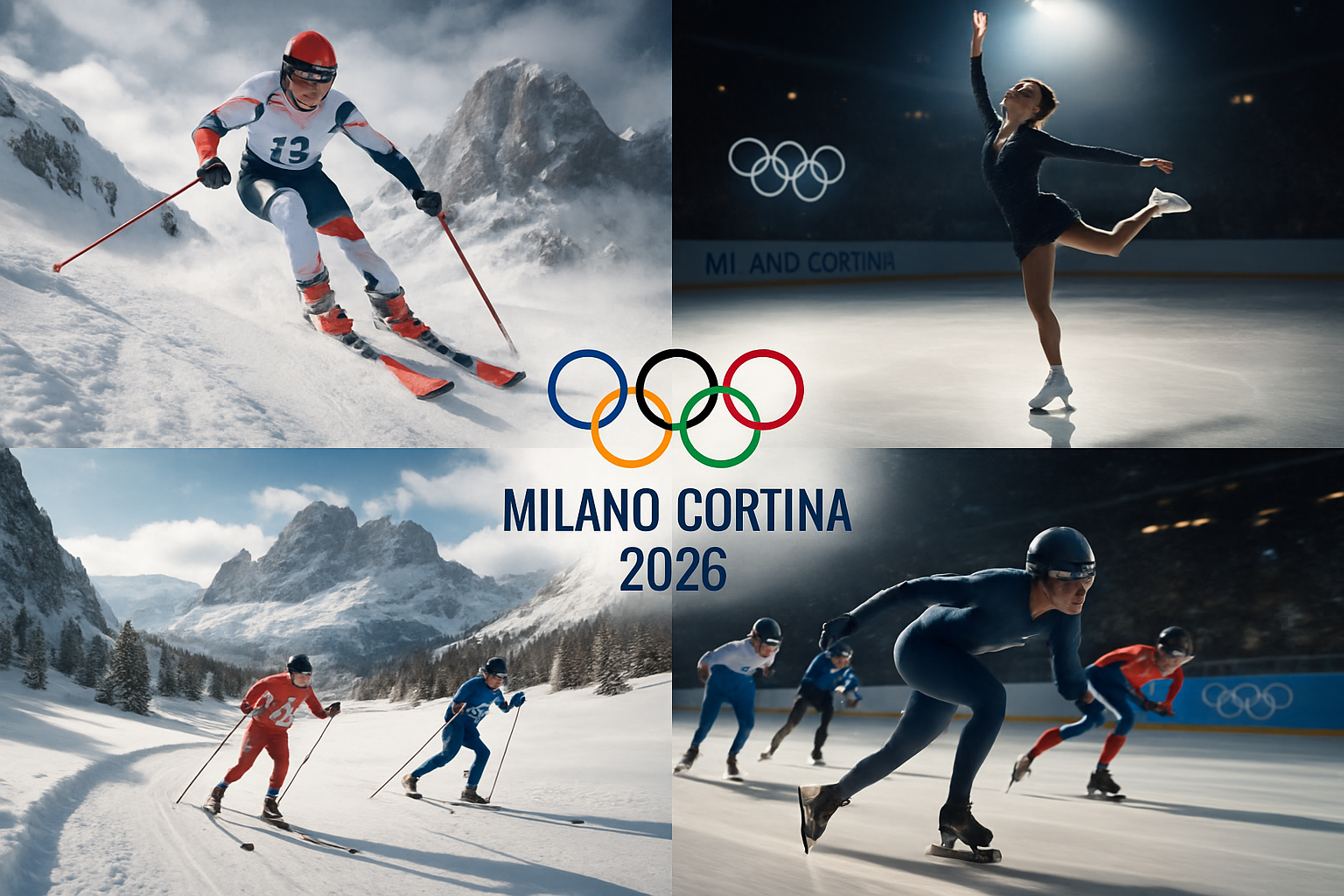
The Milano-Cortina 2026 Winter Olympics reached a pivotal moment on Day 12 (February 18), as traditional Nordic powerhouses faced unprecedented challenges from emerging winter sports nations across the most geographically dispersed Games in Olympic history.
Estonian Figure Skating Excellence
Estonia's Niina Petrõkina delivered a masterful performance in the women's Olympic figure skating short program, scoring 69.63 points to claim a respectable 10th place finish at Milan Ice Arena. Her elegant routine showcased the technical precision that has elevated Estonian skating on the world stage, continuing the Baltic nation's impressive representation at Milano-Cortina 2026.
The performance highlighted the global democratization of winter sports, with athletes from non-traditional powerhouses competing at elite levels against established skating nations. Petrõkina's achievement reflects Estonia's growing investment in winter sports development and the Olympic movement's successful expansion beyond traditional boundaries.
Nordic Skiing Battles Intensify
Swedish cross-country skiing experienced both triumph and disappointment on Day 12. The women's team sprint provided Sweden with its best opportunity for gold since the Turin 2006 Games, when Lina Andersson and Anna Olsson (then Dahlberg) claimed victory in this discipline.
However, Swedish men's cross-country skiing continued to struggle, with veteran Calle Halfvarsson acknowledging the team's underwhelming performance. "It has been an underperformance so far at this championship. Nobody wants it to be this way," Halfvarsson admitted to SVT Sport after Sweden finished last in the men's relay, still without a single Olympic medal in men's cross-country skiing.
"They have the right to criticize us," Halfvarsson said. "We haven't delivered what we should have. It's disappointing for everyone involved."
— Calle Halfvarsson, Swedish Cross-Country Skier
Norwegian Olympic History in the Making
The pressure mounted on Norway's Jens Lurås Oftebro following his impressive gold medal victory in Nordic combined. However, his triumph carries historical significance beyond personal achievement—it may represent the final individual Olympic gold ever awarded in Nordic combined, as the sport faces potential elimination from future Olympic programs.
"I hope I'm not the last one," Oftebro reflected on the possibility that his gold could mark the end of an era for the traditional Nordic sport that combines ski jumping and cross-country skiing.
Alpine Skiing Drama Unfolds
The women's slalom competition provided intense drama as American skiing legend Mikaela Shiffrin faced mounting pressure to break her Olympic medal drought. Despite her record-breaking 108 World Cup victories, five overall World Cup titles, and twelve World Championship gold medals, Shiffrin has experienced a series of setbacks at both Beijing 2022 and Milano-Cortina 2026.
Norwegian skier Mina Fürst Holtmann's emotional journey captured attention as she revealed her struggles with competitive pressure earlier in the season. "I've cried a lot," she admitted, describing how she had to step away from slalom competition mid-season to regain her form and confidence ahead of the Olympics.
Sweden's alpine skiing team prepared strategically for the women's slalom, with head coach Charlie Laband expressing confidence in their tactical approach. "Sacha has a plan that suits our girls," Laband told SVT Sport, referring to the Swedish strategy for the second run.
Ice Hockey Quarterfinal Intensity
The men's ice hockey tournament reached fever pitch as Sweden dominated Latvia 5-1 in their quarterfinal matchup, advancing to face the United States in what promises to be a thrilling semifinal battle. Sweden's systematic breakdown of Latvia's defense showcased the level of play required for medal contention in Olympic hockey.
Meanwhile, Team Sweden's women faced the United States in another crucial quarterfinal, with both teams bringing NHL-caliber talent and Olympic experience to the revolutionary dual-city hosting venues spanning over 400 kilometers across northern Italy.
Revolutionary Hosting Model Proves Successful
The Milano-Cortina 2026 Games continued to demonstrate the viability of their groundbreaking dual-city hosting model, with competition successfully maintained across seven venues from Milan to Cortina d'Ampezzo. Despite initial infrastructure challenges, including the incomplete Apollonio-Socrepes cable car that forced school closures in Cortina, the Games have proven that geographically dispersed Olympics can maintain competitive excellence while emphasizing environmental sustainability.

Technological Innovation Leading the Way
The Games have successfully integrated cutting-edge technology, including the first-ever Olympic deployment of Alibaba's Qwen AI Large Language Model system for broadcasting and spectator services. OMEGA's AI-powered figure skating analysis has provided unprecedented insights into technical performance, enhancing both judging accuracy and viewer experience.
Cultural innovations have also resonated globally, including bilingual place names in the German-speaking Alto Adige/South Tyrol region, sustainable Olympic villages featuring greenhouse spaces, and the popular Gen Z mascots Milo and Tina.
Global Winter Sports Expansion
The 2026 Games have showcased the remarkable expansion of winter sports participation across six continents. Historic first-time participations from Saudi Arabia (Fayik Abdi in alpine skiing, Rakan Aliriza in cross-country), Caribbean bobsled teams from Jamaica and Trinidad & Tobago, and Latvia's record-breaking 68-athlete delegation demonstrate winter sports' evolution beyond traditional powerhouses.
This democratization reflects changing global participation patterns, with breakthrough performances challenging established hierarchies and inspiring new generations of winter sports athletes worldwide.
Weather and Operational Challenges
Europe's harshest winter in decades, with temperatures plummeting to -30°C, has created ideal natural snow conditions across the Italian Alps, reducing concerns about artificial snow production that had generated environmental controversy before the Games. However, extreme weather has also complicated logistics across the vast venue network, requiring extensive coordination and safety measures.
Despite these challenges, competition has proceeded successfully, with venues maintaining world-class standards while managing the complex requirements of hosting events across such a geographically dispersed area.
Looking Ahead: Olympic Legacy in the Making
As competition continues through February 22, Milano-Cortina 2026 is establishing new precedents for Olympic hosting that combine traditional athletic excellence with 21st-century environmental responsibility and cultural authenticity. The dual-city model, if successful through completion, could influence future Olympic hosting strategies as the movement adapts to climate change and sustainability concerns.
With 3,000 athletes from 92 countries competing across 116 medal events in 16 sports, including the Olympic debut of ski mountaineering, these Games represent a watershed moment demonstrating that Olympic ideals of international cooperation and athletic excellence can thrive within innovative, sustainable hosting frameworks.
The medal race continues to evolve, with Norway maintaining overall leadership but facing unprecedented global competition. Traditional powerhouses are being challenged by emerging nations, creating the most democratically competitive Winter Olympics in recent memory while showcasing winter sports' remarkable global expansion.
The Human Drama Continues
Beyond medals and records, the Milano-Cortina Games have delivered compelling human stories—from breakthrough victories by athletes from non-traditional winter sports nations to veterans like Mikaela Shiffrin confronting Olympic disappointment, and emerging talents like Estonia's Niina Petrõkina writing new chapters in their countries' Olympic histories.
As the Games progress toward their February 22 conclusion, they continue to embody the Olympic spirit through triumph, heartbreak, and the relentless pursuit of athletic excellence against the spectacular backdrop of the Italian Dolomites and the innovative dual-city hosting model that may define the future of Olympic competition.