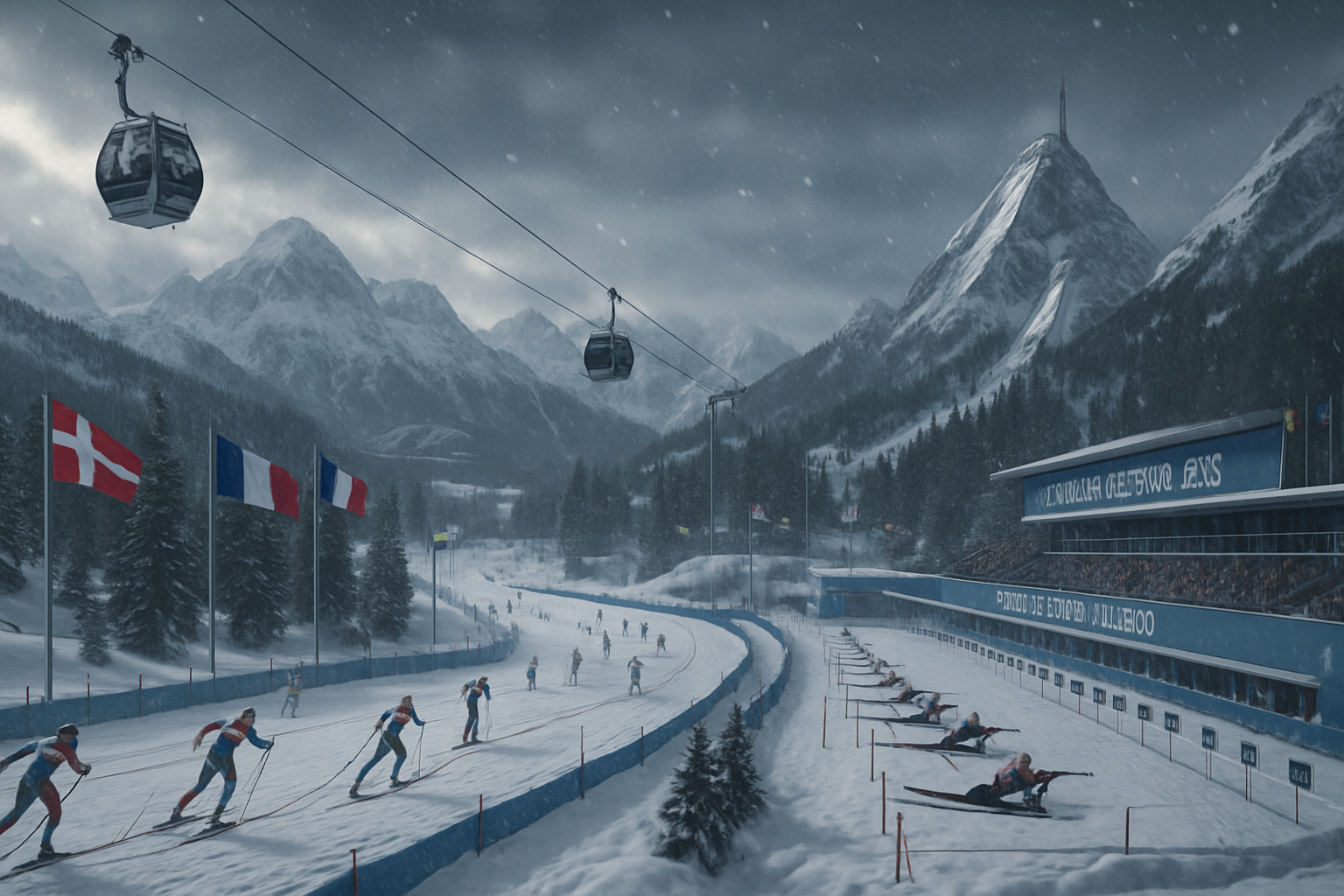
As the Milano-Cortina 2026 Winter Olympics enter their dramatic final phase, the penultimate day of competition on February 21 has delivered thrilling contests across multiple disciplines, with Norway's Johannes Høsflot Kläbo poised to make Olympic history in his quest for a record-breaking sixth gold medal of these Games.
The most geographically dispersed Winter Olympics in history, spanning over 400 kilometers across northern Italy's spectacular Alpine venues, continues to showcase unprecedented global competitiveness as traditional winter sports powerhouses face their strongest challenges ever from emerging nations across six continents.
Kläbo's Historic Pursuit
Norwegian cross-country skiing legend Johannes Høsflot Kläbo stands on the brink of Olympic immortality as he prepares for the men's 50km mass start classic, his final opportunity to claim a sixth gold medal at Milano-Cortina 2026. Already the most decorated Winter Olympian in history with 10 career golds, Kläbo has dominated these Games with five victories, including his record-breaking achievement in the men's cross-country team sprint that made him the most successful individual Winter Olympic athlete ever.
"Once again, it's going so incredibly well. I'm ready for one final effort,"
— Johannes Høsflot Kläbo, Norwegian Cross-Country Skiing Champion
The 29-year-old's pursuit of six golds in a single Olympics would represent an unprecedented achievement in Winter Olympic history, cementing his status as one of the greatest athletes the Games have ever witnessed. His commanding performances throughout Milano-Cortina 2026 have showcased the technical mastery and endurance that have defined his remarkable career.
French Biathlon Excellence
France continues its exceptional biathlon campaign with both male and female athletes positioned to conclude the Games with historic success. The French biathlon team has already secured a remarkable 10 medals in the discipline alone, contributing to France's record-breaking Winter Olympic performance with 19 podium finishes.
Julia Simon, who has captured three Olympic titles at these Games, leads the French women's biathlon contingent alongside Lou Jeanmonnot, who achieved the remarkable feat of becoming the first French woman to win four medals at a single Winter Olympics. Their dominance in the women's mass start biathlon (12.5km) scheduled for Saturday represents France's final opportunity to reach the symbolic 20-medal milestone.
The French men's biathlon squad, fresh from their historic first-ever Olympic relay gold medal, will compete in their own mass start event, with Eric Perrot leading the charge after his decisive contribution to France's relay victory over traditional powerhouses Norway and Sweden.
Ski Mountaineering Makes Olympic History
The historic Olympic debut of ski mountaineering has captured global attention, with athletes combining the technical precision of alpine skiing with the endurance demands of mountain climbing. This revolutionary addition to the Olympic program represents the perfect fusion of traditional Alpine sports with modern athletic innovation.
German athletes, including Tatjana Paller, have emerged as strong contenders in this premiere discipline, demonstrating the sport's appeal to mountaineering nations worldwide. The inclusion of ski mountaineering at Milano-Cortina 2026 reflects the Games' commitment to evolving with contemporary winter sports while maintaining traditional Olympic values.
Global Winter Sports Revolution
These Games have witnessed an unprecedented democratization of winter sports, with breakthrough performances from nations traditionally outside the winter sports mainstream. Australia has achieved its most successful Winter Olympics ever, with multiple gold medals challenging the established hierarchy of winter sports nations.
The Netherlands' remarkable success in short track speed skating, including their men's relay gold medal victory, exemplifies how geographic boundaries no longer limit Olympic aspirations. Their triumph ended years of near-misses and delivered one of the most emotionally charged victories of the Games.
Estonia's impressive showing, including Henry Sildaru's silver medal in men's freeski halfpipe and Niina Petrõkina's advancement in women's figure skating, demonstrates how emerging winter sports nations are reshaping Olympic competition. Latvia's record-breaking 68-athlete delegation has consistently achieved top finishes across multiple disciplines.
Swedish Struggles and Redemption Hopes
Sweden faces the prospect of a historically disappointing cross-country skiing performance, with their men's team still seeking their first medal in Nordic events. The traditional winter sports powerhouse has experienced unexpected struggles in disciplines where they once dominated, creating intense pressure for final-day redemption.
However, Swedish athletes remain competitive in biathlon and skicross events, with the Mobärg brothers, David and Erik, both positioned as medal contenders in men's skicross competition. The prospect of Swedish siblings sharing an Olympic podium has captured national imagination and provided hope for concluding the Games on a positive note.
"Just imagine getting to share the podium at the Olympics... That would be incredible,"
— David Mobärg, Swedish Skicross Athlete
Technological and Operational Innovation
Milano-Cortina 2026 has successfully proven that revolutionary Olympic hosting models can maintain the highest competitive standards while embracing environmental sustainability. The dual-city format spanning over 400 kilometers has operated seamlessly despite initial infrastructure challenges, including incomplete cable car systems and venue construction delays.
The Games have featured groundbreaking technological integration, including the first Olympic deployment of Alibaba's Qwen AI language model system and OMEGA's AI-powered figure skating analysis. These innovations have enhanced both the spectator experience and athletic performance evaluation while setting new standards for future Olympic broadcasting.
Cultural authenticity has been maintained through bilingual place names in the German-speaking Alto Adige/South Tyrol region, sustainable Olympic villages featuring greenhouse spaces, and the popular Gen Z mascots Milo and Tina, which have resonated globally with younger audiences.
Ice Hockey Championship Drama
The men's ice hockey tournament reaches its climax with Finland and Slovakia competing for the bronze medal, adding another layer of excitement to the final day. The tournament has showcased the global evolution of hockey talent, with NHL-caliber competition across multiple nations demonstrating the sport's continued international growth.
Canada and the United States secured their positions in the gold medal final, setting up a classic North American showdown that promises to deliver one of the Games' most anticipated competitions.
Legacy of Milano-Cortina 2026
As these remarkable Games approach their conclusion on February 22, Milano-Cortina 2026 has established new paradigms for Olympic hosting that combine traditional athletic excellence with 21st-century innovation and environmental responsibility. The revolutionary dual-city model has proven that sustainable, geographically distributed hosting can maintain competitive integrity while addressing contemporary concerns about Olympic environmental impact.
The unprecedented global competitiveness has demonstrated that winter sports excellence is no longer geographically confined, with athletes from every continent achieving breakthrough performances that would have been unimaginable just decades ago.
Most significantly, these Games have maintained the fundamental Olympic values of international cooperation and peaceful competition while navigating complex geopolitical challenges, from cyberattack threats to diplomatic tensions. The success of Milano-Cortina 2026 in delivering world-class competition amid these challenges reinforces the Olympic movement's enduring relevance in an increasingly connected yet complex world.
With Norway leading the medal standings but facing unprecedented global competition, Italy demonstrating exceptional home-nation performance, and breakthrough nations reshaping winter sports demographics, the final day promises to conclude one of the most democratically competitive and innovatively hosted Winter Olympics in history.
The stage is set for a dramatic finale that will determine not only the remaining medal winners but also establish lasting legacies for Olympic hosting, winter sports development, and international sporting cooperation in the modern era.