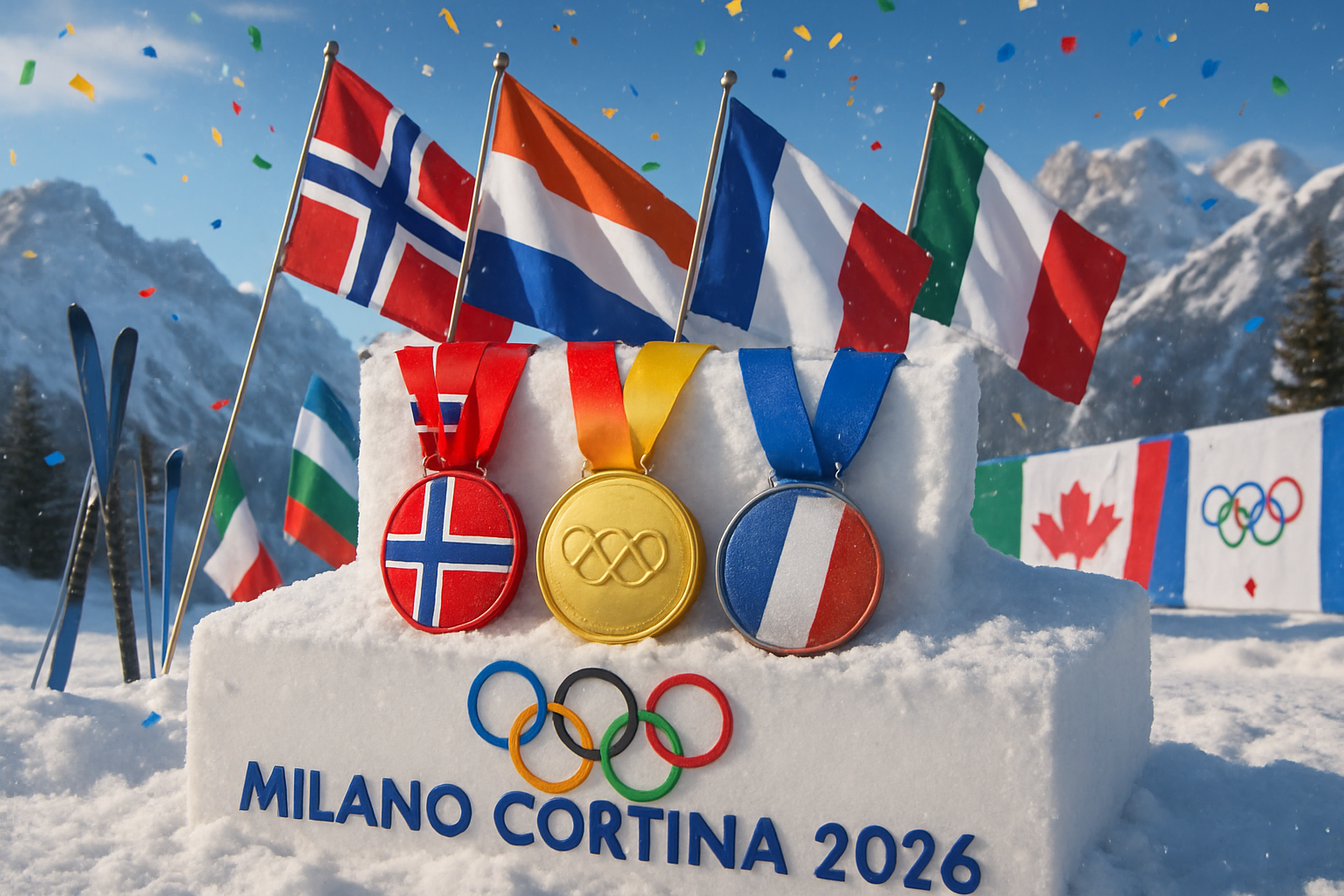
Johannes Høsflot Klæbo capped an extraordinary Milano Cortina 2026 Winter Olympics by claiming his sixth gold medal in the men's 50km cross-country skiing mass start, setting a new record for most Olympic golds won at a single Winter Games while cementing his status as the most decorated Winter Olympian in history.
The 29-year-old Norwegian cross-country skiing legend completed his historic achievement on the final day of competition, breaking American speed skater Eric Heiden's record of five gold medals from the 1980 Lake Placid Games. Klæbo's triumph in the grueling 50km classic race also made him the first athlete ever to win all six cross-country skiing events at a single Olympics.
Record-Breaking Norwegian Dominance
Norway's supremacy at Milano Cortina 2026 was absolute, with the Nordic nation securing 17 gold medals and 33 total medals - both Winter Olympic records. Klæbo's individual medal haul of six golds brought his career total to an unprecedented 11 Olympic titles, surpassing the previous record of eight held by fellow Norwegians Bjørn Dæhlie, Ole Einar Bjørndalen, and Marit Bjørgen.
"It's unbelievable. After [winning] the World Championships last year, we knew that it was possible, but to be able to do it, it's hard to find the right words," Klæbo said after his historic victory.
— Johannes Høsflot Klæbo, Norwegian Cross-Country Skier
The Norwegian podium sweep in the men's 50km classic, with Martin Loewstroem Nyenget and Andreas Skoglund joining Klæbo on the podium, epitomized their dominance in Nordic skiing disciplines throughout the Games.
Dutch Speed Skating Excellence
The Netherlands continued their speed skating supremacy with Marijke Groenewoud and Jorrit Bergsma capturing gold medals in the men's and women's mass start events respectively. These victories brought the Dutch medal total to 20, with their "gold rush" on the ice oval at Milan's speed skating venue providing some of the Games' most thrilling moments.
Austria's speed skating representatives also delivered impressive performances, with 19-year-old Jeannine Rosner finishing eighth in the mass start for her first Olympic top-ten result, while Gabriel Odor secured 12th place, improving on his tenth-place finish from Beijing 2022.
French Biathlon Breakthrough
France achieved their most successful Winter Olympics performance in decades, with 23-year-old Océane Michelon claiming gold in the women's biathlon mass start. The emotional victory marked Michelon's third podium appearance at Milano Cortina 2026, establishing her as a rising star in the discipline.
Her teammate Julia Simon, who won silver in the same event, praised Michelon as "a future great name" on the biathlon circuit. France's biathlon team contributed significantly to their record 19 medals at the Games, including an unprecedented 10 medals in biathlon alone.
Ski Mountaineering Makes Olympic Debut
One of the Games' most significant moments came with the Olympic debut of ski mountaineering, where Emily Harrop and Thibault Anselmet secured France's gold medal in the mixed relay event. The French duo dominated the race from start to finish at Bormio, providing a perfect introduction for the sport's inaugural Olympic appearance.
"We're happy about the Olympic gold and the beautiful image of ski-mountaineering at the 2026 Olympics," the French pair said after their victory.
— Emily Harrop and Thibault Anselmet, French Ski Mountaineers
Global Winter Sports Revolution
Milano Cortina 2026 will be remembered as the Games that truly globalized winter sports. Austria's impressive medal haul of 18 medals, equaling their Beijing 2022 total, included breakthrough performances and veteran achievements alike. The Austrian team celebrated five gold medals and 56 diploma places among the top six finishers.
The Games featured unprecedented participation from six continents, with historic debuts from Saudi Arabia, Caribbean bobsled teams from Jamaica and Trinidad & Tobago, and Latvia's record-breaking 68-athlete delegation. Australia achieved their most successful Winter Olympics ever with multiple gold medals, while Kazakhstan's Mikhail Shaidorov delivered one of the Games' biggest upsets by winning men's figure skating gold.
Revolutionary Hosting Success
The Milano Cortina 2026 Games proved that the most geographically dispersed Winter Olympics in history could maintain the highest competitive standards. Spanning over 400 kilometers across seven venues from Milan to Cortina d'Ampezzo, the revolutionary dual-city hosting model successfully combined environmental sustainability with athletic excellence.
The Games showcased technological innovations including the first Olympic deployment of AI systems (Alibaba Qwen and OMEGA analysis), while cultural elements such as bilingual Alto Adige/South Tyrol place names and sustainable Olympic villages with greenhouse spaces demonstrated how tradition could blend with 21st-century innovation.
Legacy of Excellence
As the Olympic flame was extinguished in both Milan and Cortina, Milano Cortina 2026 had established new paradigms for Olympic hosting while delivering unforgettable sporting moments. From Klæbo's historic six-gold achievement to breakthrough performances from athletes across the globe, these Games demonstrated that winter sports excellence truly knows no geographic boundaries.
Austrian Olympic Committee President Horst Nussbaumer captured the sentiment perfectly: "I am very satisfied," he said, reflecting on his nation's performance and outlining plans to build on this success for future Games.
The Milano Cortina 2026 Winter Olympics concluded having set new standards for sustainable Olympic hosting, global participation, and athletic achievement, leaving a lasting legacy that will influence future Games for years to come.