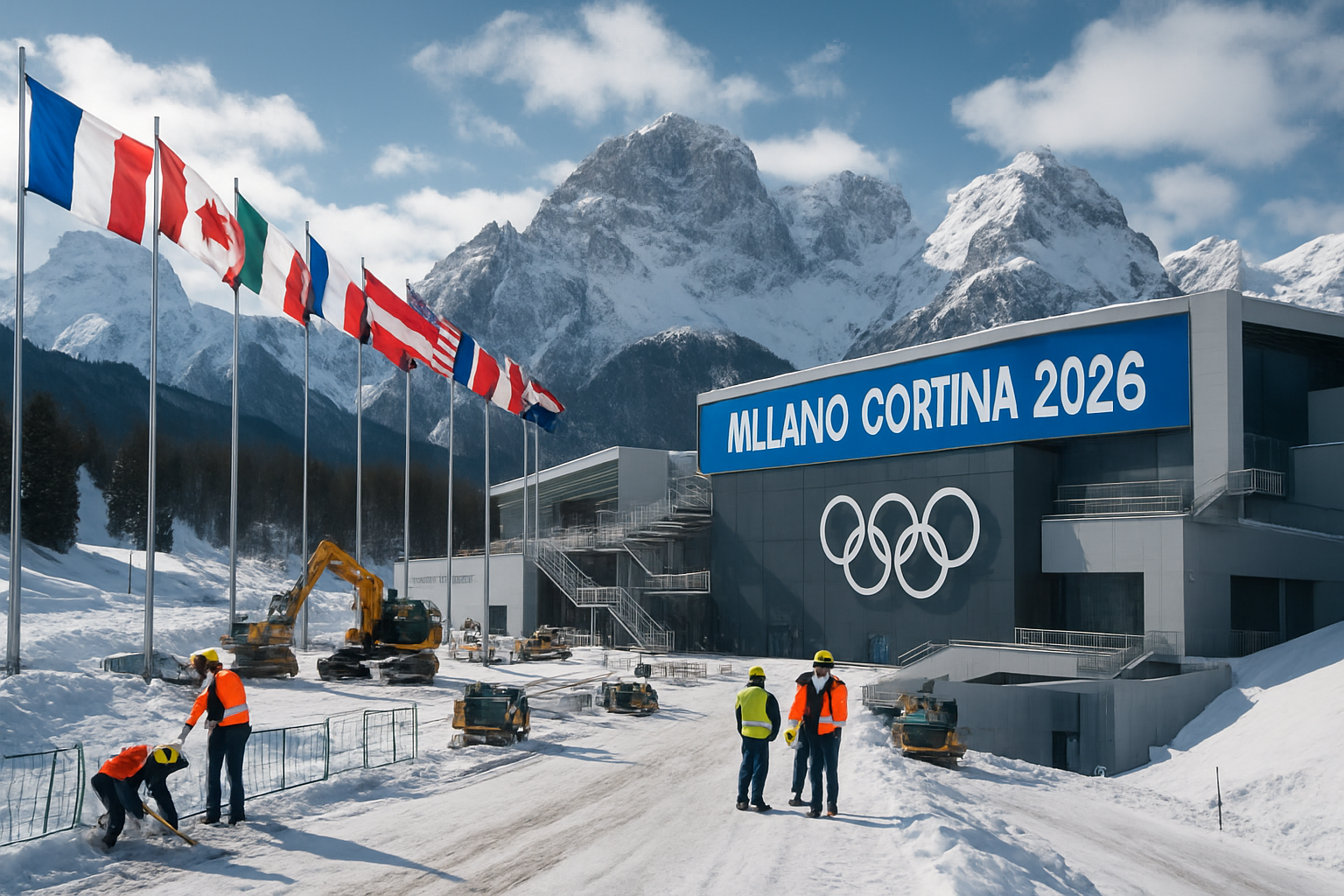
The countdown has entered its final stage for the Milano-Cortina 2026 Winter Olympic Games, with nations announcing their flag bearers and organizers racing to complete venue preparations just days before the February 6 Opening Ceremony at Milan's San Siro stadium.
As the world's attention turns to northern Italy, the most geographically dispersed Winter Olympics in history faces both triumph and challenges in its final hours of preparation. With events scheduled across seven venues spanning the Italian Alps, teams have been arriving at Olympic villages in Milan and Cortina d'Ampezzo since February 3, bringing together over 1,500 athletes from around the globe.
Flag Bearer Announcements Mark Olympic Tradition
Countries have been unveiling their flag bearers for Friday's Opening Ceremony, highlighting the diversity of nations participating in these Winter Games. Australia named mogul skiing champions Jakara Anthony and Matt Graham as their flag bearers, both bringing considerable Olympic experience to the honor.
Norway selected biathlete Kajsa Vickhoff Lie and cross-country skier Peder Kongshaug to carry their nation's flag in what promises to be a spectacular ceremony. The United States chose figure skater Jackson as their flag bearer, with teammates praising the selection as recognition of a trailblazer in the sport.
Saudi Arabia confirmed its participation with a two-athlete delegation, marking the Kingdom's growing presence on the Olympic stage. Fayik Abdi will compete in alpine skiing while Rakan Aliriza represents Saudi Arabia in cross-country skiing, reflecting the nation's sustained efforts to expand participation across winter sports disciplines.
Ice-Making Excellence: Canadian Expertise in Focus
Behind the scenes, Canadian ice masters Don Moffatt and Mark Messer are working to create perfect surfaces for hockey and long-track speed skating events. Their expertise represents decades of experience in crafting Olympic-quality ice, ensuring athletes will compete on surfaces meeting the highest international standards.
"We're committed to delivering NHL-quality ice standards for these Games,"
— Don Moffatt, Ice-Making Specialist
The ice-making process has taken on additional significance given the last-minute construction challenges at some venues. Despite "frantic" work continuing at the main ice hockey venue, organizers express confidence that all competitions will proceed as planned.
Venue Preparations and Infrastructure Challenges
The Milano-Cortina 2026 Games face unique logistical challenges as the most dispersed Winter Olympics ever staged. Construction crews are working around the clock to complete final preparations, with particular focus on transportation links between venues across northern Italy.
One significant challenge involves the incomplete Apollonio-Socrepes cable car in Cortina, which has forced local authorities to implement school closures to ease transport management during the Games. This infrastructure shortfall highlights the complex logistics of staging events across such a wide geographic area.
Despite these challenges, the Olympic villages showcase impressive sustainable design features, including greenhouse spaces and wood construction materials. The Milan village alone has capacity for 3,500 athletes and features what organizers call a "signature for peace" in its architectural design.
Technology and Broadcasting Innovation
The 2026 Games will feature cutting-edge technology integration, with Alibaba Cloud partnering with Olympic Broadcasting Services and the International Olympic Committee to deploy advanced AI and cloud technologies. This collaboration marks another step in the IOC's transition toward cloud-based, AI-enabled broadcasting.
Alibaba's Qwen technology will power the first use of Large Language Model (LLM) technology at an Olympics, supporting smarter and more efficient broadcasting worldwide. These innovations are designed to enhance viewing experiences for global audiences while improving operational efficiency for broadcasters.
Team USA's Naming Controversy
An unusual diplomatic sensitivity emerged around Team USA's Olympics base camp, which had to change its name from "Ice House" to "Winter House." The name change reflects broader political tensions but demonstrates the careful attention to diplomatic protocols surrounding these Games.
The United States delegation remains focused on competition despite the naming controversy, with figure skaters particularly enthusiastic about returning to a traditional Olympic village atmosphere after the COVID restrictions that characterized the Beijing 2022 Games.
Cultural and Environmental Considerations
The Games feature significant cultural innovations, including the implementation of bilingual place names in Alto Adige/South Tyrol, acknowledging the German-speaking population that comprises two-thirds of the region. This represents a historic accommodation of linguistic diversity within the Olympic framework.
Environmental concerns have centered on the extensive use of artificial snow production across venues, requiring substantial water and energy resources. However, organizers emphasize their commitment to sustainability through various green initiatives integrated into venue design and operations.
Competition Schedule and Expectations
Competition begins February 5 with curling events, while women's downhill training commences February 6. The Games will run through February 22, featuring 16 different sports and bringing together hundreds of the world's best winter athletes.
The return of the Winter Olympics to the Alps after a 20-year absence adds historical significance to these Games. IOC President Kirsty Coventry, presiding over her first Winter Olympics, has acknowledged the "bumpy" preparations while promising "unforgettable" Games for athletes and spectators alike.
Media Coverage and Global Interest
International broadcasters are positioning extensive coverage of the Games, with specialized programming highlighting both competition and cultural elements. The geographic diversity of venues provides unique storytelling opportunities, showcasing different regions of northern Italy's Alpine landscape.
The Games' mascots, Milo and Tina, have been dubbed the "first Gen Z" Olympic mascots, reflecting efforts to connect with younger global audiences through contemporary cultural references and social media engagement strategies.
As final preparations intensify in these crucial hours before competition begins, the Milano-Cortina 2026 Winter Olympics stand poised to deliver a unique celebration of winter sport against the dramatic backdrop of the Italian Alps, combining traditional Olympic values with innovative approaches to sustainability, technology, and cultural inclusion.