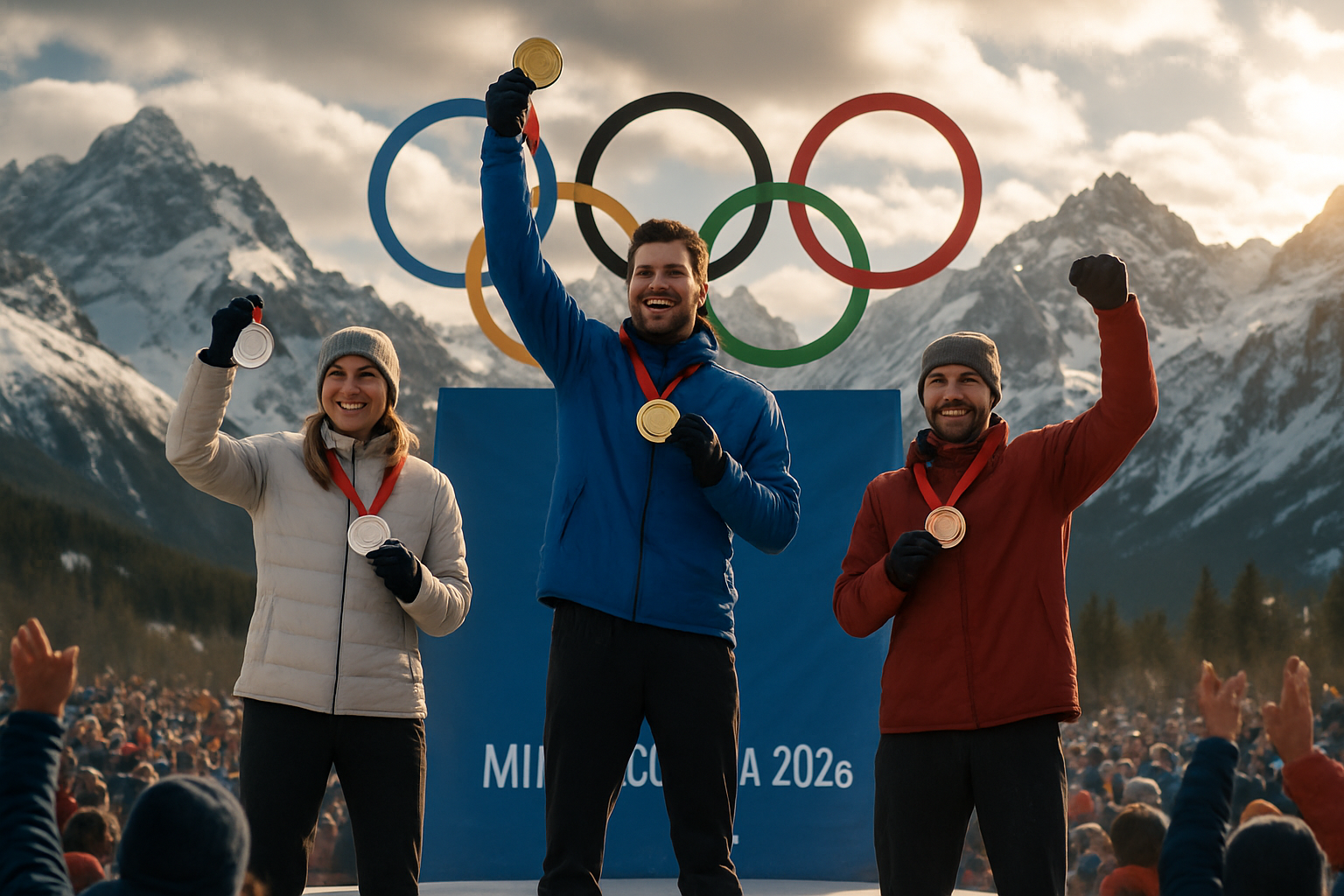
The seventh competitive day of Milano-Cortina 2026 delivered some of the most dramatic medal moments in Winter Olympic history, with Kazakhstan claiming its first-ever figure skating gold, Japan asserting dominance in snowboard halfpipe, and Australia extending its breakthrough Games performance.
Seven complete medal sets were distributed across multiple venues on February 13, 2026, as the most geographically dispersed Winter Olympics in history continued to showcase both athletic excellence and stunning upsets that have defined these revolutionary Games.
Kazakhstan's Golden Moment in Figure Skating
The day's most shocking result came from Milan's ice arena, where 21-year-old Mikhail Shaidorov delivered one of the greatest upsets in Olympic figure skating history. The Kazakhstani skater, who entered the competition ranked fifth after the short program, produced a flawless free skate performance to claim gold with 291.58 points.
Shaidorov's victory represents Kazakhstan's first-ever Olympic medal in figure skating and stands as one of the defining moments of Milano-Cortina 2026. The young athlete's composed performance under pressure exemplified the unpredictable nature that has characterized these Games.
"I knew I had to skate perfectly, and everything just came together,"
— Mikhail Shaidorov, Kazakhstan's figure skating champion
Japan's Yuma Kagiyama earned silver with 280.06 points, matching his Beijing 2022 performance, while compatriot Shun Sato claimed bronze. The podium finish represented a triumphant moment for Japanese figure skating despite missing out on gold.
American Disappointment: Malinin's Olympic Nightmare
In one of the most shocking collapses in Olympic history, American superstar Ilia Malinin finished eighth in men's figure skating after entering as the overwhelming favorite. The 17-year-old phenomenon, who had remained undefeated since 2023 and dominated the sport with his quad axel mastery, fell twice during his free skate program.
Malinin's devastating performance came just days after helping Team USA win the figure skating team event, making his individual competition failure all the more dramatic. The result highlighted the intense pressure and unpredictability that defines Olympic competition at its highest level.
Japanese Halfpipe Excellence
Japan continued its snowboarding success at the Livigno Snow Park, where Yuto Totsuka captured men's snowboard halfpipe gold with a masterful performance. The victory prevented Australia's Scotty James from achieving his long-sought Olympic gold, relegating the three-time Olympic medalist to silver once again.
Australia's Scotty James, who has become winter sports royalty despite never winning Olympic gold, delivered another exceptional performance but fell just short of his ultimate goal. His silver medal adds to his collection from previous Games, cementing his status as one of the sport's greatest competitors despite the elusive gold.
Japan's Ryusei Yamada earned bronze, with compatriot Ruka Hirano finishing fourth, demonstrating the nation's depth in snowboard halfpipe disciplines.
Australia's Golden Touch Continues
Australia's remarkable Milano-Cortina 2026 campaign continued with Josie Baff's stunning gold medal in women's snowboard cross. The victory marked Australia's second gold medal at these Games, following Cooper Woods' historic moguls triumph earlier in the week.
Baff's victory exemplifies the "self-belief utilized to its fullest extent" that has characterized Australia's breakthrough performance at these Games. The success has positioned Australia as an emerging force in winter sports, challenging traditional powerhouses with unexpected excellence.
Biathlon and Cross-Country Skiing Results
France's Quentin Fillon Maillet added to his growing Milano-Cortina medal collection with gold in men's biathlon sprint, achieving his fourth Olympic title and matching the seven-medal total of French biathlon legend Martin Fourcade. His performance under the brilliant sunshine at Südtirol Arena d'Anterselva, perched at 1,600 meters altitude, demonstrated the technical precision that has made him one of the sport's elite performers.
Norway's Johannes Høsflot Klæbo made history in a different way, tying the all-time Winter Olympic individual gold medal record with his eighth career triumph. The Norwegian cross-country skiing legend's achievement in men's sprint classic moved him alongside biathlon great Ole Einar Bjørndalen and cross-country icon Marit Bjørgen in the Olympic record books.
"Now I feel complete. This record means everything to me and Norwegian cross-country skiing,"
— Johannes Høsflot Klæbo after tying the Olympic record
Skeleton Success for Great Britain
Great Britain secured its first medal of Milano-Cortina 2026 through Matt Weston's dominant performance in men's skeleton. The 26-year-old British racer delivered emphatic victory at the Cortina d'Ampezzo sliding track, demonstrating technical mastery across four runs on the challenging Eugenio Monti course.
Weston's triumph represents Great Britain's first skeleton gold since Amy Williams at Vancouver 2010, validating British Skeleton development programs and highlighting the global expansion of sliding sports excellence.
Germany continued its strong skeleton showing with Axel Jungk claiming silver and Christopher Grotheer earning bronze, though the competition was overshadowed by the controversial exclusion of Ukrainian athlete Vladyslav Heraskevych over his memorial helmet honoring fallen Ukrainian athletes.
Speed Skating and Other Disciplines
The Netherlands maintained its speed skating excellence with multiple medal contenders across various distances, while other disciplines continued to showcase the global democratization of winter sports that has defined these Games.
Cross-country skiing events demonstrated the continuing Nordic dominance while highlighting breakthrough performances from nations traditionally outside winter sports' elite circles.
Medal Standings Impact
Norway retained its position atop the medal standings with eight gold medals and 18 total medals, though Italy remained competitive with six gold medals and 18 total medals, benefiting significantly from home advantage across the revolutionary dual-city hosting format.
The United States occupied third place with four gold medals and 14 total medals, while the day's results continued to demonstrate the increasing competitiveness and global reach of winter sports competition.
Ongoing Challenges and Triumphs
Day seven continued to highlight both the operational successes and ongoing challenges of hosting the most geographically dispersed Winter Olympics in history. The 400+ kilometer venue network from Milan to Cortina d'Ampezzo has proven viable while showcasing sustainable hosting practices and technological innovations.
Despite infrastructure challenges including incomplete transportation systems and previous power outages, competition has proceeded successfully across all venues, demonstrating the resilience and adaptability that has characterized Milano-Cortina 2026.
Looking Forward
With competition continuing through February 22, the seventh day's medal distribution reinforced themes that have defined these Games: unpredictability, global competitiveness, breakthrough performances from unexpected nations, and the continuing evolution of winter sports excellence.
The day's events, from Shaidorov's stunning figure skating upset to Australia's continued golden success, exemplify the Olympic spirit of athletic achievement transcending national boundaries while creating unforgettable moments that will define Milano-Cortina 2026's legacy.
As the Games progress toward their conclusion, the seventh day's medal bonanza has set the stage for continued drama and athletic excellence across the spectacular venues of northern Italy's Alpine region.