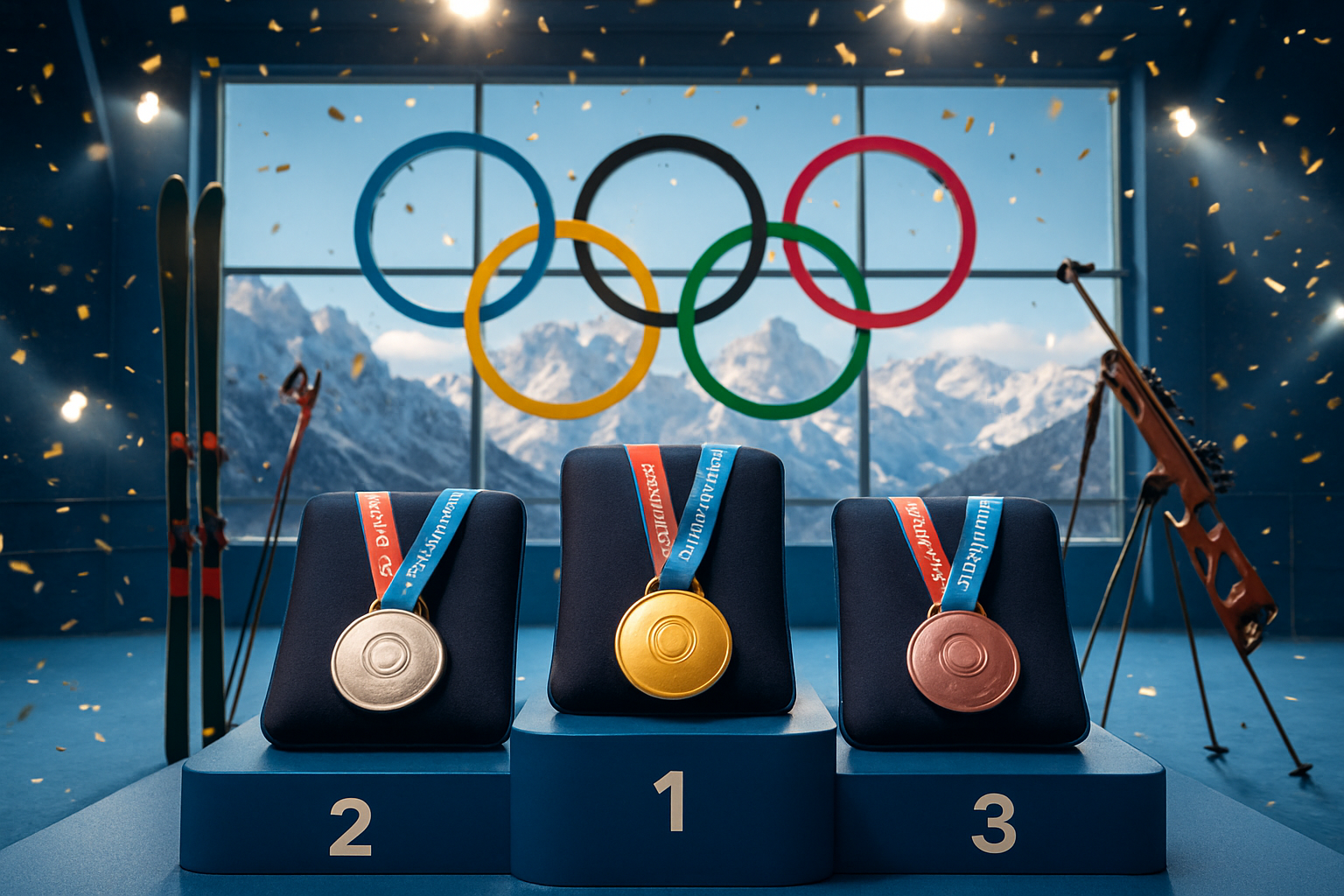
The Milano-Cortina 2026 Winter Olympics reached a crescendo of athletic excellence on February 15, as Italian biathlete Lisa Vittozzi captured a historic gold medal with a flawless performance, while Norway's Johannes Høsflot Klæbo cemented his legacy as the most decorated Winter Olympian of all time with his ninth career gold medal.
The day's events showcased the revolutionary dual-city hosting model spanning 400 kilometers across northern Italy's spectacular Alpine venues, with competitions proceeding seamlessly despite earlier infrastructure challenges that had threatened the Games' success.
Historic Italian Breakthrough in Biathlon
Lisa Vittozzi's triumph in the women's 10-kilometer biathlon pursuit at Antholz Arena marked a watershed moment for Italian winter sports. The 29-year-old delivered a masterclass performance, shooting without a single miss across all four stages to finish 28.8 seconds ahead of Norway's Maren Kirkeeide and 34.4 seconds clear of Finland's Suvi Minkkinen.
"This is a moment I will remember forever. To win gold here in Italy, with this atmosphere, it's incredible,"
— Lisa Vittozzi, Italy
The victory came just 40 minutes after Italian alpine skiing queen Federica Brignone's dramatic giant slalom triumph in Cortina, creating a golden hour that sent the host nation into raptures. Vittozzi's gold represents Italy's first-ever Olympic biathlon victory in an individual women's event, ending decades of near-misses and establishing the 21st medal of Italy's remarkable Milano-Cortina campaign.
The Austrian team struggled significantly in the challenging conditions, with Anna Andexer finishing as the highest-placed ÖOC representative in 21st place, while Lisa Hauser and Anna Gandler both suffered from costly shooting errors that ended their medal hopes early in the race.
Klæbo Makes Olympic History
At Val di Fiemme, Norwegian cross-country skiing legend Johannes Høsflot Klæbo added to his extraordinary legacy by securing his ninth Olympic gold medal as part of Norway's dominant men's 4x7.5km relay team. The 29-year-old's latest triumph saw him surpass the previous record of eight gold medals held jointly by Bjørn Dæhlie, Ole Einar Bjørndalen, and Marit Bjørgen.
Emil Iversen was visibly emotional during the victory ceremony, paying tribute to Klæbo's unprecedented contribution to Norwegian Olympic success. The achievement represents not just personal excellence but the continuation of Norway's systematic dominance in Nordic disciplines that has defined their Winter Olympic legacy.
"I wouldn't be here without my grandfather. This record means everything to me and to Norway,"
— Johannes Høsflot Klæbo, Norway
Canada's Moguls Breakthrough
Canada finally secured their first gold medal of the Milano-Cortina Games through the artistry of Mikaël Kingsbury, who won the men's dual moguls event at Livigno Snow Park. The 31-year-old veteran defeated Japan's Ikuma Horishima in a thrilling final, with Australia's Matt Graham claiming bronze in what represented the third medal for Australia's impressive moguls contingent.
Kingsbury's victory provided an emotional climax to what had been a challenging Games for the Canadian team, with the gold medal ending a medal drought that had persisted through the first week of competition. The triumph was particularly sweet for Kingsbury, coming in what he has indicated will be his final Olympic appearance.
Speed Skating Drama in Netherlands
The speed skating oval in Milan witnessed one of the day's most compelling storylines as Dutch star Femke Kok claimed the women's 500-meter gold medal with a new Olympic record time of 36.69 seconds. The victory was made all the more dramatic by the fact that Kok defeated her compatriot and social media sensation Jutta Leerdam, who had to settle for silver after leading through most of the competition.
Leerdam, who had previously won gold in the 1000 meters earlier in the Games, was gracious in defeat despite the disappointment of missing out on a second title. The Dutch success continued their remarkable speed skating dominance, with the Netherlands having claimed multiple medals across various distances throughout the Milano-Cortina Games.
Global Breakthrough Performances
The day also witnessed remarkable achievements from traditionally non-winter sports nations. Bulgarian biathlete Lora Hristova finished seventh in the women's pursuit with flawless shooting, building on the nation's breakthrough medal success earlier in the Games that ended a 20-year Winter Olympic drought.
Sweden's Martin Ponsiluoma delivered a masterful performance to win the men's biathlon pursuit, providing his nation with a crucial gold medal in a discipline where they had struggled in recent Olympic cycles. The victory was emotional for the 30-year-old, who has faced criticism and calls to switch to cross-country skiing throughout his career.
"There has been talk that I should go to cross-country skiing instead, but I have stood by this in an impressive way,"
— Hanna Öberg on Martin Ponsiluoma's persistence
Snowboarding Qualifying Drama
At Livigno Snow Park, Austrian snowboarding icon Anna Gasser secured her place in the women's slopestyle final, finishing fifth in qualification for what will be her final Olympic appearance. The 34-year-old double Olympic champion in Big Air demonstrated her class despite challenging conditions, ensuring she will have one last chance to add to her medal collection before retirement.
The qualification sessions also saw breakthrough performances from younger athletes, with Ukraine's Kateryna Kotsar securing 11th place in freestyle skiing to advance to the medal round, where she received an engagement proposal on Valentine's Day, adding a romantic subplot to the sporting drama.
Revolutionary Hosting Success
The February 15 competitions highlighted the unprecedented success of the Milano-Cortina dual-city hosting model, which has proven that geographically dispersed Olympic venues can maintain the highest competitive standards while promoting environmental sustainability.
The integration of artificial intelligence technology, including Alibaba's Qwen system and OMEGA's AI-powered analysis, has enhanced both the competition experience and broadcast quality, setting new standards for future Olympic Games.
Cultural innovations such as bilingual Alto Adige/South Tyrol place names and the popular Gen Z mascots Milo and Tina have successfully bridged Italy's diverse linguistic heritage while appealing to global audiences.
Looking Ahead
With competition continuing through February 22, the Milano-Cortina Games have already established themselves as a watershed moment in Olympic history. The combination of breakthrough performances from emerging nations, record-setting achievements from established stars, and successful implementation of sustainable hosting practices has created a template for future Winter Olympics.
Norway maintains its overall medal lead, but the unprecedented depth of global competition has created the most open medal race in Winter Olympic history. From Australia's historic winter sports emergence to Kazakhstan's figure skating breakthrough and Brazil's first alpine gold, the 2026 Games have demonstrated that excellence in winter sports truly knows no geographic boundaries.
As the most geographically dispersed Olympics in history draws toward its conclusion, the Milano-Cortina Games have proven that innovation, sustainability, and athletic excellence can coexist to create an unforgettable celebration of international sport and cooperation.