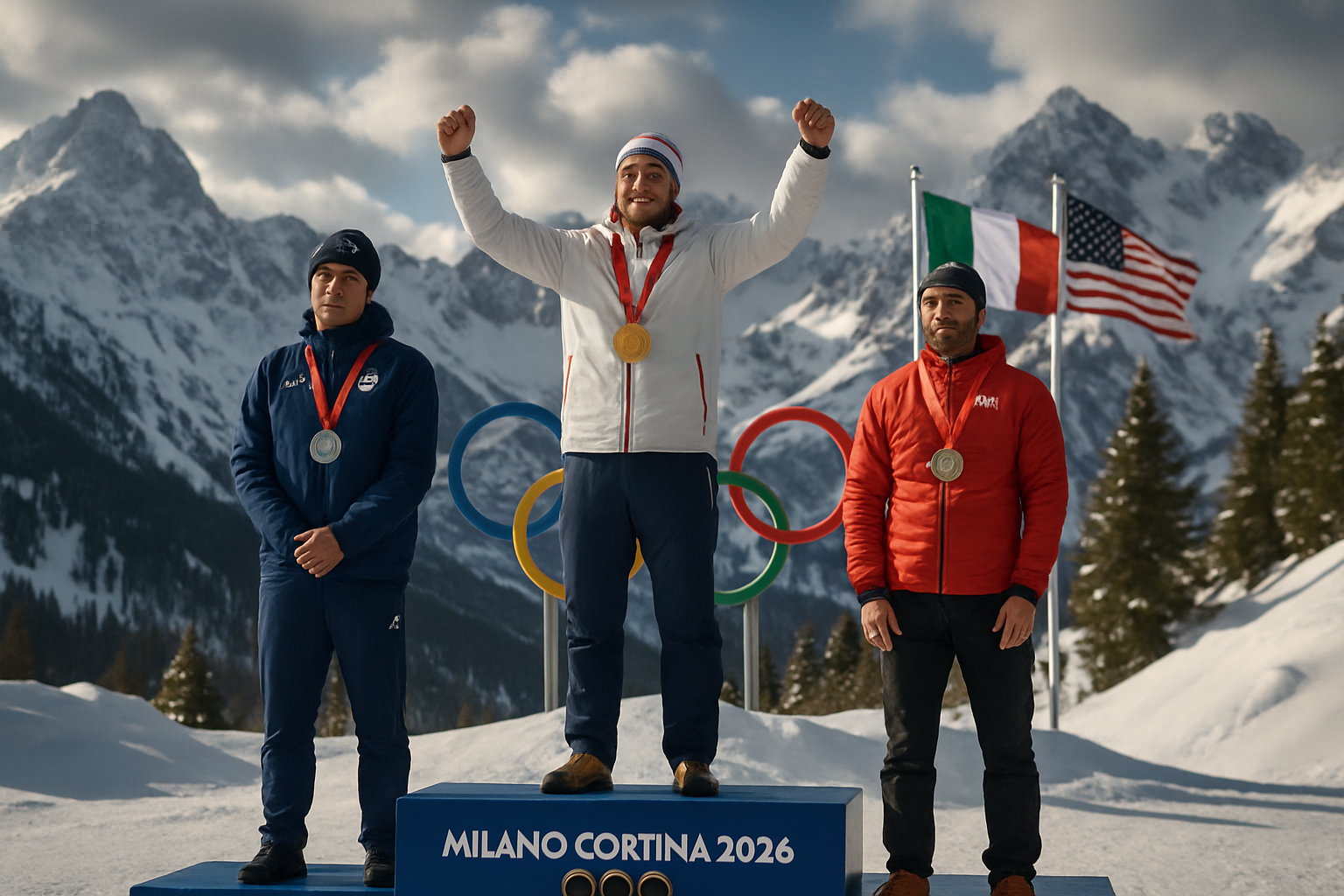
Saturday, February 14, 2026, proved to be a defining day at the Milano-Cortina Winter Olympics, with multiple medal events delivering stunning performances, emotional victories, and historic achievements across the most geographically dispersed Olympic Games in history.
Austrian Skeleton Success: Janine Flock's Golden Redemption
The day's most emotionally charged victory came at the Eugenio Monti track in Cortina d'Ampezzo, where 36-year-old Austrian skeleton racer Janine Flock finally claimed the Olympic gold medal that had eluded her for years. The Tyrolean athlete managed her lead after three runs in the ice channel, securing victory in the final run ahead of Germany's Susanne Kreher (+0.30 seconds) and Jacqueline Pfeifer (+0.44).
Flock's victory represented a powerful redemption story, as the 2018 PyeongChang Olympics had ended in heartbreak when she lost an Olympic medal by just two hundredths of a second despite leading after three runs. This time, eight years later, she maintained her composure and delivered when it mattered most.
"I haven't cried this much in a long time. This completes my career."
— Janine Flock, Olympic Skeleton Champion
The Austrian military athlete's success was celebrated across Austria, with the Austrian Armed Forces highlighting their soldier's achievement. Flock's gold medal represents Austria's continued excellence in sliding sports at the revolutionary Milano-Cortina Games.
Slovenian Ski Jumping Dominance: Domen Prevc's Historic Achievement
In Predazzo, Slovenia's ski jumping superstar Domen Prevc lived up to his pre-competition billing as the favorite by capturing gold in the men's large hill event. The victory marked Slovenia's first-ever Olympic gold medal in a men's individual ski jumping competition, representing a watershed moment for the Alpine nation's winter sports program.
Prevc, already the runaway World Cup leader and reigning Four Hills champion, launched his decisive attack from second place in the final round. His soaring jump to the longest distance of the day sealed the title in spectacular fashion, capping off what has been a dominant season for the 26-year-old athlete.
The gold medal served as redemption after Prevc's disappointing sixth-place finish on the normal hill earlier in the Games, an event won by Germany's Philipp Raimund. Japan's Ren Nikaido, who had led after the opening round, was forced to settle for silver after being overtaken by Prevc's superb second jump.
Global Medal Distribution Showcases Winter Sports Expansion
Saturday's competitions demonstrated the continued globalization of winter sports, with medals distributed across multiple continents and breakthrough performances from unexpected nations.
Short Track Speed Skating Results
The Netherlands' Jens van 't Wout added to his Olympic medal collection by winning gold in the men's 1,500-meter short track speed skating event. The victory marked van 't Wout's second Olympic short track gold medal, adding to his impressive haul from these Games.
South Korea's Hwang Dae-heon claimed silver in the same event, continuing his nation's strong showing in short track disciplines. The performance was particularly notable given Hwang's recent struggles with injury and poor form leading up to the Olympics.
Latvia's Roberts Krūzbergs delivered his nation's second medal of the 2026 Games by securing bronze in the 1,500m short track final, marking a historic achievement for Latvian winter sports. The medal represents Latvia's continued success at Milano-Cortina, with their record 68-athlete delegation performing exceptionally well.
Brazilian Alpine Skiing History
Perhaps the day's most surprising result came from the alpine skiing venue at Stelvio, where Brazil's Lucas Pinheiro Braathen claimed a historic gold medal in the men's giant slalom. The victory represents not only Brazil's first Winter Olympic gold medal but South America's inaugural triumph in winter sports competition.
Braathen's success was particularly remarkable given the challenging weather conditions, with heavy snowfall and reduced visibility making the course treacherous. The 25-year-old skier, who previously competed for Norway, overcame a difficult first run to deliver a commanding second-run performance that secured Brazil's place in Olympic history.
"This is Carnival in the Italian snow. We're celebrating in Brazil tonight!"
— Lucas Pinheiro Braathen, Brazil's First Winter Olympic Champion
Biathlon Excellence and European Dominance
The biathlon events at the Südtirol Arena d'Anterselva continued to showcase European excellence in the demanding sport. French biathletes maintained their strong showing throughout the Games, adding two additional medals to their impressive tally.
The mixed relay competition saw Norway claim another gold medal, with their team demonstrating the tactical awareness and shooting precision that has made them the world's premier biathlon nation. Italy secured a silver medal in front of their passionate home crowd, while Germany rounded out the podium with bronze.
Bulgaria's representatives, including Milena Todorova and Lora Hristova, continued their impressive campaign with strong performances that highlighted the global growth of biathlon beyond its traditional European strongholds. The Bulgarian team's success builds on Tervel Zamfirov's bronze medal in snowboard parallel giant slalom earlier in the Games, which ended Bulgaria's 20-year Olympic medal drought.
Operational Excellence Across Dispersed Venues
Saturday's competitions continued to validate the revolutionary dual-city hosting model employed by Milano-Cortina 2026. Despite spanning over 400 kilometers across northern Italy, the Games have maintained smooth operations and world-class competition standards.
The integration of artificial intelligence technology, including Alibaba's Qwen AI system for broadcasting and spectator services, has enhanced the Olympic experience while setting precedents for future Games. The success of the geographically dispersed format demonstrates the viability of more sustainable Olympic hosting models.
Cultural innovations, including the bilingual place names in Alto Adige/South Tyrol and the popular Gen Z mascots Milo and Tina, have created a unique atmosphere that celebrates both Italian heritage and international cooperation.
Looking Ahead: Medal Race Intensifies
With multiple medal events continuing through the weekend, the competition for overall national supremacy remains intense. Norway maintains its traditional position at the top of the medal table, but faces unprecedented challenges from a more globally competitive field than ever before.
The success of athletes from non-traditional winter sports nations – including Latvia's breakthrough performances, Bulgaria's ended drought, and Brazil's historic achievement – demonstrates the continued democratization of winter sports competition.
Sunday's events promise additional drama as the Milano-Cortina Games continue to deliver on their promise of being "unforgettable," combining athletic excellence with innovative hosting approaches that may well define the future of Olympic competition.
The remarkable stories emerging from Saturday's competitions – from Janine Flock's eight-year journey to redemption to Brazil celebrating its first winter gold – exemplify the Olympic spirit that transcends national boundaries and inspires athletes and spectators around the world.