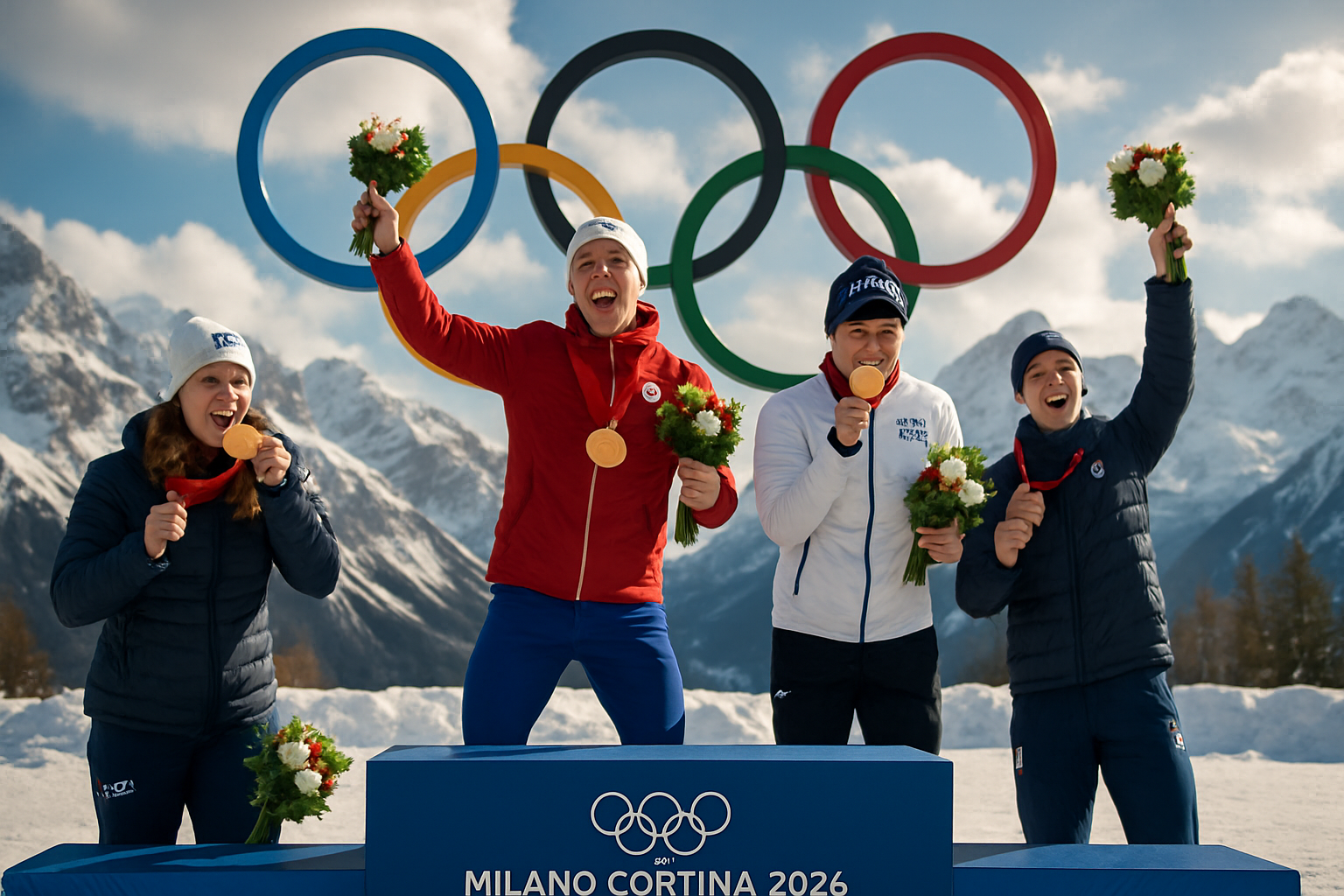
The Milano-Cortina 2026 Winter Olympics have delivered a compelling mix of athletic excellence and heart-wrenching drama, as competitors from around the globe battle for glory across Italy's stunning Alpine venues in the most geographically dispersed Winter Games in Olympic history.
Figure Skating Excellence Takes Center Stage
Team USA's figure skating dominance has emerged as one of the Games' defining storylines, with 17-year-old prodigy Ilia Malinin leading the charge to Olympic gold in the team event. The American squad accumulated 69 points to claim their second consecutive team title, narrowly edging Japan's 68 points in a thrilling competition that went down to the final performances.
"Es una sensación increíble. Para mí supone un gran honor, todos estamos felices por todo el trabajo que hemos hecho. No podríamos haber llegado aquí unos sin los otros," Malinin celebrated after securing his first Olympic gold medal, speaking in Spanish to international media.
Japan mounted a fierce challenge throughout the competition, with their skaters delivering technically brilliant performances that kept the final outcome in doubt until the closing moments. Italy, competing on home ice, captured bronze with 60 points, providing the passionate Italian crowds with moments of celebration amid their hosts' strong showing.
Tragedy Strikes on the Alpine Slopes
The Games took a devastating turn when American skiing legend Lindsey Vonn's remarkable comeback attempt ended in a catastrophic crash during the women's downhill event. Racing with start number 13 on Cortina's treacherous Tofana course, the 41-year-old champion lost control just 13 seconds into her run after clipping a gate with her right shoulder.
Vonn's spectacular tumble down the mountainside left her motionless on the snow in obvious pain before helicopter evacuation to hospital. The crash was particularly heartbreaking given that she was competing just nine days after completely rupturing her ACL in a training accident at Crans-Montana, making her Olympic participation an unprecedented act of athletic courage.
Despite the tragedy overshadowing the event, competition continued with American teammate Breezy Johnson claiming gold in a masterful performance, though celebrations were notably muted out of concern for Vonn's condition. Medical officials confirmed Vonn suffered a broken left leg and was in stable condition at the hospital.
Global Participation Showcases Winter Sports Growth
The Milano-Cortina Games have demonstrated the remarkable global expansion of winter sports, with historic participation from nations traditionally outside the winter Olympic movement. K-pop star Sunghoon of Enhypen carried the Olympic torch in a ceremonial role, highlighting South Korea's growing prominence in winter sports after retiring from competitive figure skating.
Bulgaria's Vladimir Zografski represents his nation's hopes in ski jumping, serving as the lone Bulgarian competitor on Day 3 of competition as the small Balkan nation continues building its winter sports programs. His participation in the normal hill event at Predazzo symbolizes the democratization of winter Olympic competition beyond traditional Alpine and Nordic powerhouses.
Czech Republic's women's hockey team provided another compelling storyline with their 2-0 victory over Finland, earning their first Group A win and keeping quarter-final hopes alive. The victory came at Milano's Rho Ice Hockey Arena, one of seven venues spanning over 400 kilometers across northern Italy in this uniquely dispersed Olympic format.
Competition Highlights Across Multiple Disciplines
Monday's competition schedule promises continued excitement across multiple sports, with four medal sets to be awarded including women's freestyle skiing slopestyle, men's alpine skiing team combination, women's 1000m speed skating, and snowboarding parallel giant slalom.
Canada's Megan Oldham emerged as a medal contender in freestyle skiing after strong qualification performances at Livigno Snow Park, representing the nation's hopes for podium success in the technical aerial disciplines. Her performances during training runs have impressed international judges and positioned her among the favorites heading into finals.
The Games' unique geographic spread has created logistical challenges but also showcased Italy's diverse mountain regions, from Milan's urban Olympic facilities to Cortina's historic Alpine venues and Predazzo's Nordic skiing traditions. Despite infrastructure concerns including incomplete cable car systems and power outages affecting some venues, competition has proceeded successfully.
Technology and Sustainability Define Modern Olympics
Milano-Cortina 2026 represents a revolutionary approach to Olympic hosting, with Alibaba's Qwen AI serving as the first artificial intelligence system integrated into Olympic broadcasting and spectator services. The technology provides real-time translation, venue information, and enhanced viewing experiences for the global audience following competition across multiple time zones.
Cultural innovations include bilingual place names throughout Alto Adige/South Tyrol region, acknowledging the area's German-speaking population, while Milo and Tina, dubbed the first "Gen Z" Olympic mascots, connect with younger global audiences through social media engagement and contemporary design aesthetics.
"These Games represent the future of Olympic hosting - sustainable, technologically advanced, and respectful of local communities while delivering world-class competition."
— Olympic Official, Milano-Cortina Organizing Committee
Security Challenges and Operational Success
The Games have operated successfully despite significant security challenges, including pro-Russian cyberattacks on Olympic venues and Italian diplomatic facilities that were successfully countered by Italian security services. The attacks, occurring hours before the opening ceremony, highlighted the complex geopolitical environment surrounding major international sporting events.
Diplomatic tensions also emerged over the presence of U.S. Vice President J.D. Vance and Secretary of State Marco Rubio, whose security detail included ICE agents, creating concerns about potential protests during Olympic events. Despite these challenges, competition has proceeded smoothly with comprehensive security measures ensuring athlete and spectator safety.
Looking Ahead
As the Milano-Cortina 2026 Winter Olympics continue through February 22, the Games have already established themselves as a landmark event in Olympic history. The combination of traditional winter sports excellence, technological innovation, and unprecedented geographic dispersion has created a unique Olympic experience.
From Malinin's figure skating mastery to Vonn's courageous but tragic comeback attempt, from Bulgaria's determined participation to Czech Republic's hockey breakthrough, these Games embody both the triumph and heartbreak that define Olympic competition at its highest level.
The remaining days of competition promise continued drama across alpine skiing, Nordic events, speed skating, and ice hockey, as athletes from 92 nations pursue their Olympic dreams amid Italy's spectacular mountain venues. Whether celebrating victory or confronting defeat, these Olympics have already demonstrated the enduring power of athletic competition to inspire, unite, and captivate global audiences.