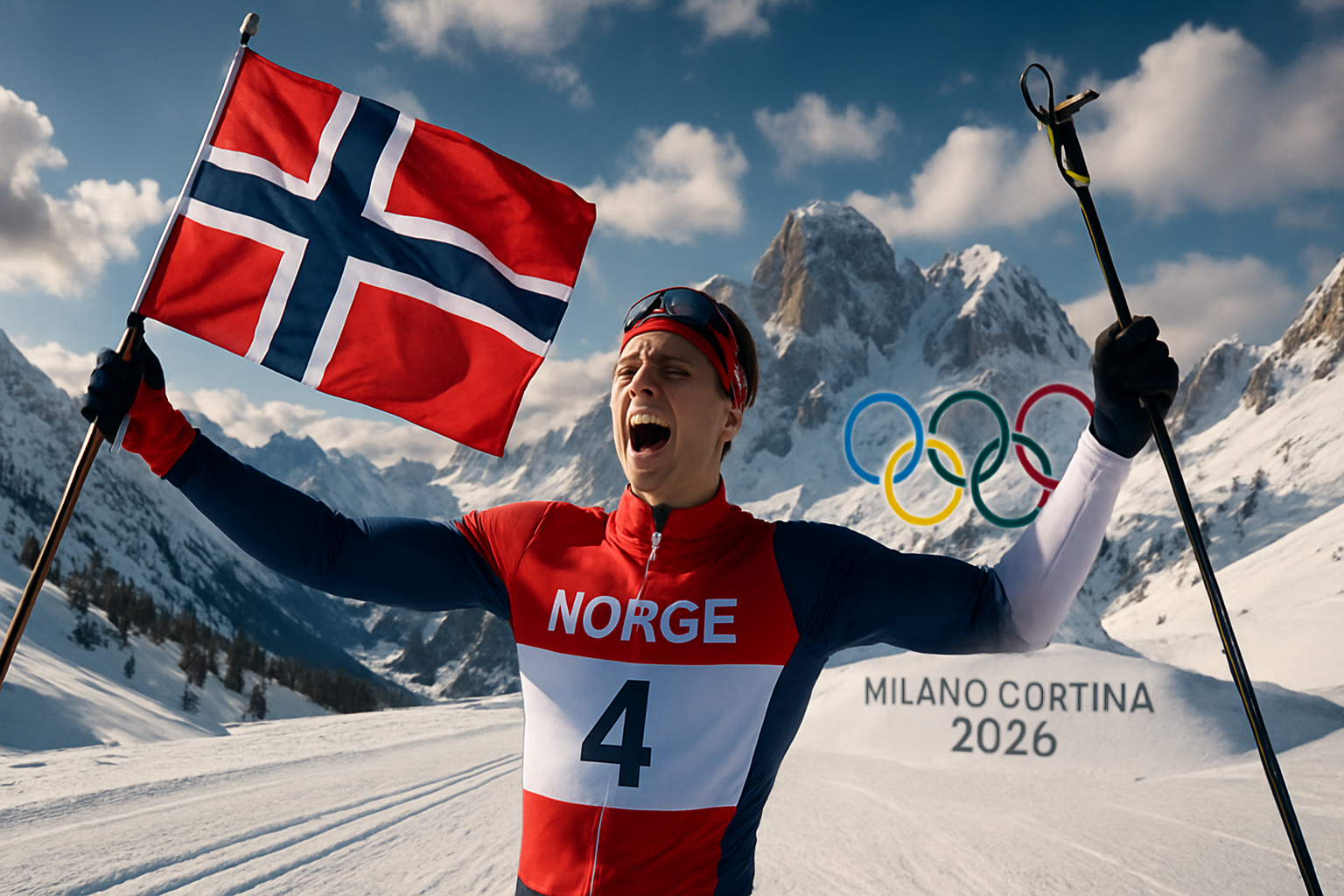
Norway continues to dominate the medal standings as the 2026 Winter Olympics in Milan-Cortina enters its final days, with 15 gold, 8 silver, and 10 bronze medals, while the Games make history with ski mountaineering's Olympic debut.
After competitions on Wednesday, February 18, Norway maintains a commanding lead with 33 medals overall, demonstrating their systematic excellence across Nordic disciplines. The nation has now broken multiple records at these Games, with Johannes Høsflot Klæbo becoming the most decorated Winter Olympian ever with his 10th career gold medal achieved in the men's cross-country team sprint.
Host Nation Italy Trails in Second Place
Italy, competing on home soil across the revolutionary dual-city hosting model, sits second with nine gold medals and 26 medals overall. The host nation has delivered remarkable performances, including Lisa Vittozzi's historic biathlon 10km pursuit gold - Italy's first-ever individual women's biathlon Olympic gold medal.
The United States rounds out the top three with 24 medals, showcasing the global competitiveness that has defined these Games. France and the Netherlands have each captured six gold medals, while Sweden and Germany have also accumulated impressive medal totals.
Ski Mountaineering Makes Olympic History
One of the most significant developments at Milano-Cortina 2026 has been the Olympic debut of ski mountaineering, known as "skimo." This grueling sport combines uphill skiing with alpine descent techniques, testing athletes' endurance and technical skills across challenging mountain terrain.
"Ski mountaineering represents the perfect fusion of endurance, technical skill, and mountain expertise - qualities that define the Olympic spirit of pushing human limits."
— IOC Sports Director
German athletes, including Tatjana Paller, have been among those representing their nations in this premiere Olympic discipline, which has attracted significant attention from spectators fascinated by its combination of speed and mountaineering prowess.
Revolutionary Dual-City Hosting Model Proves Successful
The 2026 Winter Olympics have broken new ground as the most geographically dispersed Games in Olympic history, spanning over 400 kilometers across seven venues from Milan to Cortina d'Ampezzo. This revolutionary dual-city hosting model has proven remarkably successful despite initial infrastructure challenges.
The Games have showcased technological innovation with the first Olympic integration of AI systems, including Alibaba's Qwen LLM technology for broadcasting and OMEGA's AI-powered figure skating analysis. Cultural innovations have included bilingual place names in Alto Adige/South Tyrol and the popular Gen Z mascots Milo and Tina.
Global Winter Sports Democratization
Milano-Cortina 2026 has demonstrated unprecedented global participation in winter sports. Historic debuts include Saudi Arabia's first Winter Olympics participation with Fayik Abdi in alpine skiing and Rakan Aliriza in cross-country skiing. Caribbean nations Jamaica and Trinidad & Tobago made their bobsleigh Olympic debuts.
Australia has emerged as a winter sports powerhouse, achieving their most successful Winter Olympics ever with multiple gold medals in moguls and snowboard cross. This success challenges traditional winter sports hierarchies and demonstrates that geographic location doesn't limit Olympic aspirations.
Breakthrough Performances Across Continents
The Games have witnessed remarkable breakthrough performances from unexpected nations:
- Brazil's Lucas Pinheiro Braathen won the nation's first Winter Olympic gold in alpine skiing
- Kazakhstan's Mikhail Shaidorov delivered a stunning figure skating upset
- Bulgaria ended a 20-year Olympic medal drought with Tervel Zamfirov's snowboard bronze
- Latvia's record 68-athlete delegation achieved multiple top finishes
Maintaining Excellence Despite Challenges
The Milano-Cortina Games have successfully maintained competitive excellence while navigating various operational challenges. Infrastructure issues, including incomplete cable car systems and power outages, were overcome through careful planning and international cooperation.
Security concerns, including countering pro-Russian cyberattacks on Olympic venues, were successfully managed by Italian authorities led by Foreign Minister Antonio Tajani. The Games proceeded without major disruptions, showcasing Italy's ability to host under complex circumstances.
Environmental Sustainability Takes Center Stage
These Olympics have established new standards for environmental responsibility in mega-event hosting. The dual-city model emphasized the use of existing venues, sustainable Olympic villages with greenhouse spaces, and reduced artificial snow requirements thanks to Europe's harshest winter in decades.
The success of this dispersed hosting model provides a template for future Olympic Games adapting to climate change concerns while maintaining the highest competitive standards.
Looking Toward the Final Days
As competition continues through February 22, the 2026 Winter Olympics represent a watershed moment in Olympic history. With 3,000 athletes from 92 countries competing across 116 medal events in 16 sports, the Games have demonstrated that winter sports truly transcend traditional boundaries.
The combination of Norwegian Nordic dominance, Italian home advantage, and breakthrough performances from emerging winter sports nations has created the most competitive and globally representative Winter Olympics in recent memory. The success of ski mountaineering's debut adds another dimension to Olympic competition, potentially inspiring future additions to the winter sports program.
"Milano-Cortina 2026 has proven that Olympic values of excellence, friendship, and respect can thrive even in our complex modern world, while innovation and tradition can coexist beautifully."
— IOC President Kirsty Coventry
As the Games approach their conclusion, the revolutionary dual-city hosting model, unprecedented global participation, and successful integration of new sports like ski mountaineering have established Milano-Cortina 2026 as a transformative moment in Olympic history, setting new precedents for sustainable, inclusive, and technologically advanced winter sports competition.