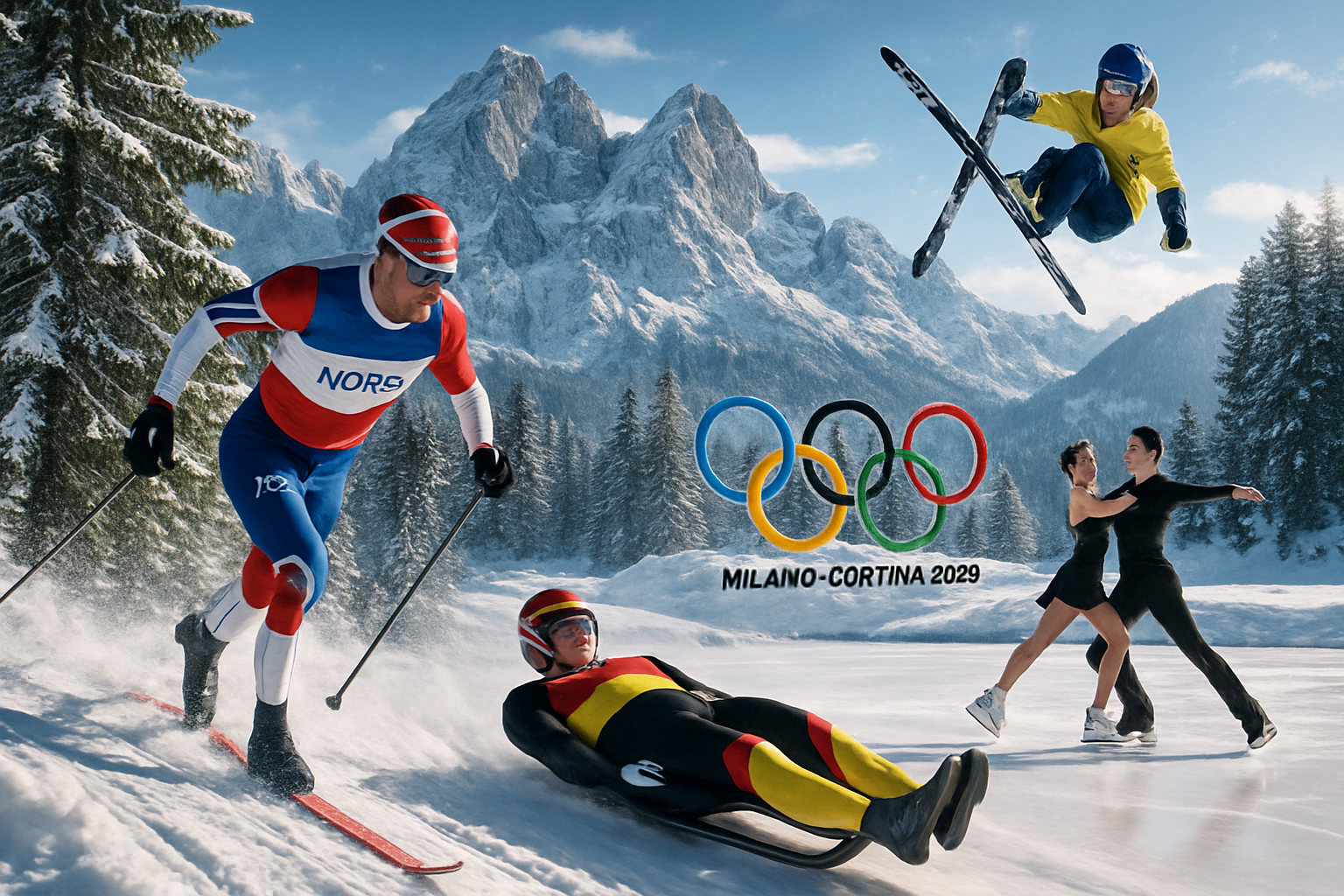
The Milano-Cortina 2026 Winter Olympics have delivered a stunning array of athletic triumphs, heartbreaking setbacks, and historic breakthroughs across the most geographically dispersed Games in Olympic history, spanning over 400 kilometers of spectacular Italian Alpine terrain.
From the opening ceremony at Milan's San Siro stadium to the snow-covered peaks of Cortina d'Ampezzo, nearly 3,000 athletes from 92 countries are competing in 116 medal events across 16 sports, creating an Olympic experience unlike any other in winter sports history.
Norwegian Dominance Continues
Norway has reinforced its position as the world's premier winter sports nation, with Johannes Høsflot Klæbo claiming his seventh Olympic gold medal in the men's cross-country sprint. The victory brings the 27-year-old Norwegian within striking distance of the all-time Winter Olympic record for individual medals.
"This is what we train for our entire lives - to compete at this level and represent Norway on the world's biggest stage."
— Johannes Høsflot Klæbo, Cross-Country Skiing Champion
Johan-Olav Botn provided one of the Games' most emotional moments, winning biathlon gold while dedicating his victory to teammate Sivert Guttorm Bakken, who died tragically just before Christmas. Botn pointed to the sky after crossing the finish line, shouting "Sivert - we did it!" in a moment that captured the essence of Olympic spirit.
American Silver and Tragedy
The United States experienced both triumph and tragedy on the Alpine slopes. Ben Ogden of Vermont made history by winning silver in cross-country skiing, breaking a 50-year medal drought for American men in the sport. His powerful performance behind Norway's Klæbo marked a breakthrough moment for U.S. Nordic skiing.
However, the games' most shocking moment came when Australian snowboard cross athlete Cam Bolton fractured his neck in a training crash, requiring helicopter evacuation and emergency surgery. Medical officials confirmed Bolton is in stable condition, though his Olympic dreams have ended.
Equally dramatic was the plight of Australian halfpipe athlete Misaki Vaughan, whose Olympics concluded after suffering a concussion, highlighting the dangerous nature of winter sports competition at the highest level.
Historic Breakthroughs
The Games have witnessed remarkable debuts and comebacks across multiple disciplines. New Zealand's Luca Harrington claimed bronze in freeski slopestyle, prompting his Kiwi teammates to perform a traditional haka in celebration - a moment that instantly became viral on social media.
Australian moguls specialist Jakara Anthony has begun her quest to become the first Australian athlete to win back-to-back Winter Olympic gold medals, successfully qualifying for the women's moguls final with a dominant first run that had Australian supporters erupting in celebration.
Political Tensions and Controversies
The Games have not been without controversy. Ukrainian skeleton athlete Vladyslav Heraskevych was banned from wearing a memorial helmet honoring athletes killed in the war, due to IOC guidelines prohibiting political statements. President Volodymyr Zelensky defended the athlete's tribute, calling it a reminder of "the price of our struggle."
Infrastructure challenges have also plagued the Games, with power outages affecting competition venues and incomplete transportation systems forcing school closures in the Cortina region. Despite these obstacles, competition has proceeded successfully across the unprecedented geographic spread of venues.
Emerging Nations Make Their Mark
The Milano-Cortina Games have showcased the global expansion of winter sports, with several nations achieving historic firsts. Belgium won its first-ever Winter Olympic medal when the Belgian Ice Bears secured bronze in the mixed relay, with the host nation Italy claiming gold in an emotional home victory.
Canada added to their medal tally with silver in short-track speedskating mixed team relay, led by William Dandjinou, Courtney Sarault, Kim Boutin, and Felix Roussel, though they couldn't close the gap on the victorious Italian team in the final moments.
Innovation and Tradition
These Games represent a revolutionary approach to Olympic hosting, with the dual-city model spanning from Milan's urban venues to Cortina's traditional Alpine facilities. The integration of cutting-edge technology, including AI-powered analysis systems and sustainable venue designs, demonstrates how the Olympics continue to evolve while maintaining their core sporting values.
Cultural innovations have included bilingual place names in the German-speaking Alto Adige region and the introduction of Milo and Tina, dubbed the first "Gen Z" Olympic mascots, connecting with younger global audiences.
Looking Ahead
With competition continuing through February 22, the Milano-Cortina Games promise more dramatic moments ahead. Canada's women's hockey team faces a crucial match against the United States with captain Marie-Philip Poulin ruled out due to injury, while Canadian lugers Kailey Allan and Beattie Podulsky prepare to make history as the first women representing Canada in Olympic doubles luge competition.
The Games have already established themselves as a unique chapter in Olympic history, combining traditional winter sports excellence with innovative hosting approaches and unforgettable human drama. From the spectacular Italian Dolomites backdrop to the cutting-edge technology enhancing the spectator experience, Milano-Cortina 2026 demonstrates that the Olympic movement continues to inspire and unite the world through sport.
As athletes push their limits across the seven competition venues spanning northern Italy, each day brings new stories of courage, determination, and Olympic spirit that will be remembered long after the final medals are awarded.