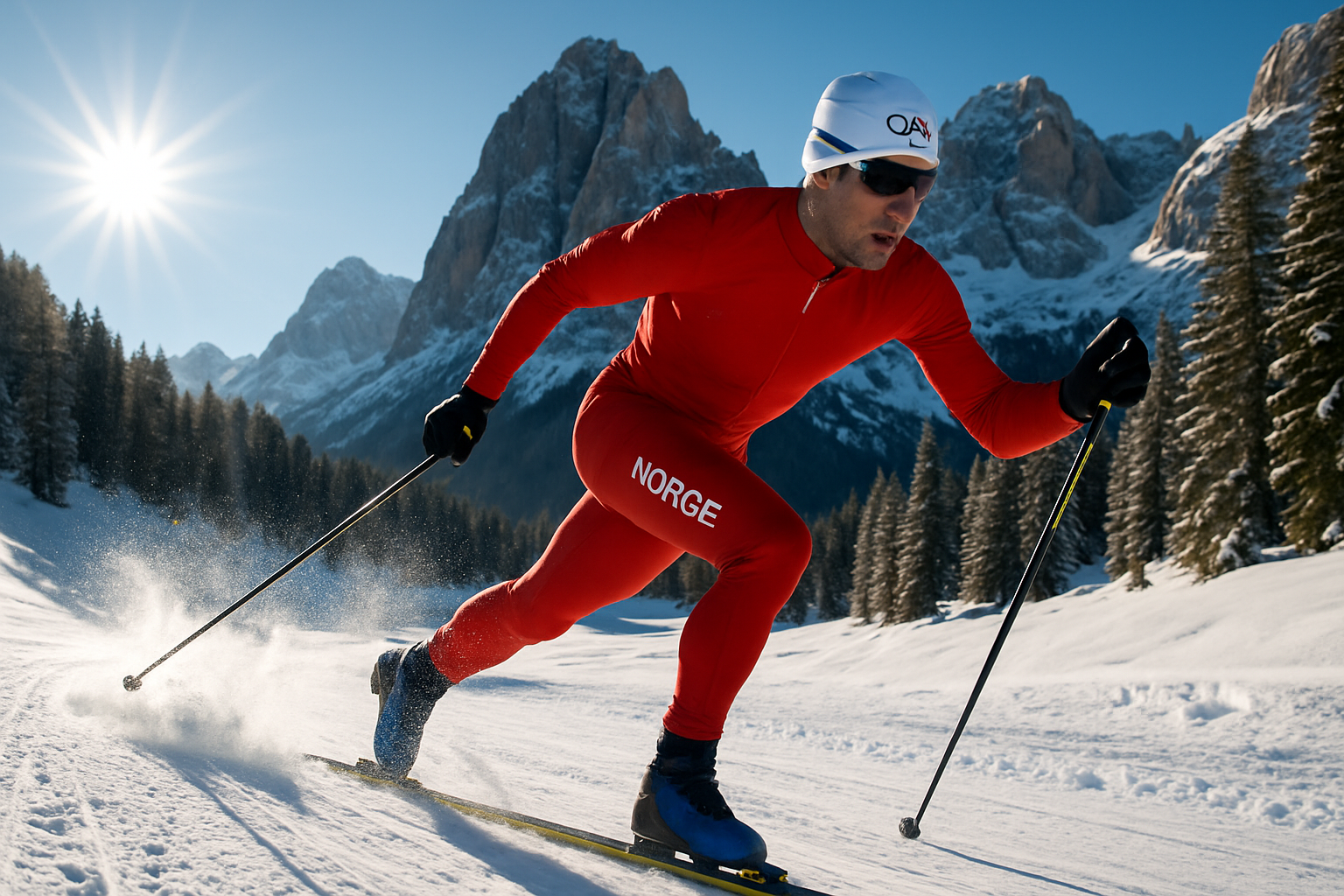
The Milano-Cortina 2026 Winter Olympics continue to deliver historic achievements and political controversy as Norwegian cross-country skiing legend Johannes Høsflot Klæbo secured his record-breaking 10th Olympic gold medal while tensions mount over Russian and Belarusian participation at the upcoming Paralympics.
Klæbo Rewrites Olympic History
Johannes Høsflot Klæbo made Winter Olympics history on Wednesday, claiming his 10th career Olympic gold medal in the men's cross-country team sprint alongside partner Einar Hedegart. The 29-year-old Norwegian now holds the record as the most successful individual athlete in Winter Olympic history, surpassing the previous mark of nine golds.
Klæbo's dominance at Milano-Cortina 2026 has been absolute, with this being his fifth gold medal at the current Games. The victory came after a powerful finish on the final stretch in Tesero, where Klæbo pulled away from the competition with a commanding lead that allowed him to celebrate before crossing the line.
"Now I feel complete. This is what I've been working toward my entire career."
— Johannes Høsflot Klæbo, after winning his 10th Olympic gold
Norway successfully defended their team sprint title, continuing their remarkable dominance in Nordic skiing events at these Games. The result extends Norway's streak of seven consecutive victories in this event, cementing their status as the world's premier cross-country skiing nation.
Australian and Swedish Breakthroughs
Australia continued their remarkable Winter Olympics campaign with multiple athletes advancing to medal contention. Danielle Scott and Abbey Willcox both qualified for the women's aerials final, while Ally Hickman remains in contention for the women's slopestyle final. These performances build on Australia's already historic medal haul at Milano-Cortina 2026, establishing the nation as an emerging winter sports power.
Sweden delivered their own breakthrough moment as Maja Dahlqvist and Jonna Sundling dominated the women's team sprint, securing Sweden's fourth gold medal of the Games. The Swedish duo was described as being "in a class of their own," demonstrating the technical excellence that has made them formidable competitors.
The Swedish victory came at Norway's expense, with the traditionally dominant Norwegian team finishing just outside the medal positions in a dramatic sprint finish. This result highlighted the increasingly competitive nature of Nordic skiing, where traditional hierarchies are being challenged.
Global Competition Intensifies
The Games have showcased remarkable global expansion of winter sports, with athletes from six continents competing at unprecedented levels. Estonia finished 13th in the men's biathlon relay, while Latvia's cross-country skiing team of Kitija Auziņa and Patrīcija Eiduka claimed 13th place in the women's team sprint.
Denmark demonstrated resilience in curling, defeating China 8-7 in a dramatic match that kept their semifinal hopes alive. The victory came after Denmark squandered a significant early lead, showcasing the unpredictable nature of Olympic competition.
These performances reflect the democratization of winter sports, with nations traditionally outside the medal conversation making significant strides. The Milano-Cortina 2026 Games have become a showcase for this global expansion, challenging the historical dominance of traditional winter sports powerhouses.
Russian Paralympic Controversy Erupts
Political tensions have escalated following the International Paralympic Committee's decision to allow Russian and Belarusian athletes to compete under their own flags at the Milano-Cortina Paralympics, reversing previous sanctions imposed after Russia's 2022 invasion of Ukraine.
Six Russian and four Belarusian athletes will be permitted to compete as representatives of their nations rather than as neutral athletes, marking a significant policy reversal. The IPC confirmed that both countries regained full membership rights after member organizations voted to lift partial suspensions in September 2025.
Ukraine has reacted with strong condemnation of the decision. Ukrainian officials described the move as "disappointing and outrageous," arguing that it undermines the principles of sport and sends the wrong message about accountability for the ongoing conflict.
"This decision is scandalous and goes against everything the Paralympic movement should represent."
— Ukrainian Paralympic Committee statement
The controversy threatens to overshadow the upcoming Paralympic Games, with calls from various international bodies for the IPC to reconsider its decision. The debate highlights the ongoing challenges facing international sports organizations in navigating geopolitical tensions while maintaining competitive integrity.
Technical and Operational Excellence
Despite the political controversies, the Milano-Cortina 2026 Games continue to demonstrate operational success across their revolutionary dual-city hosting model. The Games span over 400 kilometers across seven venues, representing the most geographically dispersed Winter Olympics in history.
The technological innovations have proven successful, with Alibaba's Qwen AI system providing the first Olympic integration of large language model technology for broadcasting and spectator services. OMEGA's AI-powered figure skating analysis has also enhanced competition judging and viewer experience.
Cultural elements have resonated globally, including bilingual place names in the Alto Adige/South Tyrol region and the popular Gen Z mascots Milo and Tina. The sustainable Olympic villages, featuring greenhouse spaces and environmentally responsible design, have set new standards for Olympic hosting.
Looking Ahead
With competition continuing through February 22, the Milano-Cortina 2026 Games are establishing new paradigms for Olympic hosting that combine athletic excellence with environmental sustainability. The success of the geographically distributed format may influence future Olympic planning, particularly as climate concerns affect traditional winter sports venues.
The medal race remains intensely competitive, with Norway maintaining their overall lead but facing unprecedented challenges from emerging winter sports nations. The democratization of winter sports evident at these Games suggests a fundamental shift in the Olympic landscape, with traditional powerhouses no longer guaranteed dominance.
As Johannes Høsflot Klæbo's historic achievement demonstrates, individual excellence continues to define Olympic competition. However, the broader success of nations like Australia, Sweden, and numerous other breakthrough performers shows that the future of winter sports will be more globally competitive than ever before.
The ongoing Russian participation controversy will likely influence Paralympic policies for years to come, while the Milano-Cortina 2026 Games themselves are proving that innovative hosting approaches can maintain competitive integrity while addressing 21st-century challenges of sustainability and accessibility.