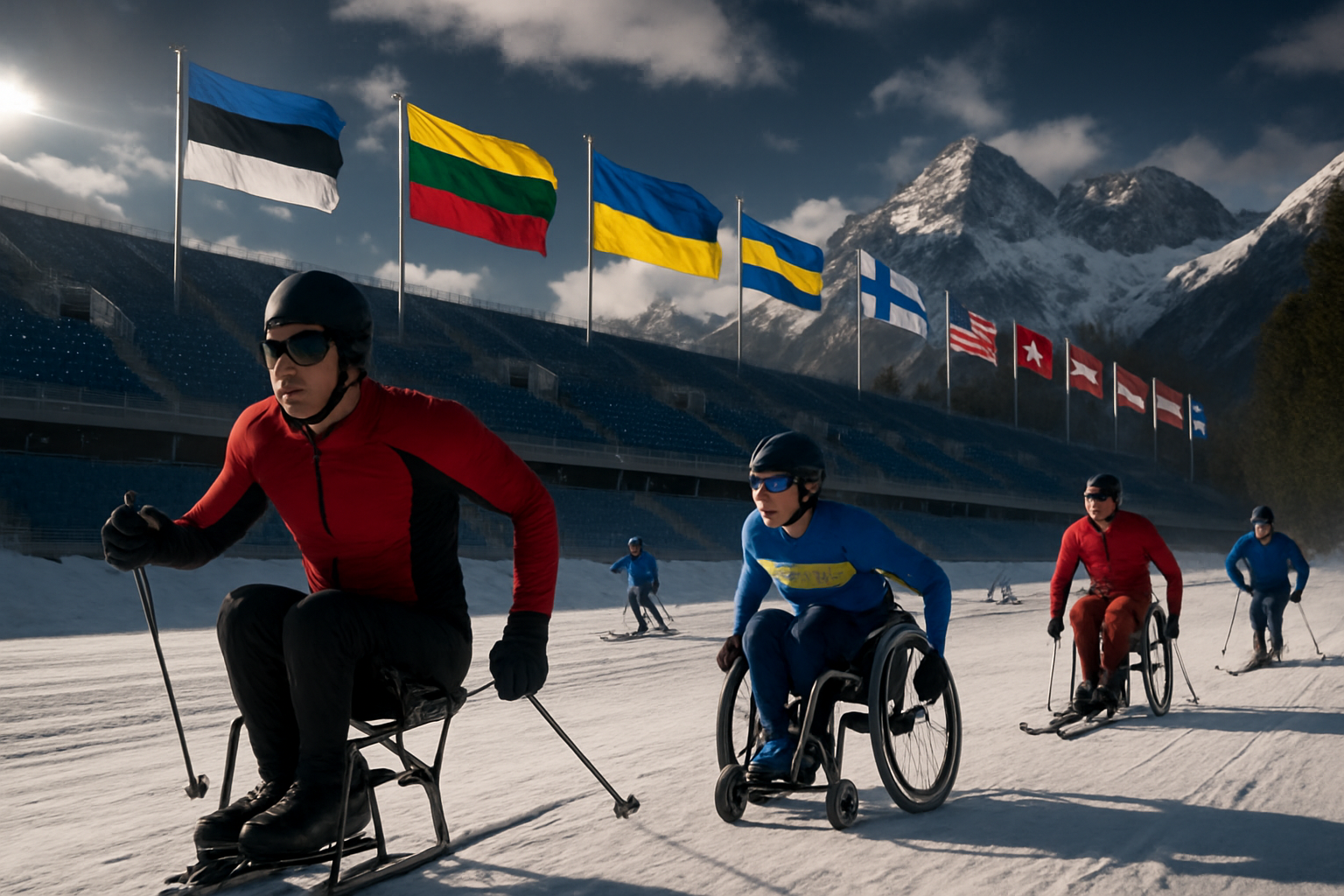
A growing international protest movement is threatening to overshadow the 2026 Winter Paralympics as multiple nations announce boycotts of the opening ceremony in response to the International Paralympic Committee's controversial decision to allow Russian and Belarusian athletes to compete under their national flags and symbols.
Estonia became the latest nation to join the boycott movement on March 3, 2026, following similar announcements from Germany, Lithuania, and several other European countries. The protests center on the IPC's September 2025 decision to reverse sanctions imposed after Russia's full-scale invasion of Ukraine in 2022, allowing six Russian and four Belarusian Paralympics to compete in selected sports under their own national identities rather than as neutral athletes.
Growing International Opposition
The Estonian Paralympic Committee announced its decision to boycott the March 6 opening ceremony at San Siro stadium in Milan, joining what Ukrainian officials have described as a "widening protest" against the IPC's stance. The decision follows Germany's announcement that its Disabled Sports Association would boycott the ceremony, a move that was immediately welcomed by Ukrainian Foreign Minister Andrii Sybiha.
Lithuania's national broadcaster LRT has gone further, announcing it will not televise the opening ceremony in protest of the IPC's decision. The broadcaster stated that it refuses to provide promotional coverage for Russian and Belarusian athletes competing under their national flags while the conflict in Ukraine continues.
"Estonia joins a widening protest against the International Paralympic Committee's decision to allow Russian and Belarusian athletes to compete under their national flags and symbols."
— Estonian Paralympic Committee Statement
The IPC's Controversial Reversal
The controversy stems from a significant policy shift by the International Paralympic Committee in September 2025, when member organizations voted to lift the suspensions that had been in place since Russia's invasion of Ukraine. Under the new arrangements, ten Paralympic athletes - six from Russia and four from Belarus - will be eligible to compete while displaying their national flags and symbols, marking a dramatic departure from the neutral athlete status that had been required since 2022.
This decision has drawn sharp criticism from Ukrainian officials, who have described it as "disappointing and outrageous." Ukrainian Paralympic Committee representatives have called the ruling "scandalous" and have indicated they are considering their own response to what they view as a betrayal of Olympic and Paralympic values during an ongoing military conflict.
Historical Context and Previous Olympics
The current controversy comes just weeks after the conclusion of the Milano-Cortina 2026 Winter Olympics, which were marked by their own set of political tensions and operational challenges. The Winter Olympics, held February 6-22, 2026, saw unprecedented success in terms of global participation and winter sports democratization, with breakthrough performances from nations across six continents.
During the Winter Olympics, Ukrainian skeleton racer Vladyslav Heraskevych was banned from competition for wearing a memorial helmet depicting faces of over 20 Ukrainian athletes and coaches killed during Russia's war. The incident sparked international debate about Olympic neutrality versus athlete expression during ongoing conflicts, with President Zelensky awarding Heraskevych the Order of Freedom for "civic courage and patriotism."
Political and Diplomatic Implications
The boycott movement reflects deeper tensions about the role of international sports organizations during times of conflict. Ukrainian President Volodymyr Zelensky has previously criticized the IPC's decision as "dirty," arguing that allowing Russian and Belarusian athletes to compete under their national flags while their countries maintain military aggression undermines the Paralympic movement's core values.
The controversy has also drawn criticism from European Union officials and various national parliaments. Estonian MEP Urmas Paet has called for a complete reinstatement of Ukrainian symbols and has criticized the IPC for what he sees as insufficient action against aggressor nations.

Impact on Paralympic Competition
The Milano-Cortina 2026 Winter Paralympics are scheduled to run from March 6-15, utilizing the same revolutionary dual-city hosting model that proved successful during the Winter Olympics. The Games will span 400+ kilometers across seven venues, from Milan to Cortina d'Ampezzo, maintaining the same sustainable hosting approach that characterized the preceding Olympics.
Despite the controversy, Paralympic organizers are proceeding with preparations for what they hope will be a celebration of adaptive athletics and international cooperation. The Games will feature the same technological innovations that marked the Olympics, including AI integration systems and sustainable venue operations.
Ukrainian Position and International Support
Ukraine's position has garnered significant international support, particularly from nations that experienced Soviet occupation or have strong solidarity with Ukrainian resistance efforts. The Ukrainian Paralympic Committee has been particularly vocal in its criticism, arguing that the IPC's decision effectively rewards aggression and undermines the Paralympic movement's commitment to peace and human dignity.
The committee has also demanded that Ukrainian flags not be used in the opening ceremony, viewing any such display as hypocritical given the IPC's willingness to accommodate Russian and Belarusian symbols while Ukrainian athletes continue to compete under the shadow of war.
"This is a scandalous decision that undermines everything the Paralympic movement stands for. How can we celebrate unity and peace while allowing aggressor nations to parade their flags?"
— Ukrainian Paralympic Committee Representative
Broader Implications for International Sports
The controversy extends beyond the immediate Paralympic competition, raising fundamental questions about the role of international sports federations during periods of geopolitical conflict. Critics argue that the IPC's decision sets a dangerous precedent that could undermine the integrity of future international competitions.
Sports law experts have noted that the situation creates a complex challenge for international sporting bodies, which must balance principles of political neutrality with moral obligations to respond to aggression and human rights violations. The Paralympic boycott represents one of the most significant political protests in international adaptive sports in recent memory.
Looking Ahead
As the March 6 opening ceremony approaches, the IPC faces mounting pressure to reconsider its position. However, officials have indicated that the decision is final, having been approved by member organizations through the federation's democratic processes.
The boycott movement appears likely to continue growing, with additional nations considering their own responses to the controversy. The situation threatens to overshadow what organizers had hoped would be a celebration of Paralympic sport and the achievements of adaptive athletes from around the world.
The Milano-Cortina 2026 Winter Paralympics, building on the successful Olympic model of distributed hosting and technological innovation, now face the challenge of maintaining their sporting integrity while navigating one of the most significant political controversies in Paralympic history. The outcome may well influence how international sporting bodies handle similar situations in the future, particularly as geopolitical tensions continue to intersect with global athletic competition.