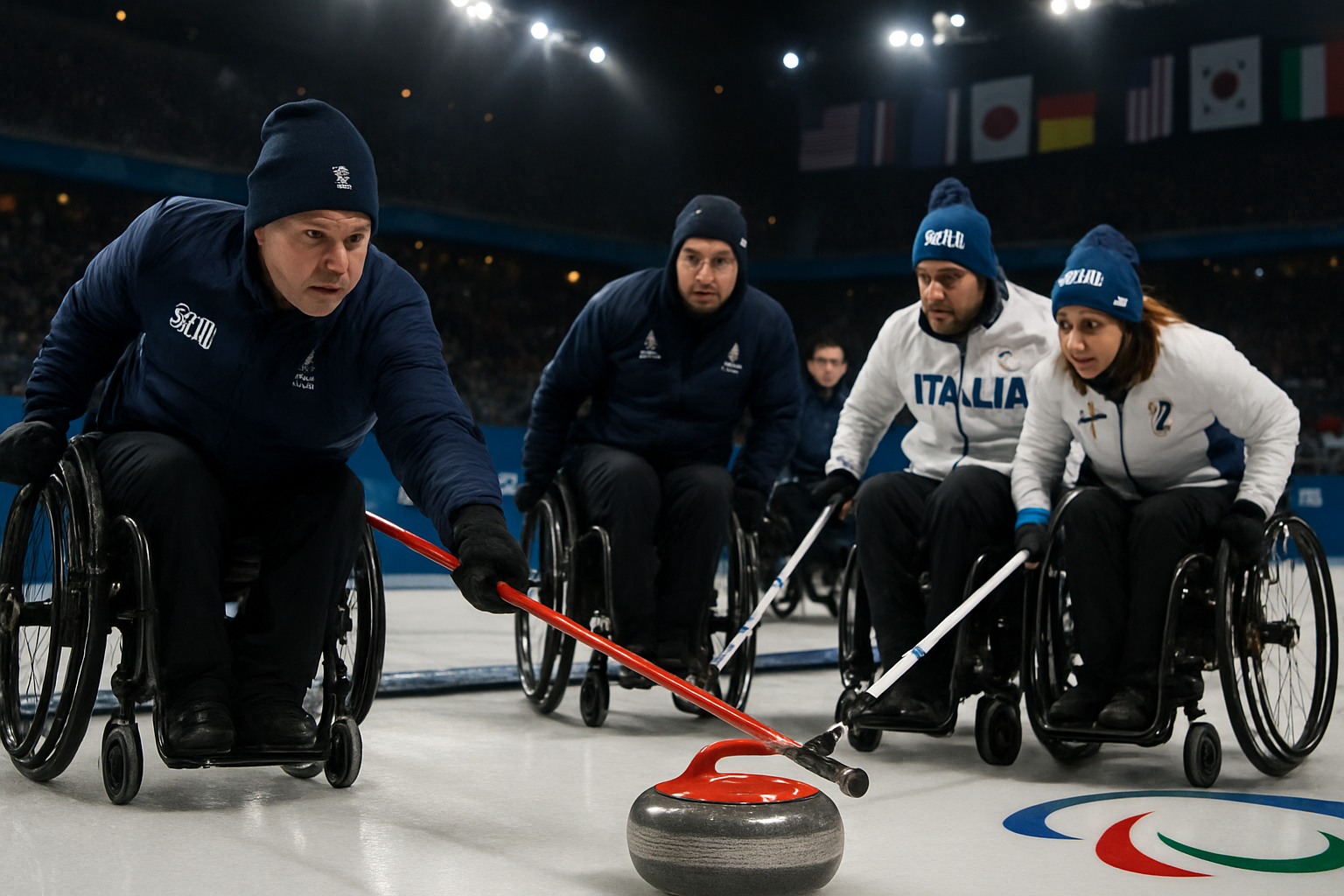
The Milano-Cortina 2026 Winter Paralympics are underway with fierce competition across multiple sports, but the Games have been overshadowed by a growing international boycott of Friday's opening ceremony over the International Paralympic Committee's controversial decision to allow Russian and Belarusian athletes to compete under their national flags.
Estonia's wheelchair curling mixed pair Kätlin Riidebach and Ain Villau celebrated their second victory at the Milano-Cortina Winter Paralympics on Thursday, defeating Italy's Orietta Berto and Paolo Ioriatti 6-5 in a thrilling match that went down to the final stones. The Estonian duo has emerged as a formidable force in the competition, building momentum as they aim for medal contention.
Meanwhile, Latvia faced off against the United Kingdom in curling action as part of the ongoing competition that spans multiple venues across northern Italy. The matches have delivered the high-level competition expected at Paralympics, with athletes demonstrating remarkable skill and determination despite the political tensions surrounding the Games.
Boycott Movement Gains Momentum
However, athletic achievements have been overshadowed by the diplomatic crisis engulfing these Paralympics. Several countries have announced they will boycott Friday's opening ceremony at San Siro stadium in Milan, protesting the IPC's September 2025 decision to lift suspensions on Russian and Belarusian athletes imposed after the 2022 invasion of Ukraine.
Ukraine has emerged as the leader of the boycott movement, with Ukrainian officials condemning the IPC's decision as "disappointing and outrageous." The controversy centers on the IPC's vote by member organizations to allow Russian and Belarusian para-athletes to compete under their national flags and symbols, reversing the neutral status imposed during the height of international sanctions.
Estonia has joined the boycott of the opening ceremony, following similar announcements from Germany and Lithuania. The Estonian Parliamentary Committee voiced strong opposition to the IPC decision, while Lithuanian broadcaster LRT has refused to televise the ceremony in solidarity with Ukraine.
"This decision is dirty and disappointing. Ukrainian athletes have paid the ultimate price in this war, and to allow those who represent the aggressor nation to compete with full honors is scandalous."
— Ukrainian Paralympic Committee Statement
Political Tensions Shape Games Atmosphere
The controversy represents the most significant political protest in Paralympic history, with sports law experts noting the complex challenge of balancing political neutrality with moral obligations during active conflicts. The IPC's decision affects approximately 10 athletes - 6 Russians and 4 Belarusians - who are now eligible to compete with their national symbols rather than as neutral participants.
Estonian MEP Urmas Paet has called for the reinstatement of Ukrainian symbols and stronger solidarity measures, while EU officials have criticized the IPC's stance. The movement reflects deeper tensions about international sports federations' role during geopolitical conflicts, with nations that have experienced Soviet occupation or maintain strong Ukrainian solidarity leading the boycott effort.
The Ukrainian Paralympic Committee has demanded that the Ukrainian flag not be used in the opening ceremony, viewing any association with the event as endorsement of the IPC's decision. This demand highlights the profound impact the controversy has had on Ukrainian participants, who feel betrayed by the international sporting community.
Competition Continues Despite Controversy
Despite the political tensions, Paralympic competition has proceeded with the exceptional standard expected at this level. The Milano-Cortina Paralympics, running from March 6-15, utilize the same innovative dual-city hosting model that proved successful during the Winter Olympics, spanning over 400 kilometers across seven venues.
The Games feature the same technological innovations that characterized the Olympics, including AI integration and sustainable venue management. However, the boycott threatens to overshadow the celebration of adaptive athletics and the remarkable achievements of Paralympic athletes from around the world.
Estonia's success in wheelchair curling exemplifies the high level of competition, with the pair of Riidebach and Villau representing their nation's continued development in winter Paralympic sports. Their victory over the Italian home team demonstrated the global competitiveness that makes Paralympic sport compelling, even as political controversies swirl around the event.
Broader Implications for International Sport
The Milano-Cortina Paralympics boycott crisis raises fundamental questions about the role of international sporting bodies during conflicts. The IPC's decision to reverse suspensions came despite ongoing warfare in Ukraine and the documented killing of Ukrainian athletes and coaches during the conflict.
Sports governance experts note this represents a test case for how international federations balance their stated political neutrality with moral leadership during humanitarian crises. The outcome may influence future policies across multiple sports federations and establish precedents for athlete participation during active conflicts.
The controversy also highlights the unique position of Paralympic sport, where athletes overcome significant physical challenges to compete at the highest level. Many observers argue that Paralympic athletes, who already face numerous barriers, deserve to compete without the additional burden of geopolitical tensions.
Looking Forward
As competition continues through March 15, the success of individual athletes like Estonia's curling pair provides hope that sporting excellence can still shine despite political controversies. The dual-city hosting model continues to operate effectively, demonstrating that innovative approaches to major sporting events remain viable.
However, the boycott movement represents a watershed moment for Paralympic sport and international athletics more broadly. The resolution of this crisis may determine how future international sporting events navigate the intersection of athletic competition and global politics.
The Milano-Cortina Paralympics will ultimately be remembered both for remarkable athletic achievements and as the Games where the Paralympic movement faced its greatest political challenge. Whether the focus returns to celebrating adaptive athletic excellence or remains overshadowed by geopolitical tensions may depend on developments in the coming days as the opening ceremony approaches.