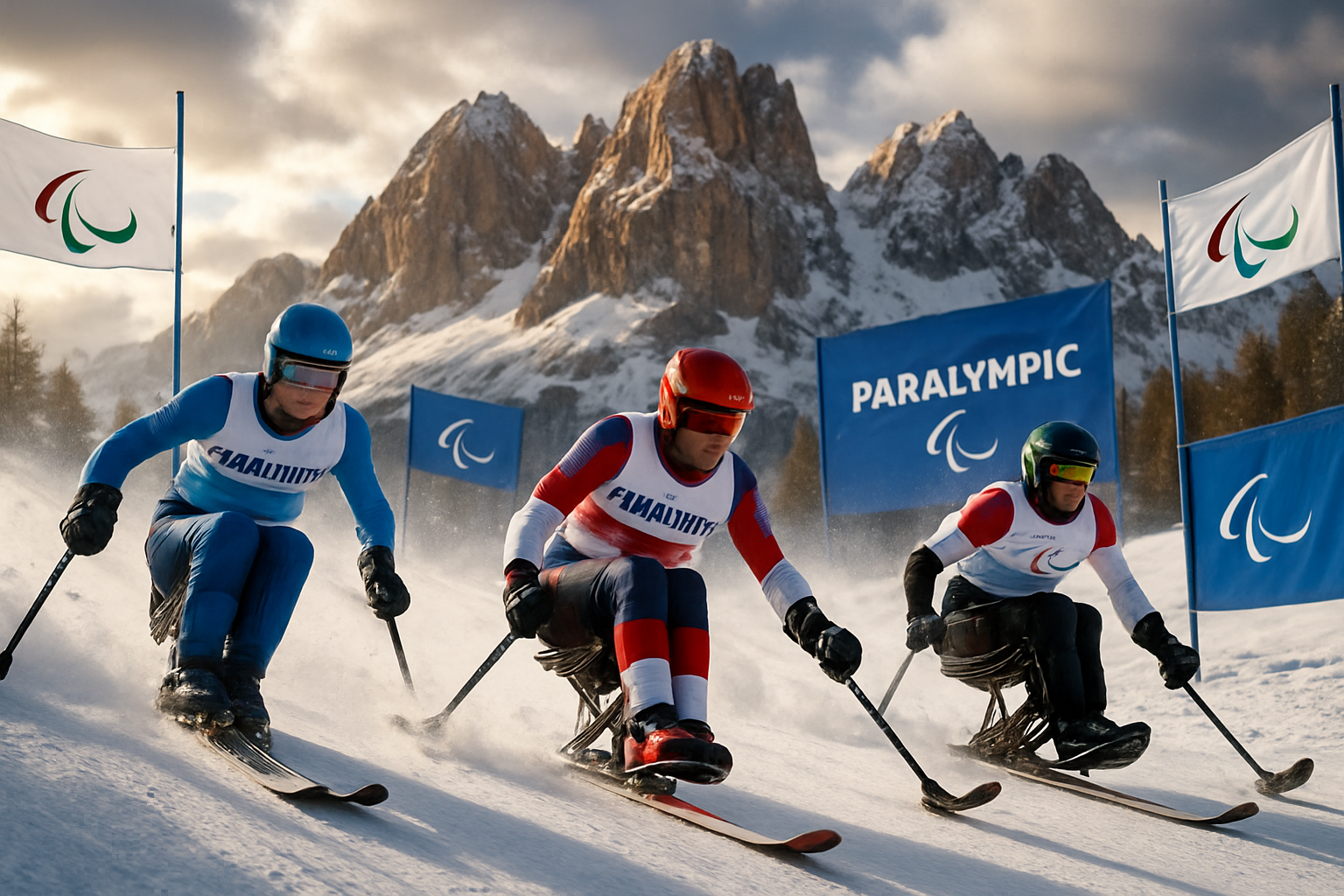
The Milano-Cortina 2026 Winter Paralympics are delivering extraordinary sporting drama as athletes from across the globe compete in adaptive winter sports, with breakthrough performances from Australia's youngest female Paralympic competitor and remarkable comeback victories spanning the Italian Alps.
Australia's Historic Paralympic Breakthrough
In a momentous debut that captured hearts worldwide, 16-year-old Liana France made history as Australia's youngest female Winter Paralympian. Competing in front of her family, who proudly waved a custom pink flag bearing her face, France's Paralympic debut represents a significant milestone for Australian winter Paralympic sport development.
Her appearance at the Games symbolizes the global expansion of Paralympic winter sports, demonstrating how adaptive athletics now reaches athletes from diverse climates and backgrounds. The teenager's participation builds on Australia's remarkable success at the preceding Winter Olympics, where the nation achieved its most successful winter campaign ever.
European Medal Dominance and Home Advantage
French Paralympic alpine skier Aurélie Richard has emerged as one of the standout performers at Milano-Cortina 2026, adding a bronze medal in the giant slalom standing event to her impressive collection. The 20-year-old's fourth medal at these Paralympics brings France's total medal count to ten, showcasing the depth and quality of the French Paralympic program.
Richard's achievement in Cortina d'Ampezzo highlights the competitive excellence that has characterized these Games, with her bronze medal performance demonstrating the technical precision required at the highest level of Paralympic alpine skiing.
"After three silver medals, adding bronze to my collection feels incredible. The competition level here has been extraordinary."
— Aurélie Richard, French Paralympic Alpine Skier
German Paralympic Renaissance
Germany's Anna-Lena Forster has delivered one of the most compelling storylines of Milano-Cortina 2026, capturing her second gold medal of the Games in the giant slalom. The 30-year-old monoskier's victory at Cortina d'Ampezzo on the sixth competition day represents a remarkable return to Paralympic glory.
Forster's success exemplifies the resilience and determination that defines Paralympic sport. Her dual gold medal performance at these Games has positioned her among the elite performers of Milano-Cortina 2026, demonstrating the evolution and competitive depth of Paralympic alpine skiing.
Italian Home Soil Celebrations
The host nation has experienced emotional moments throughout the Paralympics, with Italian athletes delivering inspiring performances on home snow. Local favorite Chiara Mazzel from Trentino has continued her remarkable Paralympic campaign, adding another medal to Italy's growing collection and thrilling home crowds in the Italian Dolomites.
Mazzel's success in the visually impaired alpine skiing category has become a focal point for Italian Paralympic pride, with her achievements representing the culmination of years of dedicated training and preparation for these home Games.
Revolutionary Hosting Model Success
The Milano-Cortina 2026 Winter Paralympics are utilizing the same groundbreaking dual-city hosting model that proved successful during the preceding Winter Olympics. Spanning over 400 kilometers across northern Italy, the Games demonstrate how sustainable, distributed hosting can maintain the highest competitive standards while addressing modern environmental and logistical challenges.
This revolutionary approach has incorporated advanced technological innovations, including AI integration for broadcasting and analysis, while preserving the cultural authenticity of the Alpine regions. The bilingual place names in Alto Adige/South Tyrol reflect the area's unique heritage, creating an authentic European mountain sports atmosphere.
Global Paralympic Expansion
The Milano-Cortina Paralympics have showcased the remarkable global growth of winter Paralympic sport. Athletes from non-traditional winter sports nations have delivered competitive performances, demonstrating that adaptive athletics excellence transcends geographic and climatic boundaries.
This democratization of winter Paralympic sport reflects broader trends in international athletics, where dedicated training programs and improved accessibility have enabled athletes from diverse backgrounds to compete at the highest level. The presence of competitors from six continents underscores the truly global nature of modern Paralympic competition.
Technical Excellence and Safety Standards
The Paralympics have maintained exceptional technical standards across all venues, with natural snow conditions provided by Europe's harsh winter creating ideal racing surfaces. The Games have demonstrated how existing infrastructure can be effectively utilized for major international competitions, reducing environmental impact while delivering world-class sporting experiences.
Safety protocols and adaptive equipment innovations have enabled athletes with various classifications to compete safely and effectively, showcasing the continuous evolution of Paralympic sport technology and support systems.
Veteran Athletes and Paralympic Legacy
The Games have featured remarkable stories of athletic longevity, including Norway's Jostein Stordahl competing in his tenth Paralympics at age 59. After suffering life-changing injuries in a train accident at age 17, Stordahl's nearly four-decade Paralympic career represents the embodiment of Paralympic values: determination, inspiration, courage, and equality.
Such veteran presence alongside young athletes like Australia's Liana France demonstrates the intergenerational nature of Paralympic sport, where experience and youth combine to create compelling competition narratives.
Looking Ahead: Paralympic Impact and Legacy
As the Milano-Cortina 2026 Winter Paralympics continue through March 15, the Games are establishing new benchmarks for international Paralympic competition. The combination of breakthrough performances, technological innovation, and sustainable hosting practices is creating a template for future Paralympic events.
The success of these Paralympics in maintaining competitive excellence while addressing 21st-century hosting challenges demonstrates the adaptability and resilience of the Paralympic movement. Athletes continue to transcend expectations and inspire global audiences through their remarkable achievements on Italian snow.
With competition remaining intense across all disciplines, the final days promise additional memorable moments as Paralympic athletes push the boundaries of adaptive sport performance in the spectacular Alpine setting of northern Italy.