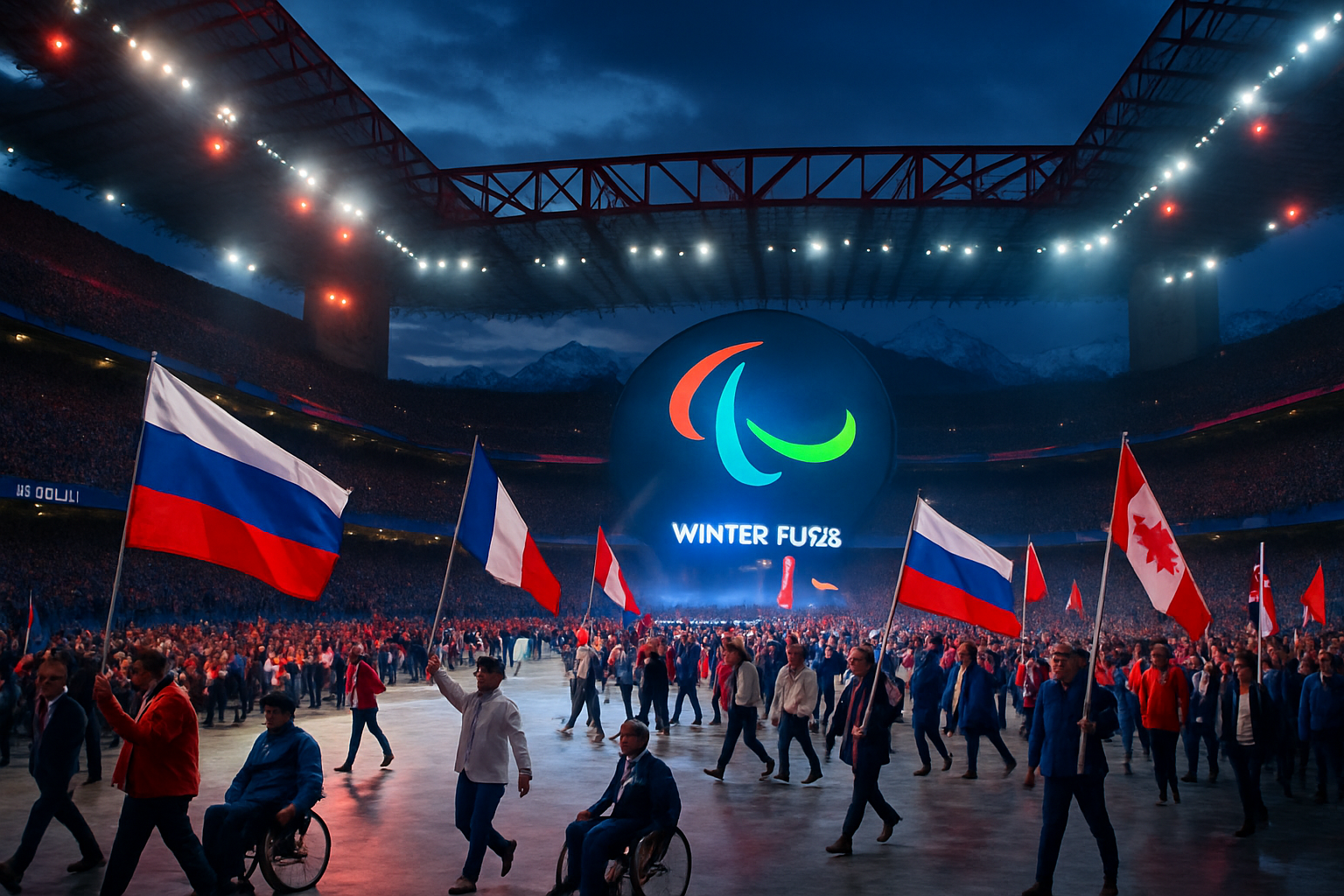
The Milano-Cortina 2026 Winter Paralympics officially opened Friday evening at Milan's San Siro stadium amid unprecedented political controversy, as Russian athletes marched under their national flag for the first time since 2014, drawing boos from spectators while Ukrainian athletes received thunderous applause.
The International Paralympic Committee's (IPC) controversial February decision to lift the long-running ban on Russian and Belarusian athletes competing under their own flags and anthems has sparked the most significant political protest in Paralympic history, with multiple European nations boycotting the opening ceremony in diplomatic opposition.
Historic Return Sparks International Backlash
As the Russian delegation entered the arena, parts of the crowd responded with audible jeers and whistles, creating a tense atmosphere that contrasted sharply with the warm reception given to Ukraine's athletes moments later. The decision allows six Russian and four Belarusian athletes to compete with national symbols, reversing the neutral status imposed after Russia's February 2022 invasion of Ukraine.
"The risk to human life is too high," officials explained as Iran's sole Paralympic athlete was forced to withdraw from the Games due to security concerns, highlighting the broader geopolitical tensions surrounding the event. The withdrawal removed Iran's only representative from what should have been a celebration of international Paralympic sport.
"This is a historic moment that demonstrates both the power and complexity of international sport during times of conflict."
— Paralympic Sports Analyst
European Diplomatic Coalition Forms
The opening ceremony proceeded despite a coordinated boycott by several European nations, including Estonia, Germany, Lithuania, and others who viewed the IPC's decision as legitimizing Russian participation during an active military conflict. Lithuanian broadcaster LRT refused to televise the ceremony, while Estonian officials demanded the reinstatement of Ukrainian symbols.
President Volodymyr Zelensky had previously condemned the IPC decision as "dirty" and "scandalous," with the Ukrainian Paralympic Committee demanding that the Ukrainian flag not be used in the ceremony if Russian athletes were allowed to compete under their national banner.
Games Continue Despite Political Tensions
While political controversy dominated headlines, Paralympic competition has continued with remarkable athletic performances. Estonia's wheelchair curling duo Ain Villau and Kätlin Riidebach have been competing strongly, demonstrating the high level of Paralympic sport across the Games' six disciplines.
Norway's Jostein Stordahl made headlines by competing in his remarkable 10th Paralympics at age 59, nearly four decades after a train accident at age 17 crushed his legs. His longevity represents the determination and inspiration that define the Paralympic movement.
France arrived with an experienced 13-athlete delegation, nearly half of whom are previous Paralympic medalists, including four defending champions competing across four of the six disciplines. The quality of competition remains exceptionally high despite the political backdrop.
Revolutionary Hosting Model Continues
The Paralympics are utilizing the same innovative dual-city hosting model that proved successful during the Winter Olympics, spanning over 400 kilometers across northern Italy venues. The Games feature the same technological innovations, including Alibaba Qwen AI integration and sustainable venues with bilingual Alto Adige/South Tyrol place names.
Natural snow conditions have remained favorable for competition across all venues, benefiting from Europe's harsh winter that provided ideal conditions throughout the Olympic and Paralympic period.
Broader Implications for Paralympic Movement
The controversy represents a watershed moment for the Paralympic movement and international sport more broadly. The decision tests how international federations balance sporting neutrality with moral leadership during humanitarian crises, particularly given that over 20 Ukrainian athletes and coaches have been documented as war casualties.
The Paralympic Games continue through March 15, with athletes striving to transcend political divisions through sporting excellence. However, the controversy has raised fundamental questions about the role of international sporting bodies during geopolitical conflicts and their capacity to navigate competing demands for neutrality and moral positioning.
Looking Ahead
Despite the diplomatic tensions, the Paralympics showcase the remarkable resilience of the Paralympic movement and the power of adaptive sport to inspire global audiences. Athletes are competing at the highest levels across wheelchair curling, Para alpine skiing, Para cross-country skiing, Para snowboarding, Para ice hockey, and Para biathlon.
The Games represent both a celebration of Paralympic values—determination, inspiration, courage, and equality—and a test of how international cooperation can persist during challenging geopolitical circumstances. As competition continues, the focus gradually shifts from political controversy to athletic achievement and the inspiring stories of Paralympic athletes overcoming both physical challenges and international tensions.