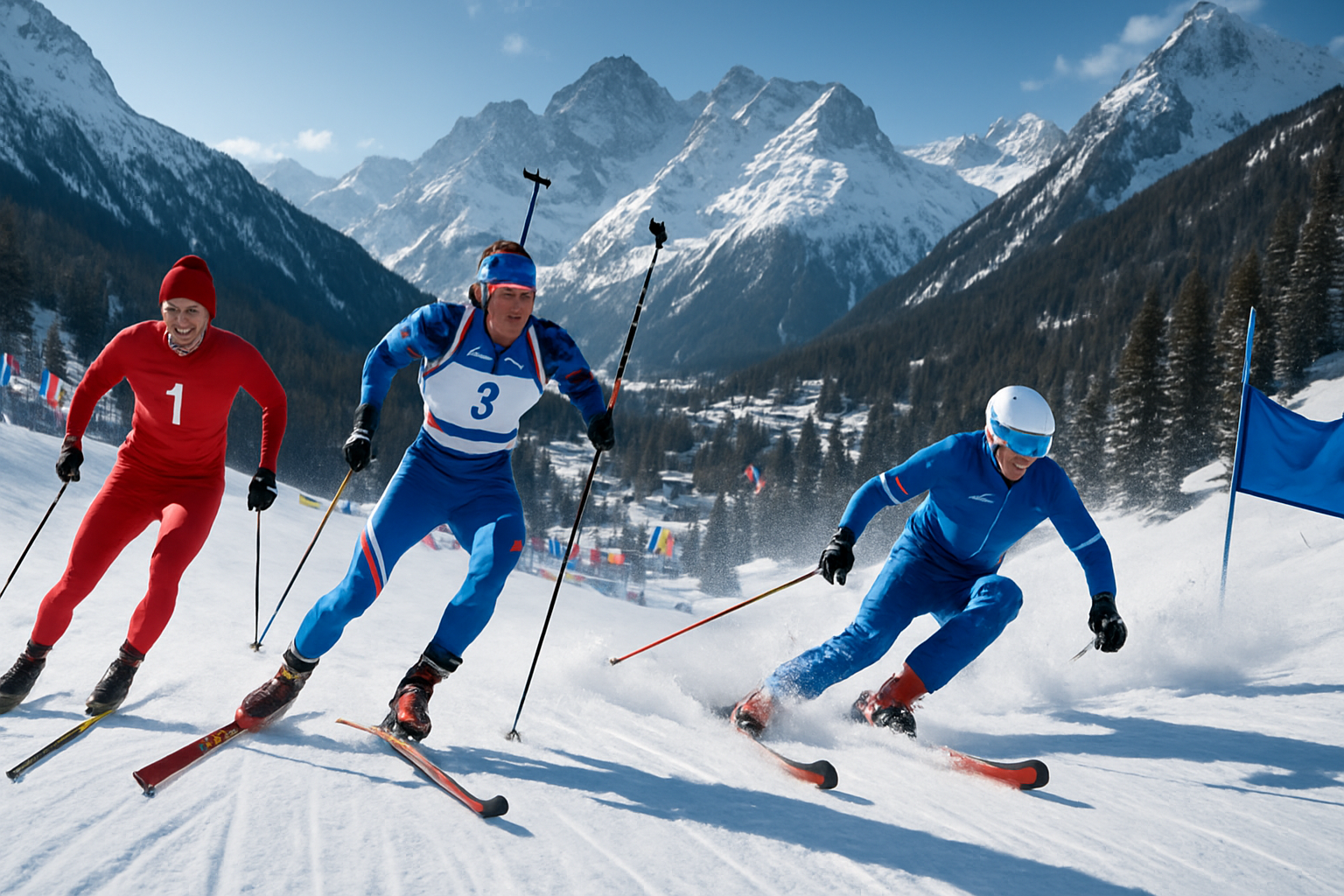
Winter sports concluded a remarkable 2025-26 season with Norwegian and European athletes dominating World Cup skiing events and Paralympic competitions, while breakthrough nations continued to challenge traditional powerhouses in the global expansion of winter athletics.
World Cup Skiing Excellence
Norwegian cross-country legend Johannes Høsflot Klæbo extended his extraordinary dominance with a commanding victory in the 10-kilometer classical race in Lahti, Finland, marking his tenth consecutive win in the discipline. The triumph positions Klæbo to secure all available World Cup titles in what has been called a "completely vanishing" performance by competitors.
"It's completely insane what he's doing. He's in a class by himself," remarked Norwegian commentators following Klæbo's latest victory.
— Norwegian Broadcasting Expert
Sweden's Frida Karlsson demonstrated her continued excellence in women's cross-country skiing, winning the 10-kilometer classical event in Lahti with a commanding 4.1-second margin over compatriot Linn Svahn. The Olympic champion's victory reinforced Sweden's challenge to Norwegian Nordic dominance that has been building throughout the season.
Alpine Skiing Breakthrough Performances
Italian women's alpine skiing reached new heights with Elena Curtoni's victory in the Super-G competition in Val di Fassa. The triumph was made even sweeter by a surprise third-place finish from Asja Zenere, whose previous best result in the discipline was a distant 20th place. Norway's Kajsa Vickhoff Lie secured second place, continuing her consistent World Cup campaign with her eleventh career podium finish.
Men's alpine skiing saw dramatic developments in Slovenia, where Atle Lie McGrath bounced back from Olympic disappointment to claim slalom victory in Kranjska Gora. The Norwegian skier, who had led after the first run in both World Cup and Olympic competitions, finally converted his early advantage into victory, defeating compatriot Henrik Kristoffersen in a thrilling finish.
Paralympic Games Breakthrough Moments
The Milano-Cortina 2026 Winter Paralympics delivered historic achievements despite ongoing political controversies. Australia claimed its first medal of the Games through snowboarder Ben Tudhope, who won his second Paralympic medal after claiming bronze at the 2022 Beijing Games.
Canada's Natalie Wilkie achieved a remarkable milestone by capturing the women's standing 12.5-kilometer biathlon gold, marking Canada's first gold medal at the Milano-Cortina Paralympics. The victory demonstrated the continued growth and competitiveness of Paralympic winter sports on a global scale.
"This represents years of dedication and the incredible support system we have built in Canadian Paralympic sport."
— Canadian Paralympic Officials
Italy celebrated its first gold medal of the home Paralympics through Emanuel Perathoner's triumph in snowboard cross, marking the third medal for the Italian delegation and providing an emotional moment for the host nation's supporters.
Eastern European Success Stories
Latvia's Kendija Aparjode capped off an impressive World Cup luge campaign with a third-place finish in Altenberg during the season's final stage. The result highlighted the continued strength of Eastern European nations in sliding sports, with Latvia maintaining its position among the world's elite in winter competition.
Russian athletes competing under neutral flags achieved their first World Cup podium placement since returning to international competition, with Savelij Korostelev claiming third place in cross-country skiing in Lahti. The achievement marked a significant milestone in the gradual reintegration of Russian athletes into international winter sports.
Ski Classics Innovation
Sweden's Malte Jutterdal delivered one of the season's most surprising victories in the Ski Classics long-distance racing series, winning the Orsa-Grönklitt 50-kilometer event. The 22-year-old's breakthrough performance demonstrated the depth of talent emerging in Nordic skiing's endurance disciplines.
"I haven't understood it yet. I haven't had time to digest this. Completely crazy."
— Malte Jutterdal, Race Winner
Global Winter Sports Expansion
The season continued to showcase winter sports' global expansion beyond traditional powerhouses. The Paralympic Games featured unprecedented international participation, while World Cup events consistently demonstrated the rising competitiveness of nations previously considered outsiders in winter athletics.
Australian winter sports programs continued their remarkable development, building on Olympic success with strong showings across multiple disciplines. The systematic approach to winter sports development in non-traditional nations has fundamentally challenged geographic assumptions about athletic excellence in cold-weather competitions.
Technology and Sustainability
The Milano-Cortina Paralympic Games maintained the revolutionary hosting model established during the Olympics, spanning 400+ kilometers across northern Italy while utilizing artificial intelligence integration and sustainable venue management. The dual-city approach proved successful in maintaining competitive excellence while addressing environmental concerns.
Cultural innovations including bilingual place names in Alto Adige/South Tyrol and sustainable venue practices continued to set precedents for future international winter sports events. The integration of technology with traditional winter sports competition has opened new possibilities for global accessibility and fan engagement.
Looking Forward
As the 2025-26 winter sports season concluded, the competitive landscape showed unprecedented global depth. Norwegian dominance in cross-country skiing remained intact through athletes like Klæbo, while nations across six continents demonstrated breakthrough capabilities that challenge traditional winter sports hierarchies.
The success of innovative hosting models, technological integration, and cultural authenticity established during major championships provides a blueprint for sustainable winter sports development. With the 2030 French Alps Olympics approaching, the foundation has been laid for even greater global participation and competitive excellence.
The remarkable achievements across World Cup competitions, Paralympic Games, and emerging winter sports disciplines confirm that the global expansion of winter athletics has fundamentally transformed the competitive landscape, creating opportunities for excellence that transcend geographic and traditional boundaries.