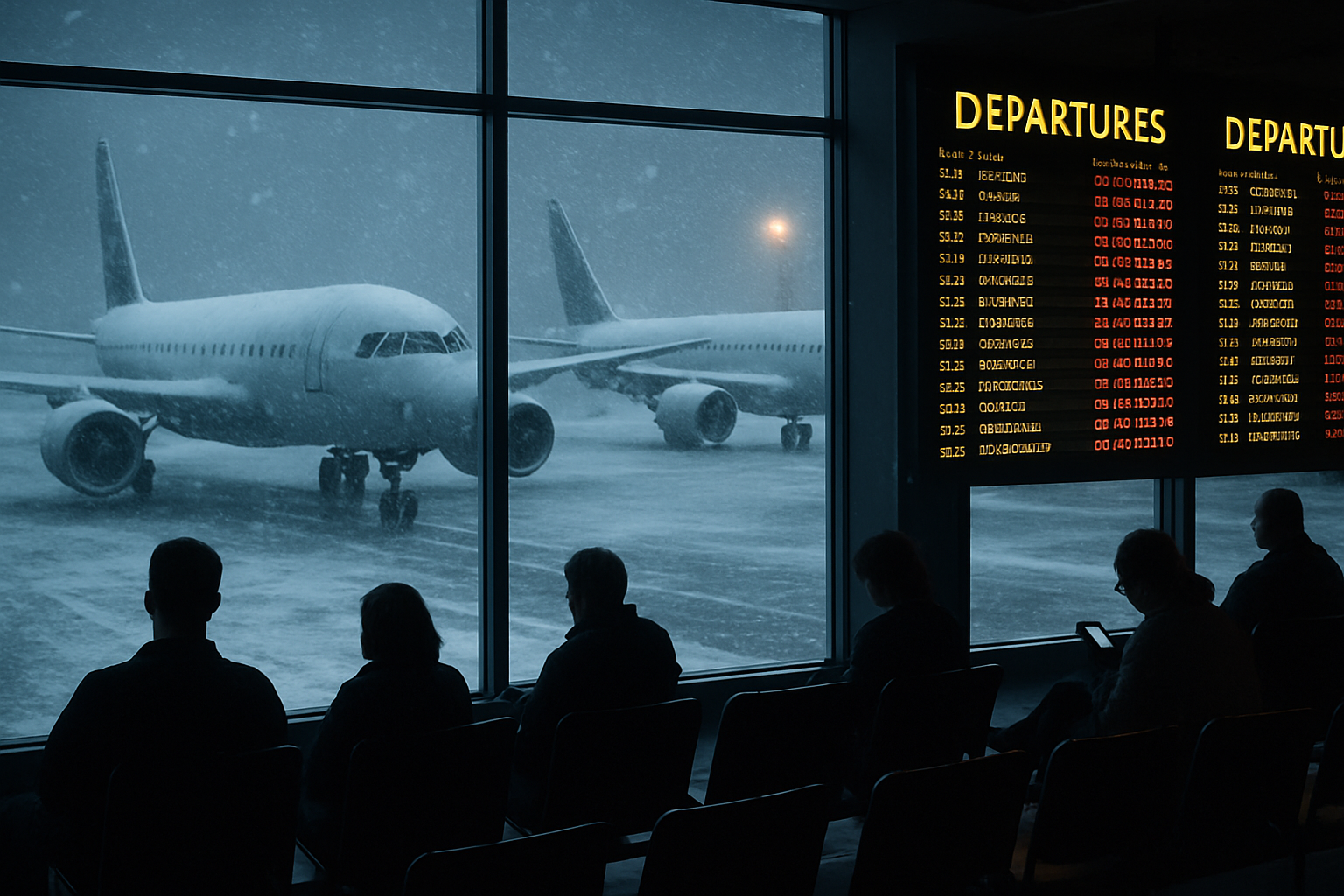
A devastating winter storm sweeping across the United States has triggered widespread flight cancellations and travel advisories affecting international travelers, with Jamaica's Sangster International Airport confirming multiple cancelled flights from February 22-24, 2026, while Kenyans in New York face high alert warnings as a powerful nor'easter threatens to ground thousands more flights along the Eastern seaboard.
MBJ Airports Limited, operators of Sangster International Airport in St. James, Jamaica, announced Saturday evening that numerous scheduled arriving and departing flights would be cancelled through Tuesday, February 24, due to severe winter conditions affecting various regions across the United States. The airport, a critical gateway for Caribbean tourism, serves as a stark reminder of how weather events thousands of miles away can cascade into international travel disruption.
Caribbean Aviation Under Siege
The flight cancellations at Sangster International represent just the latest chapter in what has become a prolonged crisis for Caribbean aviation connectivity. Passengers have been urged to contact their airlines directly for updates and rebooking options, as the ripple effects of the American winter storm extend far beyond U.S. borders.
"The interconnected nature of modern aviation means that severe weather in one region can ground flights across multiple countries," explained a senior aviation analyst familiar with Caribbean operations. "What we're seeing is the vulnerability of hub-and-spoke systems when major U.S. airports face prolonged closures."
The timing proves particularly challenging for Jamaica's tourism-dependent economy, as February represents a peak period for winter travelers seeking Caribbean destinations. Hotels and tour operators across the island now face the prospect of significant booking cancellations and revenue losses.
East Coast Braces for Devastating Nor'easter
Meanwhile, meteorological warnings have placed Kenyans and other international visitors in New York on high alert as a powerful nor'easter storm system approaches the region. Weather forecasters predict the storm could ground thousands of flights, creating what aviation experts describe as a "perfect storm" of travel disruption.
The approaching weather system threatens to compound an already strained aviation infrastructure that has struggled with capacity limitations and operational challenges throughout the winter season. Major airports including John F. Kennedy International, LaGuardia, and Newark Liberty International are expected to implement significant flight restrictions.
International travelers, particularly those from African nations like Kenya where direct flight options remain limited, face the prospect of extended delays and complex rebooking scenarios. Many rely on connecting flights through major U.S. hubs, making them particularly vulnerable to cascading disruptions.
Historical Context of Winter Travel Crises
The current disruptions occur against the backdrop of an unprecedented winter weather crisis that has plagued transportation networks across multiple continents throughout February 2026. European airports have faced similar challenges, with Berlin Brandenburg Airport experiencing repeated closures due to black ice conditions, while Schiphol Airport in Amsterdam has cancelled hundreds of flights due to severe winter weather.
This winter has been characterized by what meteorologists describe as exceptional frequency and intensity of extreme weather events. The polar vortex disruption has enabled Arctic conditions to penetrate far south into normally temperate regions, while simultaneously allowing unprecedented storm systems to develop over Atlantic waters.
The crisis demonstrates the vulnerability of global aviation networks to climate volatility, with infrastructure designed for historical weather patterns struggling to cope with new extremes. Recovery timelines that once measured in hours now extend to days or weeks, fundamentally altering the economics of international travel.
Economic and Human Impact
The travel disruptions extend far beyond mere inconvenience, creating significant economic hardship for tourism-dependent economies and separating families during peak travel periods. Caribbean nations, already struggling with post-pandemic recovery, face renewed challenges to their aviation lifelines.
For individual travelers, the disruptions mean missed connections, extended accommodation costs, and the stress of uncertain travel timelines. International students, business travelers, and families planning winter vacations find themselves caught in a web of cancellations and rebooking complications.
The cruise industry has also felt the impact, with several major cruise lines adjusting itineraries to account for passengers unable to reach departure ports due to flight cancellations. This creates a cascading effect throughout the Caribbean tourism ecosystem.
Infrastructure Adaptation Challenges
Aviation industry experts emphasize that the current crisis highlights critical gaps in climate adaptation planning for transportation infrastructure. Airports and airlines designed their operations around historical weather patterns that no longer reflect current realities.
"We're operating 20th-century infrastructure in a 21st-century climate," noted an industry executive speaking on condition of anonymity. "The frequency and intensity of these weather events requires fundamental rethinking of how we build resilience into aviation networks."
The challenge extends beyond individual airports to encompass entire regional aviation ecosystems. Caribbean airports, for instance, depend heavily on reliable connections to North American hubs. When those hubs face extended closures, the entire network suffers.
International Cooperation and Response
The crisis has prompted discussions about enhanced international coordination for aviation emergency response. Regional aviation authorities are exploring mutual aid agreements and alternative routing strategies to maintain connectivity during severe weather events.
Weather forecasting and communication systems have proven crucial in providing advance warning to travelers and airlines. However, the sheer scale of the disruptions has overwhelmed traditional contingency planning, highlighting the need for more robust emergency protocols.
Some airlines have implemented more aggressive fuel loading strategies, allowing aircraft to bypass potentially closed refueling stops. Others are exploring temporary route modifications to avoid weather-affected regions entirely.
Looking Forward: Building Resilient Networks
As the immediate crisis unfolds, aviation industry leaders are already contemplating longer-term adaptations necessary for climate resilience. These include enhanced weather monitoring systems, more flexible aircraft deployment strategies, and improved passenger communication platforms.
The current disruptions serve as a preview of conditions that climate scientists warn could become routine by the 2030s without significant adaptation investments. The choice facing the aviation industry is between reactive crisis management and proactive infrastructure transformation.
For now, passengers are advised to monitor weather forecasts closely, maintain flexible travel plans, and stay in direct contact with airlines for the most current information. The storm systems currently affecting travel are expected to persist for several more days before conditions begin to stabilize.
The travel crisis of February 2026 may ultimately be remembered as a watershed moment that forced fundamental reconsideration of how global aviation networks must evolve to maintain connectivity in an era of increasing climate volatility.