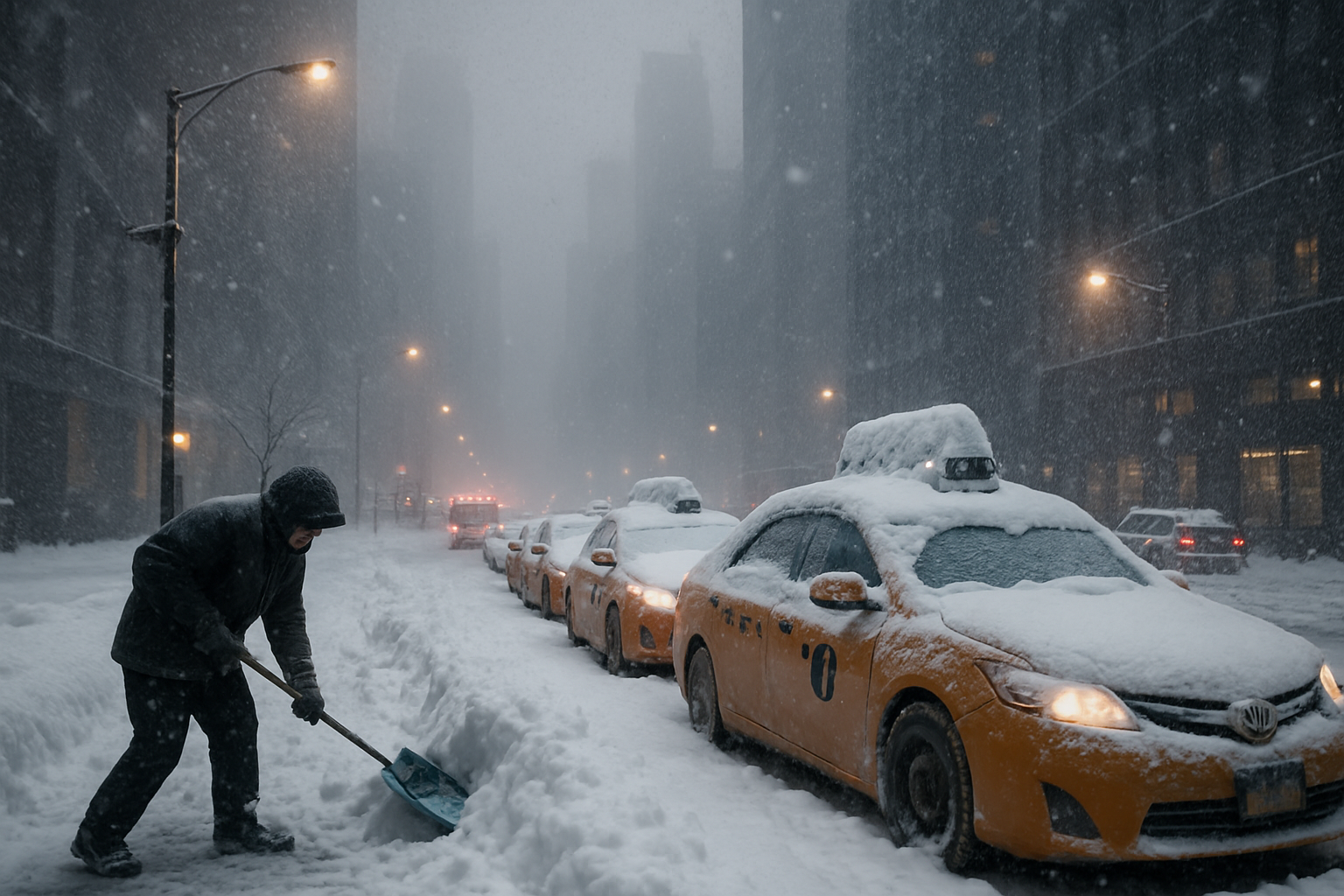
New York City is grappling with a historic winter storm that has dumped 50 centimeters of snow across the metropolitan area, bringing the nation's largest city to a virtual standstill and sparking an unusual police incident that has captured international attention.
The massive blizzard, which struck on February 23-24, 2026, has created the most challenging winter weather conditions the northeastern United States has experienced in over a decade. The storm forced widespread school closures, flight cancellations, and power outages affecting hundreds of thousands of residents from Maryland through Massachusetts.
Unprecedented Snowfall Paralyzes Transportation
According to Canadian Broadcasting Corporation reports, the winter storm has caused extensive travel disruptions across the region. Major airports including JFK, LaGuardia, and Newark have implemented significant flight restrictions, with over 5,000 flights canceled as of Tuesday morning. The unprecedented nature of this weather event has caught many transportation systems off guard.
City officials have described this as potentially the worst Northeast blizzard in a decade, with wind gusts exceeding 100 kilometers per hour creating near-zero visibility conditions. The storm has been classified as a "bomb cyclone" due to its rapid intensification and extreme weather characteristics.
Washington Square Park Snowball Fight Escalates
In an unusual turn of events that has drawn international media attention, New York Police are investigating an incident where officers were pelted with snowballs while responding to a massive snowball fight at Washington Square Park in Manhattan. Video footage shows two uniformed officers pacing a walkway in the park as snowballs fly at them from all directions.
The officers, growing visibly frustrated as they were hit by snowballs and covered in snow, shoved at least two people to the ground during the confrontation. Police sources describe this as "criminal behavior," though the full extent of any charges remains unclear as the investigation continues.
"The officers were responding to what initially appeared to be a harmless winter activity, but the situation escalated when participants began directly targeting law enforcement personnel."
— NYPD Source
The incident highlights the complex challenges law enforcement faces during extreme weather events, where public gatherings can quickly spiral out of control despite seemingly innocent origins.
Historical Context of Extreme Weather
This latest storm represents the continuation of what meteorologists are calling one of the most volatile winter periods in recent memory. The current crisis builds upon extensive historical precedent of extreme weather events that have tested the resilience of northeastern infrastructure and emergency response capabilities.
Previous winter storms this season have already claimed numerous lives across the Northern Hemisphere, with Japan experiencing its worst winter conditions since 1945, resulting in 35+ deaths from severe snowstorms. Meanwhile, Europe has faced unprecedented avalanche risks and infrastructure failures, with multiple countries declaring states of emergency.
The climate context is particularly striking: January 2026 was confirmed as the hottest month in recorded history, marking the 18th consecutive month that global temperatures exceeded 1.5°C above pre-industrial levels. This creates a climate volatility paradox where record global warming coincides with devastating regional winter extremes.
Emergency Response and Infrastructure Strain
New York City's emergency services have activated comprehensive response protocols, with Mayor Zohran Mamdani's administration implementing citywide travel restrictions and opening warming centers throughout the five boroughs. The Metropolitan Transportation Authority has suspended numerous subway services, particularly those connecting to New Jersey and outer boroughs.
Power companies report hundreds of thousands of customers without electricity as transmission lines struggle under the weight of heavy, wet snow. Natural gas prices have spiked dramatically as heating demands surge and weather-related infrastructure damage compounds supply challenges.
Emergency services are operating at capacity limits, with first responders struggling to reach those in need due to impassable roads and dangerous travel conditions. The National Guard has been activated in multiple states to assist with snow removal operations and emergency response efforts.
Economic and Social Impact
The storm's economic impact extends far beyond immediate emergency costs. Broadway shows have been canceled, disrupting one of New York's key tourism industries during what should be peak winter season. International flights have been suspended, creating ripple effects across global aviation networks.
School districts have closed throughout the region, affecting millions of students and creating childcare challenges for working families. The timing during a work week amplifies the economic disruption, as businesses face closure and supply chain interruptions.
Vulnerable populations face particular risks, with city officials emphasizing the importance of checking on elderly neighbors and ensuring homeless individuals have access to emergency shelters. Mental health services are preparing for increased demand as communities cope with extended isolation and infrastructure failures.
Climate Adaptation Challenges
The current crisis exposes critical vulnerabilities in infrastructure designed for historical rather than current climate conditions. Transportation networks, power grids, and communication systems are operating beyond their intended parameters, highlighting the urgent need for comprehensive climate adaptation strategies.
Scientists warn that such extreme weather events represent a preview of routine conditions expected by the 2030s without significant climate adaptation investments. The simultaneity and scope of these disasters are straining traditional emergency response systems and international mutual aid mechanisms.
The choice between reactive crisis management and transformative infrastructure adaptation has become increasingly urgent as recovery timelines extend from days to weeks or months, fundamentally altering the economics of disaster response.
Recovery and Future Preparedness
As the immediate crisis continues, attention is already turning to recovery and improved preparedness for future extreme weather events. The "build back better" approach emphasizes climate-resilient infrastructure designed for future rather than historical weather patterns.
Enhanced emergency response capabilities, improved early warning systems, and strengthened international cooperation frameworks are essential components of adaptation strategies for permanent climate volatility. The current crisis may serve as a watershed moment, forcing fundamental reconsideration of weather preparedness approaches.
Additional Atlantic storm systems are developing, suggesting that the current emergency period may persist for several more weeks. This pattern of consecutive severe weather events is becoming the new normal, requiring transformative rather than reactive adaptation approaches.
The combination of record snowfall, infrastructure failure, and unusual police incidents in Washington Square Park illustrates the complex challenges that extreme weather creates for urban communities. As New York continues to dig out from this historic storm, the lessons learned will likely influence winter preparedness strategies for years to come.