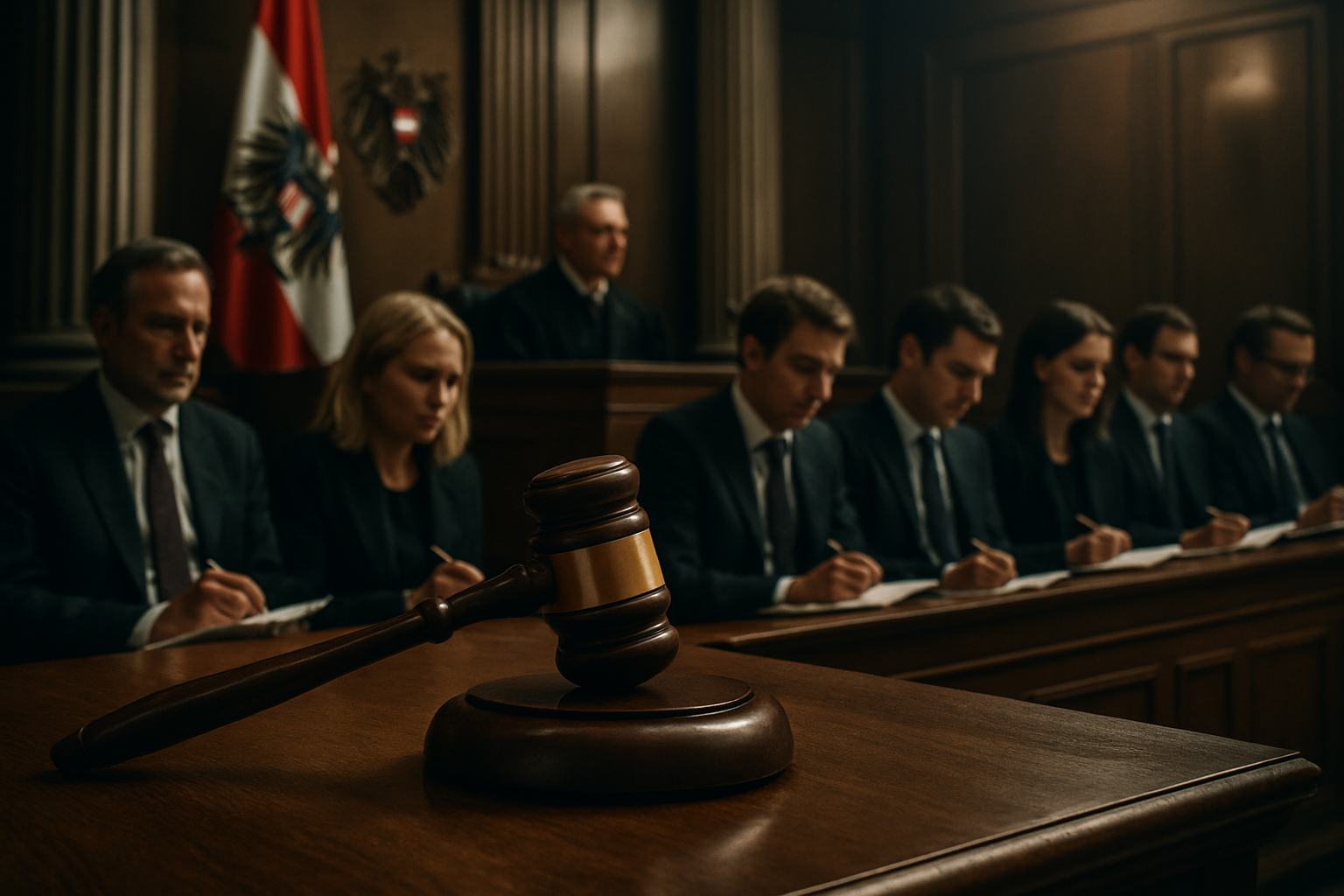
An Austrian federal judge has prohibited live media coverage during high-profile legal proceedings involving prominent political figure Wöginger, citing concerns that real-time reporting could compromise witness testimony and undermine judicial integrity.
The controversial decision represents a significant restriction on press freedom in Austria's judicial system, where media organizations typically enjoy broad access to court proceedings. Defense attorneys successfully argued that live ticker coverage could influence witnesses and compromise the fairness of the trial, leading the presiding judge to implement an unprecedented ban on real-time reporting.
Legal Justification for Media Restrictions
The court's ruling centers on the principle that witness testimony must remain uncontaminated by external influences. Defense counsel argued that live media coverage creates a dynamic where witnesses could potentially alter their statements based on real-time awareness of how proceedings are being reported to the public.
According to court documents, lawyers contended that ticker coverage represents "a possible influence on witnesses," creating an environment where testimony could be shaped by ongoing media narratives rather than factual recollection. The judge accepted this argument, determining that the integrity of the judicial process outweighed traditional press access rights.
However, the court rejected broader requests for more extensive press restrictions, indicating that while live coverage poses specific risks, general media access to court proceedings remains essential for democratic transparency.
Expert Legal Analysis Questions Decision
The restriction has drawn criticism from legal experts who question both the reasoning and precedent established by the ruling. Criminal law expert Professor Kert characterized the ticker ban as "peculiar," arguing that in multi-day court proceedings, preventing witnesses from learning about other testimony is practically impossible.
"In multi-day court proceedings, it cannot be prevented anyway that witnesses find out what other witnesses have said"
— Professor Kert, Criminal Law Expert
This critique highlights a fundamental challenge in the court's logic: if witnesses can access information about proceedings through traditional media coverage, social media discussions, and informal networks, the specific prohibition of live ticker coverage appears to address only one avenue of potential influence while leaving many others intact.
Press Freedom Implications
The decision raises significant questions about the balance between judicial integrity and democratic transparency. Live media coverage has become an essential tool for public accountability in high-profile legal proceedings, allowing citizens to follow developments in real-time and ensuring that court proceedings remain subject to public scrutiny.
Media organizations argue that live reporting serves crucial democratic functions by preventing judicial proceedings from occurring in effective secrecy, even when court sessions are technically public. The immediate availability of information allows for timely analysis and public discourse about legal proceedings that may have broader political implications.
Austrian media law traditionally provides strong protections for court reporting, recognizing that judicial transparency serves as a cornerstone of democratic governance. The Wöginger case restriction represents a notable departure from these principles, potentially setting precedent for future limitations on media access.
Broader Context of European Court Restrictions
The Austrian decision occurs within a broader European context of increasing tension between judicial independence and media access. Courts across the continent have grappled with similar challenges as digital media creates new dynamics in the relationship between legal proceedings and public awareness.
Recent international precedents demonstrate varying approaches to this balance. Some jurisdictions have embraced enhanced transparency through live streaming and expanded media access, while others have implemented stricter controls on how proceedings are reported, particularly in politically sensitive cases.
The Wöginger case joins a growing collection of European legal proceedings where courts have had to navigate the intersection of traditional judicial principles with contemporary media practices and public expectations for immediate information access.
Political Dimensions of the Proceeding
The restriction occurs in proceedings involving a prominent political figure, adding complexity to questions about media access and judicial independence. High-profile political cases often generate intense public interest, creating pressure for both comprehensive media coverage and careful judicial management to ensure fair proceedings.
The court's decision to limit media access while maintaining general public access to proceedings suggests an attempt to balance competing interests: preserving the integrity of the judicial process while maintaining the appearance of transparency and public accountability.
Legal observers note that politically sensitive cases often require courts to make difficult decisions about how to manage public interest while protecting the fundamental rights of all participants, including witnesses whose testimony may be central to the proceedings.
Implications for Future Court Proceedings
The Wöginger case precedent could influence how Austrian courts approach media access in future high-profile proceedings. If upheld on appeal, the decision might provide a template for restricting live coverage in cases where courts determine that real-time reporting poses risks to witness testimony or judicial integrity.
However, the limited nature of the restriction - applying specifically to live ticker coverage while maintaining other forms of media access - suggests that courts may seek to implement targeted limitations rather than broad restrictions on press freedom.
Constitutional law experts are closely monitoring the case to understand its implications for the broader relationship between Austria's judicial system and media organizations, particularly in an era where digital platforms enable instantaneous global dissemination of court information.
Democratic Accountability Questions
The fundamental tension revealed by this case reflects broader questions about how democratic societies balance judicial independence with public accountability. While courts must operate free from external pressure to ensure fair proceedings, democratic governance requires that judicial actions remain subject to public scrutiny and oversight.
The challenge becomes particularly acute in cases involving public figures, where the public interest in transparency may conflict with the judicial system's obligation to ensure fair proceedings for all participants. The Austrian court's approach represents one attempt to navigate these competing demands, though its effectiveness and appropriateness remain subjects of ongoing debate.
As legal proceedings continue, the case will likely serve as an important test of how European democratic institutions adapt traditional principles of judicial independence and press freedom to the realities of contemporary media landscapes and public expectations for transparency in government operations.