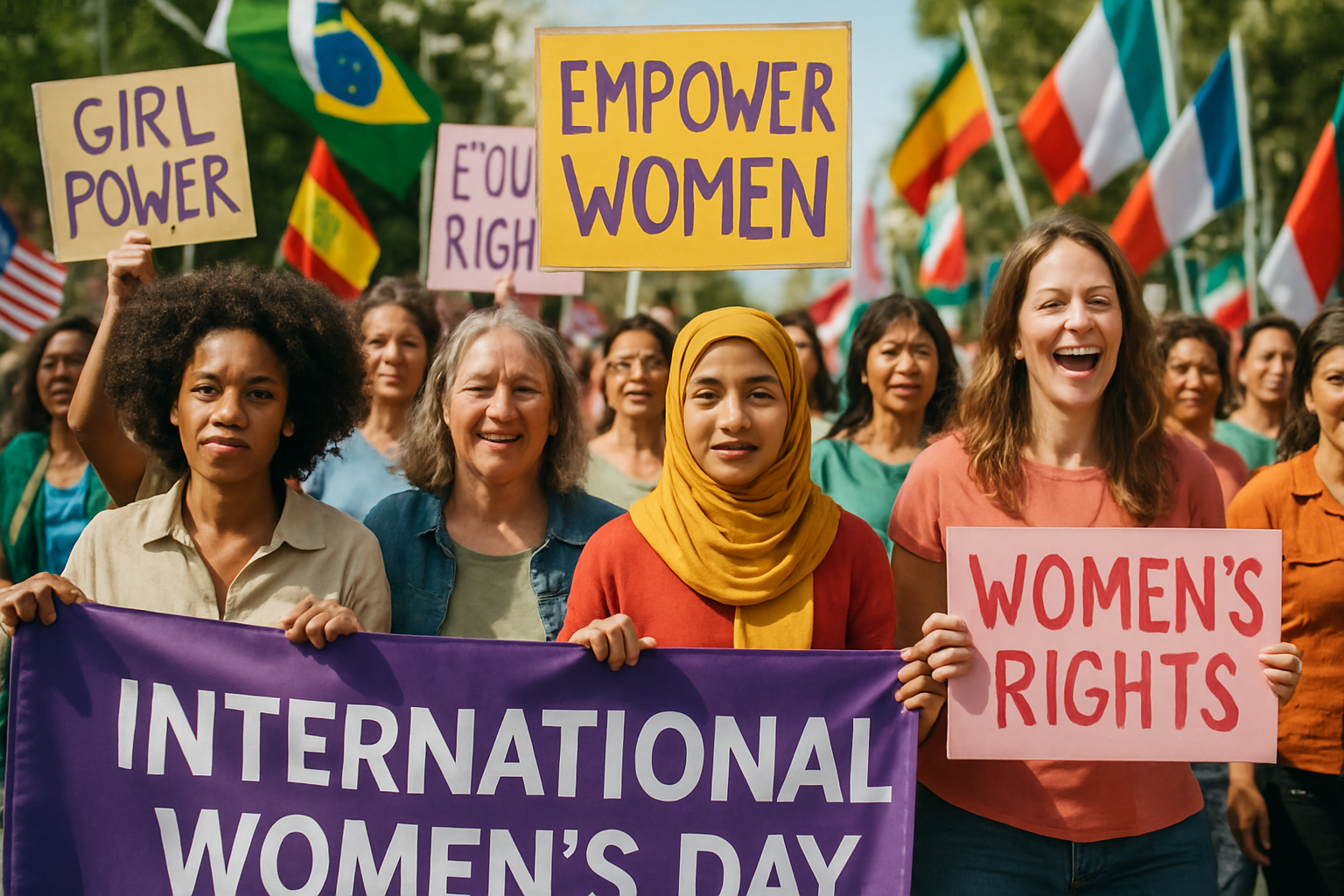
From Mexico City's massive demonstrations to Barbados' cultural initiatives and Trinidad and Tobago's solidarity walks, International Women's Day 2026 showcased a powerful global movement demanding justice, safety, and equality for women while confronting the stark reality that gender-based violence remains a pressing crisis worldwide.
Tens of thousands of women took to the streets across multiple nations on March 8, 2026, transforming what has become one of the world's largest coordinated protests into a unified call for change. The demonstrations, spanning continents and cultures, revealed both remarkable progress in women's empowerment and the sobering persistence of systematic barriers that continue to limit women's full participation in society.
Mexico Leads Massive Regional Mobilization
In Mexico City, the epicenter of Latin America's women's rights movement, tens of thousands of women participated in what Canadian media described as "the biggest political protest event in a country where human rights advocates say gender-based violence often goes ignored or unpunished." The marches carried powerful messages, with protesters holding signs reading "No llegamos todas" (We didn't all make it) and "Ni una hija menos, ni una madre rota más" (Not one less daughter, not one more broken mother).
The protests took on deeply personal dimensions as participants honored victims of femicide and disappearances. Natalia Soto marched for her best friend Ariadna Fernanda López, who is believed to have been killed in Mexico City after her body was found in 2022 along a highway in the neighboring state of Morelos. Her poster read simply: "I shout for Ariadna because she can't."
"Miles de mujeres tomaron este domingo las calles de la Ciudad de México," El Financiero reported, highlighting how thousands of women filled the capital's streets with demands for an end to the violence that claims approximately ten women's lives daily in Mexico.
— El Financiero, March 8, 2026
Caribbean Nations Emphasize Awareness and Cultural Change
In Barbados, the government took a multipronged approach to International Women's Day, combining education with cultural celebration. Minister of People Empowerment and Elder Affairs Adrian Forde acknowledged that discussions with the Barbados Police Service and studies conducted with the Inter-American Development Bank revealed "a strong need for sensitisation on gender-based violence."
Speaking at a service commemorating International Women's Day at Ellerton Wesleyan Holiness Church, Forde emphasized that survey findings highlight persistent challenges in addressing gender-based violence, even in nations making significant strides in women's empowerment.
The island nation also launched innovative cultural initiatives, with Chief Cultural Officer Andrea Wells at the National Cultural Foundation calling on artists to "use their voices and their art to shine a light on women's experiences and gender issues." The annual Changes Art Exhibition featured work from 31 male and female artists, each piece designed to raise awareness about women's experiences and promote gender equity through creative expression.
Trinidad and Tobago Shows Political Unity
In Port-of-Spain, Trinidad and Tobago, hundreds of female police officers joined with employees from the Ministry of Culture and Community Development and other state agencies for the International Women's Day walk around the Queen's Park Savannah. The event demonstrated remarkable political unity, with acting Prime Minister Jearlean John, Culture Minister Michelle Benjamin, Deputy Police Commissioner Suzette Martin, and Transport Commissioner Clive Clarke all participating.
Minister Benjamin's message to those in service to the nation was particularly poignant, advising participants "to take care of their health" – a reminder that women's empowerment must include attention to their well-being as they serve in leadership roles across society.
Global Context Reveals Mixed Progress
The 2026 International Women's Day celebrations occurred against a backdrop of both encouraging advances and disturbing setbacks in women's rights globally. Historical context from previous Planet News coverage reveals that while significant progress has been made in many regions, fundamental challenges persist.
According to comprehensive global analysis, women worldwide have only 64% of the legal protections afforded to men. In 54% of nations, consent-based rape definitions remain absent from legal frameworks, while 75% of countries still permit child marriage. Perhaps most alarmingly, 676 million women and girls live within 50 kilometers of active conflict zones where justice systems are largely absent.
However, the global movement has also achieved remarkable milestones. Austria celebrated a historic achievement where, for the first time, women's enrollment in higher education surpassed men's, with officials calling it a "decisive factor for societal transformation." The Dominican Republic marked a financial milestone where women borrowers exceeded men in formal financial systems for the first time, reaching 50.4% versus 49.6%.
Violence Against Women Remains Critical Challenge
Despite progress in education and financial inclusion, violence against women continues to cast a shadow over celebrations worldwide. The demonstrations highlighted a stark reality: gender-based violence transcends national boundaries, economic systems, and cultural contexts.
Colombia reported 18 women murdered in Atlántico department in early 2026 alone, prompting feminist groups to demand institutional examination of protection failures. Latvia adopted the slogan "We don't want flowers, we want safety," directly challenging traditional International Women's Day gestures in favor of substantive security improvements.
Research from Uganda revealed disturbing patterns where guardians, parents, relatives, and teachers emerged as primary perpetrators of violence against schoolgirls, demonstrating how deeply embedded gender-based violence has become in social structures traditionally meant to protect children.
Economic Empowerment Shows Promise Despite Barriers
The 2026 celebrations also highlighted significant progress in women's economic participation, though barriers persist. Kazakhstan reported that 48% of entrepreneurs are women, demonstrating growing business leadership, while 82% of educators are also women, pointing to continued occupational segregation patterns.
Research consistently shows that countries with comprehensive women's empowerment programs report stronger economic growth, greater innovation capacity, and more resilient community structures. Italy's economic modeling revealed that bringing female employment to male levels would boost the nation's GDP by 11-12%, representing hundreds of billions in additional economic activity.
Technology and Innovation Offer New Opportunities
The 2026 demonstrations also reflected how technology has transformed women's rights advocacy. Digital platforms enabled unprecedented coordination of global protests, while social media amplified voices that might otherwise go unheard. However, experts warned that technology can exacerbate inequalities without thoughtful implementation ensuring equal access to digital literacy training and tech sector employment.
The integration of technology in women's empowerment efforts demonstrated both promise and peril. While digital tools provide new avenues for economic participation and advocacy, they also create new forms of harassment and discrimination that require innovative policy responses.
Daily Commitment Beyond Annual Recognition
Perhaps the most significant theme emerging from International Women's Day 2026 was the transformation from annual symbolic recognition to sustained daily commitment. Malta's organizing slogan "Women's Day Every Day" exemplified this evolution, emphasizing that gender equality requires continuous attention rather than periodic acknowledgment.
Leaders across nations emphasized that gender equality must be treated as "fundamental community infrastructure" rather than individual crisis management. Success factors identified include sustained political commitment, comprehensive professional training in prevention approaches, robust community engagement, and continued international cooperation.
"Gender equality requires daily commitment versus annual observance. We must build systematic support structures that function year-round, not just during March celebrations."
— International Women's Day 2026 Advocacy Coalition
International Cooperation Despite Challenges
The 2026 celebrations demonstrated remarkable international cooperation despite traditional multilateral funding challenges. Bilateral partnerships and regional collaboration networks enabled knowledge sharing and resource coordination through innovative distributed cooperation models that allow culturally responsive approaches while maintaining evidence-based standards and universal human rights commitments.
This peer-to-peer cooperation proved particularly effective, with smaller nations contributing research methodologies while larger countries offered technological innovations and implementation resources. The approach suggested a new model for international gender equality coordination that respects cultural autonomy while leveraging global capabilities.
Looking Forward: From Recognition to Transformation
International Women's Day 2026 represented a critical juncture showing both the remarkable progress achieved through decades of advocacy and the extensive work that remains. From governmental recognition ceremonies to grassroots activists demanding justice reform, the day showcased a global movement that continues evolving despite facing both traditional barriers and emerging challenges.
The path forward requires vigilance against backsliding, innovative solutions for persistent challenges, and most importantly, the transformation of annual recognition into sustained daily commitments to women's rights and empowerment. As demonstrated by the diverse approaches taken from Mexico City's mass mobilization to Barbados' cultural initiatives and Trinidad and Tobago's institutional support, effective women's empowerment requires locally adapted strategies that maintain universal commitments to human dignity and equal opportunity.
The voices echoing through streets worldwide on March 8, 2026, carried both celebration of progress achieved and determination to address the challenges that remain. Their message was clear: women's rights are human rights, and the fight for equality requires not just one day of recognition, but a lifetime of commitment to justice, safety, and empowerment for all women and girls.