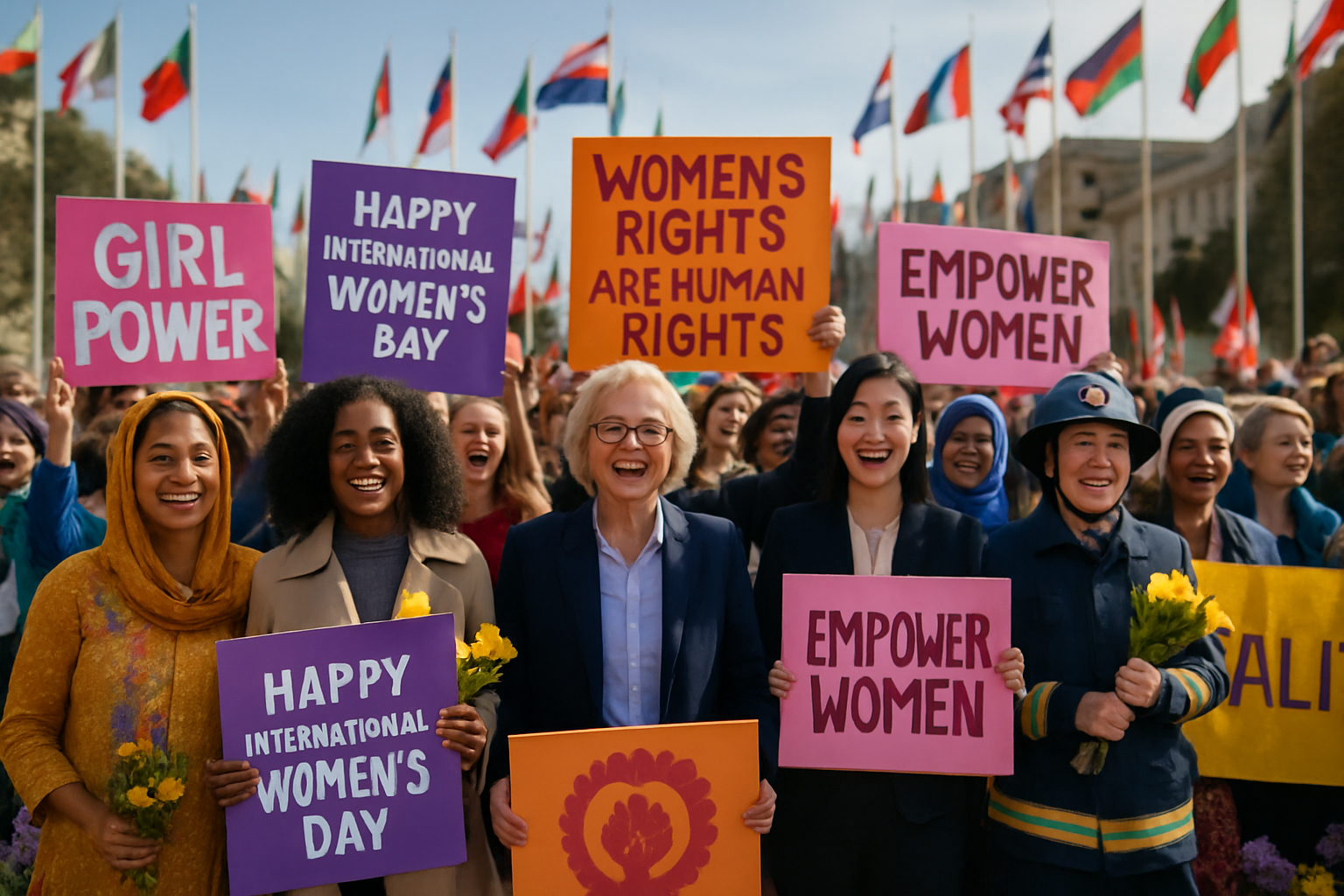
March 8, 2026 marked International Women's Day with celebrations spanning continents, as governments, organizations, and communities worldwide recognized women's achievements while acknowledging the substantial work remaining toward gender equality.
From Algeria's ministerial recognition to Singapore's feminist leadership discourse, this year's observances revealed both remarkable progress and persistent challenges facing women globally. The day unfolded against a complex backdrop of political developments, economic empowerment initiatives, and ongoing struggles for fundamental rights in various regions.
Government Leadership and Recognition
In Algeria, Minister of Housing, Urban Planning, Cities and Urban Development Mohamed Tarek Belaribi issued a message commemorating the day, emphasizing "the place that Algerian women occupy in the history of our glorious homeland." His statement highlighted women as "a symbol of sacrifice and steadfastness, and an essential partner in the process of building the state and preserving its components."
Azerbaijan's First Vice-President Mehriban Aliyeva shared commemorative messages on social media, reflecting the high-level governmental recognition across multiple countries. These official acknowledgments represent a significant evolution from previous decades when women's contributions often went unrecognized at the highest levels of government.
Pioneering Women Breaking Barriers
Burkina Faso showcased remarkable individual achievements, with profiles of women shattering traditional barriers. Maïmouna Guembré stands as the country's first female metallurgist, building a 30-year career in the West African mining industry. Her journey from laboratory mineral processing to senior management positions in major gold companies demonstrates how women can succeed in traditionally male-dominated fields.
"Those who invest in women's education invest in a more just future."
— Jugend Eine Welt, supporting Don Bosco vocational training centers
The academic sector also celebrated achievements, with sociologist and educator Ezoma Juliette Nathalie Bakyono of Thomas Sankara University emphasizing the need to "recognize the potential of women and girls as foundations of a more inclusive and just society." Her work at the intersection of research, teaching, and civic engagement exemplifies how women are driving social change through multiple channels.
Economic Empowerment and Entrepreneurship
Luxembourg revealed significant progress in women's entrepreneurship, with Luxinnovation publishing the first comprehensive analysis of startups founded or co-founded by women. The study identified 98 active startups with female leadership, demonstrating growing female participation in the innovation economy.
Japan presented mixed results, with the ratio of female executives at mid-sized firms reaching 21.5% - a 3.1% increase from the previous year. However, the country still ranked 34th among 35 countries surveyed, highlighting the persistence of structural barriers despite gradual improvement.
These economic indicators reflect a global trend where women's entrepreneurship and leadership are expanding, though unevenly across regions and sectors.
Health and Social Justice Focus
Luxembourg's march emphasized women's health as a major theme, addressing specific challenges including endometriosis, polycystic ovary syndrome (SOPK), and menstrual disorders. Activists noted that "women are not always taken seriously" regarding health concerns, pointing to ongoing medical gender bias that affects diagnosis and treatment quality.
Papua New Guinea hosted an International Women's Day walk in the National Capital District, demonstrating grassroots mobilization for women's rights. These community-level celebrations complement high-level governmental recognition, creating a comprehensive approach to advancing women's equality.
Persistent Violence and Security Concerns
The celebrations occurred against concerning reports of violence against women in positions of power. Analysis from Burkina Faso highlighted how even heads of state face gender-based violence, referencing an incident involving Mexico's President Claudia Sheinbaum. This stark reminder reinforced that "no woman, regardless of her status, is completely safe from sexist and sexual violence."
Trinidad and Tobago's Network of NGOs emphasized the urgent need for justice systems to "speed up" in addressing violence against women and girls. Coordinator Jackie Burgess stressed that the wheels of justice needed acceleration, reflecting widespread frustration with slow progress in protecting women from violence.
Media Representation and Cultural Discourse
The Philippines examined ongoing cultural challenges through analysis of public discourse, questioning why conversations continue to focus on "why Women's Month exists" rather than addressing underlying inequalities. Writers noted how women in prominent positions remain subject to objectification and casual misogyny, demonstrating that professional achievement doesn't guarantee respect or safety.
Italy's coverage reflected on the 80th anniversary of women's suffrage, with Repubblica noting that "women have been left alone without concrete political commitments." This historical perspective provided context for contemporary struggles, showing how political participation hasn't automatically translated to comprehensive equality.
Feminist Leadership Evolution
Singapore's AWARE organization showcased evolving feminist leadership through new executive director Lim Shoon Yin. The 50-year-old single mother of four described herself as a "cautious and angry feminist," reflecting on both backlash against feminism and the unfinished nature of gender equality work in Singapore.
Her perspective represents a mature approach to feminist advocacy, acknowledging progress while maintaining vigilance against setbacks - a theme echoed across multiple countries' celebrations.
Global Context and Future Challenges
UN Women Executive Director Sima Bahous captured the complex moment, noting that the world has "never been so close to achieving gender equality" while simultaneously "never closer to losing it." This paradox reflects the current global situation where significant advances coexist with organized backlash and systematic rollbacks of women's rights in various regions.
António Guterres reinforced this message, calling gender inequality "the greatest human rights challenge we face" and emphasizing that promoting equality constitutes "one of the strongest drivers of sustainable development and peace."
Technological and Professional Advancement
The day's celebrations highlighted women's growing presence in traditionally male-dominated fields. From Algeria's recognition of female workers in the housing sector to Finland's acknowledgment of International Women's Day, the observances reflected women's expanding professional roles across diverse industries.
However, challenges persist in achieving equal representation in decision-making positions, fair compensation, and protection from workplace discrimination - issues that transcended national boundaries in this year's global discussions.
Looking Forward: Sustained Commitment Beyond March 8
A recurring theme across celebrations was the need to transform annual observance into sustained daily commitment. As noted in Malta's organizing slogan "Women's Day Every Day," true progress requires consistent attention to gender equality rather than symbolic annual recognition.
The 2026 International Women's Day celebrations demonstrated both the remarkable progress achieved through decades of advocacy and the extensive work remaining. From government ministers acknowledging women's contributions to grassroots activists demanding justice reform, the day showcased a global movement that continues evolving despite facing both old and new challenges.
As women worldwide continue breaking barriers in fields from metallurgy to politics, the path toward genuine equality requires vigilance against setbacks, innovative solutions to persistent challenges, and transformation of annual recognition into sustained daily commitment to women's rights and empowerment.