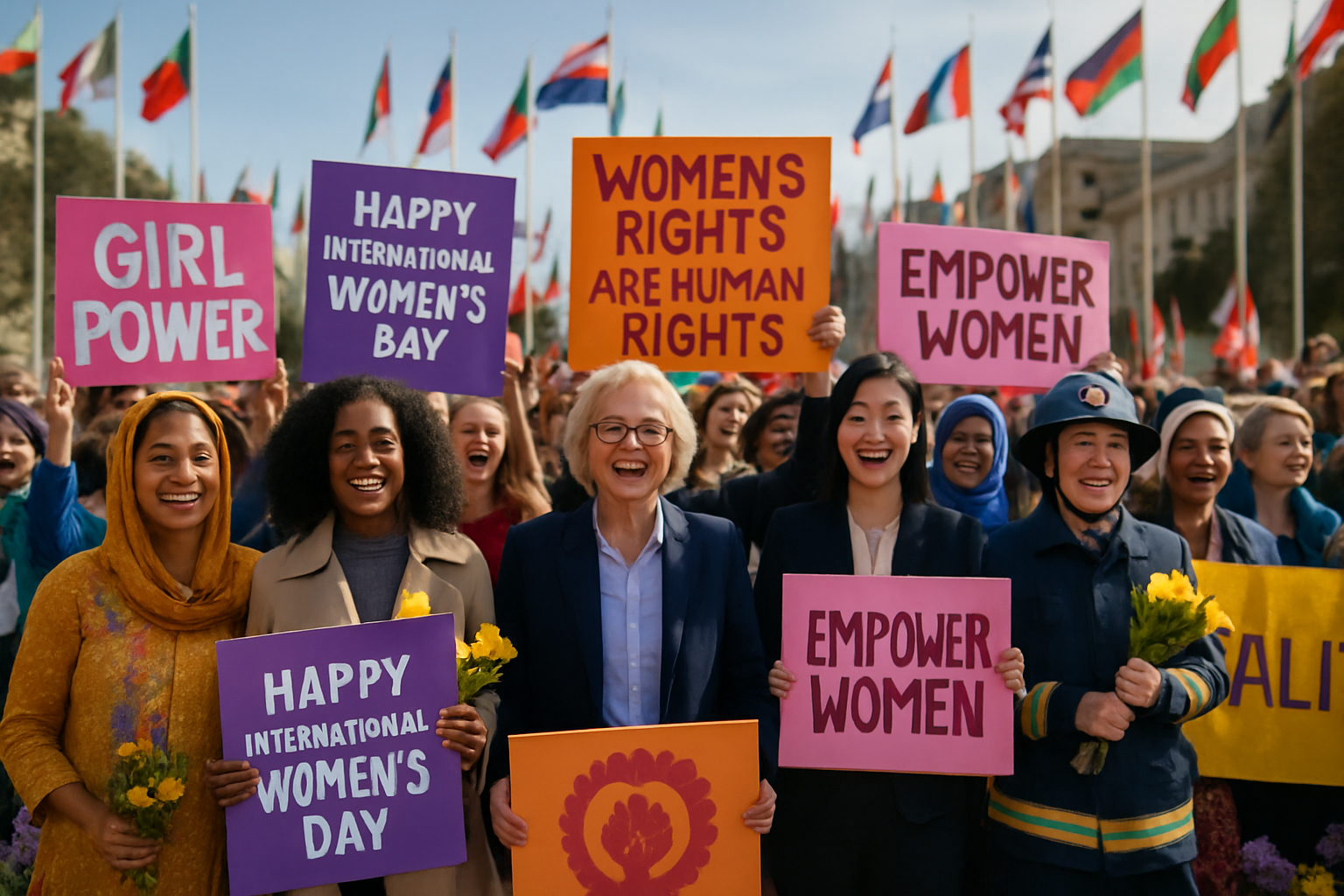
Countries worldwide marked International Women's Day 2026 with a remarkable display of solidarity and determination, showcasing both significant progress in women's rights and the persistent challenges that continue to demand global attention. From government-led ceremonies to grassroots demonstrations, the March 8th celebrations revealed a complex landscape of advancement and advocacy across diverse cultures and political systems.
The 2026 commemorations demonstrated an evolution from previous years, with many countries embracing the theme "Women's Day Every Day" – emphasizing the need for sustained commitment to gender equality beyond annual symbolic recognition. This shift reflects growing awareness that meaningful change requires continuous effort rather than periodic acknowledgment.
Government Recognition Reaches New Heights
Several nations provided unprecedented official recognition for women's contributions. In Algeria, Minister of Religious Affairs and Endowments Dr. Youssef Belmahdi oversaw celebrations at Dar al-Imam in Algiers under the theme "Algerian Women: Noble Mission and Renewed Role." The minister emphasized how celebrating International Women's Day highlights women's place in society and their contributions to building the nation.
The Dominican Republic elevated its recognition to the highest levels, with President Luis Abinader leading the ceremony marking the 41st presentation of the Medal of Merit for Dominican Women, the state's highest distinction for honoring women's contributions to national development. The event, held at the National Theater Eduardo Brito, also commemorated the centenary of Minerva Mirabal's birth, a symbol of resistance against dictatorship.
In Gabon, a conference titled "Rights and Justice for All: Women Administrators in Service" was held in Libreville, calling for increased female representation in government administration. The event highlighted the critical need for women's participation in decision-making processes at all levels of governance.
Grassroots Movements and Community Action
Beyond official ceremonies, community-led initiatives demonstrated the grassroots strength of the women's rights movement. In Burkina Faso's Dédougou region, women gathered for a public conference examining "Building Lasting Peace in Burkina Faso: What Contribution from Women and Girls in Promoting Living Together?" The event brought together administrative authorities, women's organizations, and local populations to address women's role in peacebuilding.
Malta's approach exemplified the shift toward sustained commitment, with activists organizing under the slogan "Women's Day Every Day." This messaging emphasized that gender equality requires daily attention rather than annual observances, reflecting a maturation in how the movement approaches systemic change.
In France, hundreds of thousands participated in demonstrations across the country, with notable feminist figure Gisèle Pelicot leading the march in Paris. The French demonstrations connected women's rights advocacy with broader social justice movements, illustrating the intersectional nature of contemporary feminism.
Health and Workplace Focus
Austria's contribution to the global conversation centered on mental health issues affecting women, with the Austrian Association for Psychotherapy (ÖBVP) highlighting the psychological impacts of multiple burdens and invisible care work that disproportionately affect women. This focus on mental health represents an important evolution in understanding how gender inequality manifests in less visible but equally significant ways.
In Estonia, the practical impact of women's recognition was evident in the business sector, where International Women's Day proved beneficial for the country's flower sellers and wholesalers, demonstrating the economic dimensions of cultural celebrations.
Monaco showcased innovation in approaching gender equality education with the eighth edition of the PowHer Event at Espace Leo Ferré. The interactive format guided participants through workshops designed to raise awareness about inequalities women face in sports and health, with Minister of State Christophe Mirmand and other officials actively participating.
Addressing Systemic Challenges
The celebrations were not merely commemorative but also highlighted ongoing struggles. In the Democratic Republic of Congo, the Foundation BIESTHER called for placing women's rights and empowerment at the heart of lasting peace efforts, recognizing that sustainable development requires gender equality as a fundamental component.
Radio Okapi's programming in the DRC examined how women's rights have evolved through legislative reforms, from family code changes to laws against gender-based violence. However, the coverage also questioned the gap between legal progress and concrete implementation, addressing whether these advances translate into real improvements in women's lived experiences.
"The challenge is not just creating laws on paper, but ensuring they translate into meaningful change in women's daily lives."
— Caroline Pindi Norah, Women's Rights Activist, DRC
Regional Perspectives and Cultural Approaches
The diversity of approaches across different regions revealed both universal themes and culturally specific expressions of women's rights advocacy. Burkina Faso's events were hosted by the Chinese embassy, demonstrating international cooperation in supporting women's empowerment initiatives. WHO representative Claudine Zongo delivered a message of hope, emphasizing women's central role in family, community, and societal stability even amid security and social challenges.
The celebrations also reflected ongoing tensions between progress and resistance. While many countries celebrated achievements, the global context remains challenging, with some regions experiencing setbacks in women's rights. The contrast between advancement in some areas and regression in others underscored the fragility of progress and the need for continuous vigilance.
Looking Forward: Sustainable Commitment
The 2026 International Women's Day celebrations marked a significant evolution in the global women's rights movement. The emphasis on daily commitment over annual recognition suggests a maturing understanding that gender equality requires sustained institutional change, continuous policy implementation, and cultural transformation rather than symbolic gestures.
Evidence from countries that have invested in comprehensive women's empowerment programs shows stronger economic growth, increased innovation capacity, and more resilient communities. This economic argument for gender equality complements moral and human rights justifications, providing multiple rationales for sustained commitment to women's advancement.
The path forward requires maintaining vigilance against backsliding while developing innovative solutions to persistent challenges. As demonstrated by the diverse approaches showcased on March 8, 2026, success comes through transforming annual recognition into sustained daily commitment to justice, safety, and empowerment for all women and girls.
International Women's Day 2026 revealed both remarkable progress achieved through decades of advocacy and extensive work that remains. The global community's response demonstrated that while challenges are universal, solutions must be locally adapted while maintaining international cooperation and accountability mechanisms to ensure gender equality becomes a fundamental part of building just and prosperous societies worldwide.