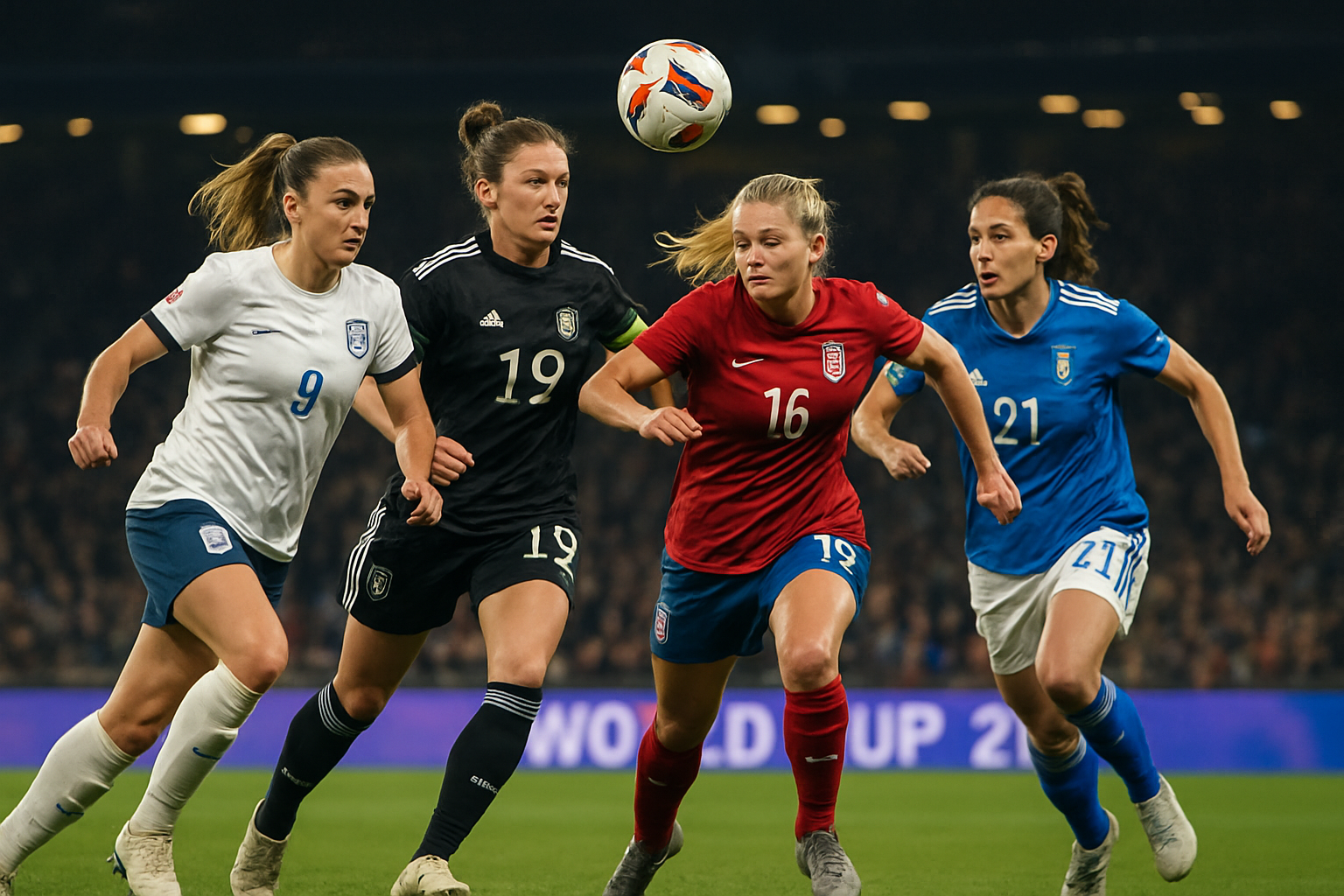
Women's national teams across Europe launched their 2027 FIFA Women's World Cup qualifying campaigns on Tuesday evening, marking the beginning of a crucial journey toward the next global tournament with dramatic opening fixtures that delivered late goals, stunning upsets, and memorable debuts.
The opening round of qualifiers showcased the evolving competitive landscape of women's international football, with traditional powerhouses facing stern resistance from emerging nations while breakthrough performances highlighted the sport's continued global expansion.
France Escape with Dramatic Victory in Dublin
France secured a vital 2-1 comeback victory over Ireland at Tallaght Stadium in Dublin, with striker Melvine Malard scoring twice to overturn an early Irish lead. The match epitomized the competitive nature of modern women's football qualifying, where no result can be taken for granted.
Ireland took a surprise lead against the French visitors, demonstrating the growing strength of women's football across Europe. However, Malard's clinical finishing proved decisive as France showed their championship pedigree to secure three crucial points in their Group A2 opener.
"This was exactly the kind of test we expected in qualifying. Ireland made it very difficult for us, but our experience showed in the crucial moments."
— French Team Source
The victory provides France with an ideal start as they aim to qualify for their third consecutive Women's World Cup, building on their strong performances at the 2019 tournament on home soil and their quarter-final appearance at the 2023 edition in Australia and New Zealand.
Late Heartbreak for Austria Against Norway
Austria suffered a devastating late defeat against Norway, losing 1-0 in Maria Enzersdorf after Lisa Naalsund's 81st-minute winner broke Austrian hearts in front of 1,480 spectators. The result ended Austria's impressive four-match unbeaten streak against the world's 12th-ranked Norwegian team.
Captain Sarah Puntigam and her Austrian teammates dominated large periods of the match, creating several clear opportunities in the second half. However, Norway's clinical efficiency in the final moments proved the difference in a contest that could have gone either way.
The defeat places additional pressure on Austria in Group A4, where Germany has already established themselves as early leaders following a commanding 5-0 victory over Slovenia. Austria's next opportunity to secure their first qualifying points comes on Saturday with an away fixture in Slovenia.
Sweden Start Strong Despite Coaching Challenges
Sweden began their qualifying campaign with a hard-fought 1-0 victory over Italy, demonstrating remarkable resilience despite facing unique challenges. The team competed without their head coach on the sidelines and featured a debutant in their defensive line, yet still managed to secure three vital points.
Filippa Angeldahl emerged as the hero for Sweden, scoring the decisive goal with a spectacular long-range effort that flew past the Italian goalkeeper. The goal showcased the technical quality that has made Swedish women's football a consistent force in international competition.
The victory represents an ideal start for Sweden as they pursue qualification for what would be their eighth consecutive Women's World Cup appearance, maintaining their status among the world's elite footballing nations.
Lithuania Celebrates Historic Victory
Lithuania marked their entry into the 2027 World Cup qualifying cycle with celebration and achievement, securing victory in their opening fixture. The performance highlighted the continued expansion of competitive women's football across all UEFA member associations.
Striker Rimantė Jonušaitė delivered a spectacular individual performance, scoring four goals to lead Lithuania to a memorable triumph. Her achievement represents one of the standout individual performances of the opening qualifying round and demonstrates the attacking talent emerging from nations traditionally considered outsiders in women's football.
Lithuania's victory contributes to the broader narrative of football democratization, where systematic youth development and increased investment in women's programs are producing competitive teams capable of challenging established hierarchies.
Group Dynamics Begin to Take Shape
The opening fixtures have already begun to establish the competitive dynamics within qualifying groups. Germany's dominant 5-0 victory over Slovenia immediately positions them as Group A4 favorites, while France's comeback in Dublin suggests Group A2 will be closely contested throughout the qualifying period.
These early results demonstrate the increased competitive balance across European women's football, with several nations now possessing the infrastructure, coaching expertise, and player development systems necessary to compete at the highest level.
The qualifying format ensures that only the strongest teams will secure direct qualification spots, with additional pressure coming from the playoff system that will determine the final European representatives at the 2027 tournament.
Rising Standards Across Women's Football
The quality displayed across Tuesday's opening fixtures reflects the significant investment in women's football infrastructure throughout Europe over recent years. Professional leagues, improved coaching education, and enhanced youth development programs have elevated playing standards considerably.
This qualifying cycle takes place against the backdrop of record attendance figures, increased media coverage, and growing commercial interest in women's football. The 2023 World Cup in Australia and New Zealand attracted global audiences exceeding previous tournaments, raising expectations for the 2027 edition.
Nations are now approaching women's football with the same strategic planning and resource allocation traditionally reserved for men's programs, resulting in the competitive landscape witnessed during the opening qualifying rounds.
Path to 2027 World Cup
The European qualifying process will continue through 2026, with teams competing in groups of varying sizes before the highest-ranked nations secure direct qualification slots. The playoff system will provide additional opportunities for teams finishing in qualifying positions, maintaining competitive tension throughout the campaign.
UEFA's allocation for the expanded 32-team World Cup format ensures strong European representation at the 2027 tournament, but the increased competition means traditional powers cannot assume automatic qualification.
The opening fixtures have established that every match will be competitive, with nations like Lithuania, Ireland, and Slovenia demonstrating they possess the quality to trouble higher-ranked opponents on any given day.
Looking Ahead
As the qualifying campaign progresses, teams will face the challenge of maintaining consistency across multiple international windows while managing player workload in increasingly professional domestic environments.
The early evidence suggests that the 2027 World Cup qualifying process will be among the most competitive in women's football history, reflecting the sport's remarkable growth and the rising standards across all participating nations.
Tuesday's opening fixtures provided a compelling preview of what promises to be an enthralling qualifying campaign, where established powers will face genuine challenges from emerging nations backed by improved infrastructure and unwavering ambition to reach football's biggest stage.