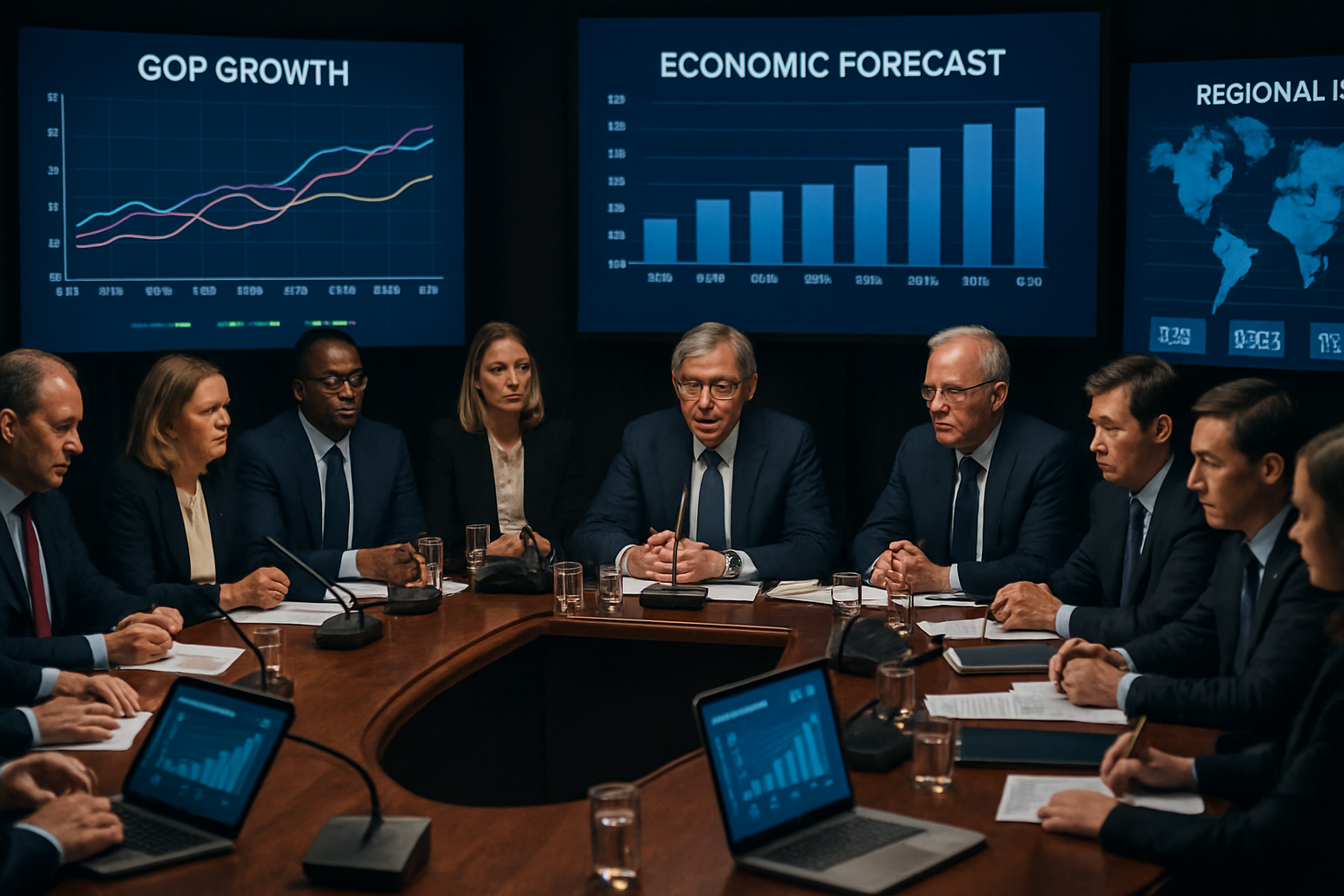
The World Bank released its latest regional economic updates on April 8, 2026, painting a complex picture of global growth with significant divergence across regions as Latin America and the Caribbean face slower expansion while developing economies in Europe and Central Asia confront mounting challenges.
Latin America and the Caribbean: Modest Growth Amid Uncertainty
According to the World Bank's Economic Update for Latin America and the Caribbean, the region is projected to grow by 2.3% in 2026, slightly below the 2.4% recorded in 2025. The forecast for 2027 remains cautiously optimistic at 2.6%, reflecting what economists describe as a "moderate macroeconomic environment" characterized by persistent structural challenges.
The report emphasizes that reforms designed to help businesses grow, innovate, and compete could be crucial for creating better employment opportunities across the region. This recommendation comes as many Latin American economies continue to grapple with the aftermath of previous economic disruptions and seek sustainable paths to prosperity.
"The region's growth trajectory reflects both opportunities and challenges, with policy reforms playing a critical role in unlocking the potential for better jobs and economic dynamism."
— World Bank Economic Update Report
Romania: Significant Downward Revision
In a dramatic reassessment, the World Bank has substantially revised its growth estimates for Romania, cutting projections from 1.3% in January to just 0.5% for 2026. This revision, detailed in the ECA Economic Update published by the World Bank Group, represents one of the most significant downward adjustments for a European economy this year.
The bank also reduced its estimates for 2027, when the Romanian economy is now expected to underperform previous expectations. This revision reflects broader concerns about economic momentum in Eastern Europe and highlights the interconnected nature of global economic challenges affecting individual national economies.
South Asian Economies Face Slowdown
The World Bank projects that South Asian growth will decelerate to 6.3% in 2026, a concerning trend attributed to ongoing Middle East conflicts and their ripple effects throughout the global economy. This slowdown represents a significant shift from previous robust growth patterns that had characterized the region.
The conflict-related disruptions have created uncertainty in energy markets, trade routes, and investment flows, directly impacting South Asian economies that rely heavily on stable regional conditions for their continued expansion. The projection underscores how geopolitical tensions can quickly translate into measurable economic consequences.
Eastern European and Central Asian Challenges
Developing countries across Europe and Central Asia are confronting what the World Bank describes as a broader economic slowdown, with multiple factors contributing to reduced growth prospects. The region, which had shown resilience in previous years, now faces a constellation of challenges that threaten to undermine economic progress.
These challenges include supply chain disruptions, energy security concerns, and the lingering effects of geopolitical tensions that have reshaped trade relationships and investment patterns across the region.
Global Economic Context and Implications
The mixed regional projections emerge against a backdrop of unprecedented global economic complexity. Historical data from our analysis shows that throughout 2026, economies worldwide have faced what experts describe as a "multipolar moment" where traditional economic coordination mechanisms have given way to more fragmented, region-specific approaches.
The semiconductor crisis continues to impact global supply chains, with memory chip prices experiencing sixfold increases affecting everything from smart infrastructure to financial technology systems. This technological constraint has paradoxically accelerated innovation in resource-efficient solutions while creating short-term growth headwinds.
Energy Markets and Economic Performance
Energy market volatility remains a critical factor influencing regional economic performance. The March 2026 energy crisis, which saw oil prices surge above $100 per barrel following Middle East tensions, demonstrated how quickly geopolitical events can translate into economic disruption across multiple regions simultaneously.
Countries with diversified energy partnerships and robust renewable infrastructure have shown greater resilience, while those heavily dependent on specific supply routes or energy sources have experienced more pronounced economic volatility.
Investment Strategy Evolution
The divergent regional performance has accelerated a fundamental shift in investment strategies, with analysts increasingly focusing on country-specific fundamentals rather than broad regional themes. This evolution reflects growing sophistication in understanding how local institutional quality, policy consistency, and economic governance can override traditional geographic investment categories.
Emerging markets with strong institutional frameworks have consistently outperformed expectations, demonstrating that governance quality and policy credibility have become primary determinants of economic resilience in an increasingly fragmented global environment.
Technology and Economic Development
The integration of artificial intelligence and digital technologies continues to reshape economic development patterns across regions. While some economies have successfully leveraged technological advancement to boost productivity and create new economic opportunities, others have struggled to adapt to the rapid pace of technological change.
The "AI revolution" has created new categories of economic activity while disrupting traditional sectors, contributing to the divergent growth patterns observed across different regions and countries.
Looking Forward: Policy Implications
The World Bank's mixed projections underscore the importance of adaptive policy frameworks that can respond to rapidly changing global conditions while maintaining focus on long-term sustainable development goals. The success stories emerging from various regions provide templates for policy innovation that balances immediate economic needs with strategic positioning for future growth.
Regional cooperation mechanisms, such as the African Continental Free Trade Area (AfCFTA) and enhanced European integration initiatives, have shown promise in creating resilient economic frameworks that can withstand global volatility while fostering sustained prosperity.
As economies navigate this complex landscape, the ability to combine technological innovation with sound governance, maintain international partnerships while preserving policy autonomy, and balance immediate economic pressures with long-term strategic objectives will likely determine which regions emerge stronger from current global uncertainties.