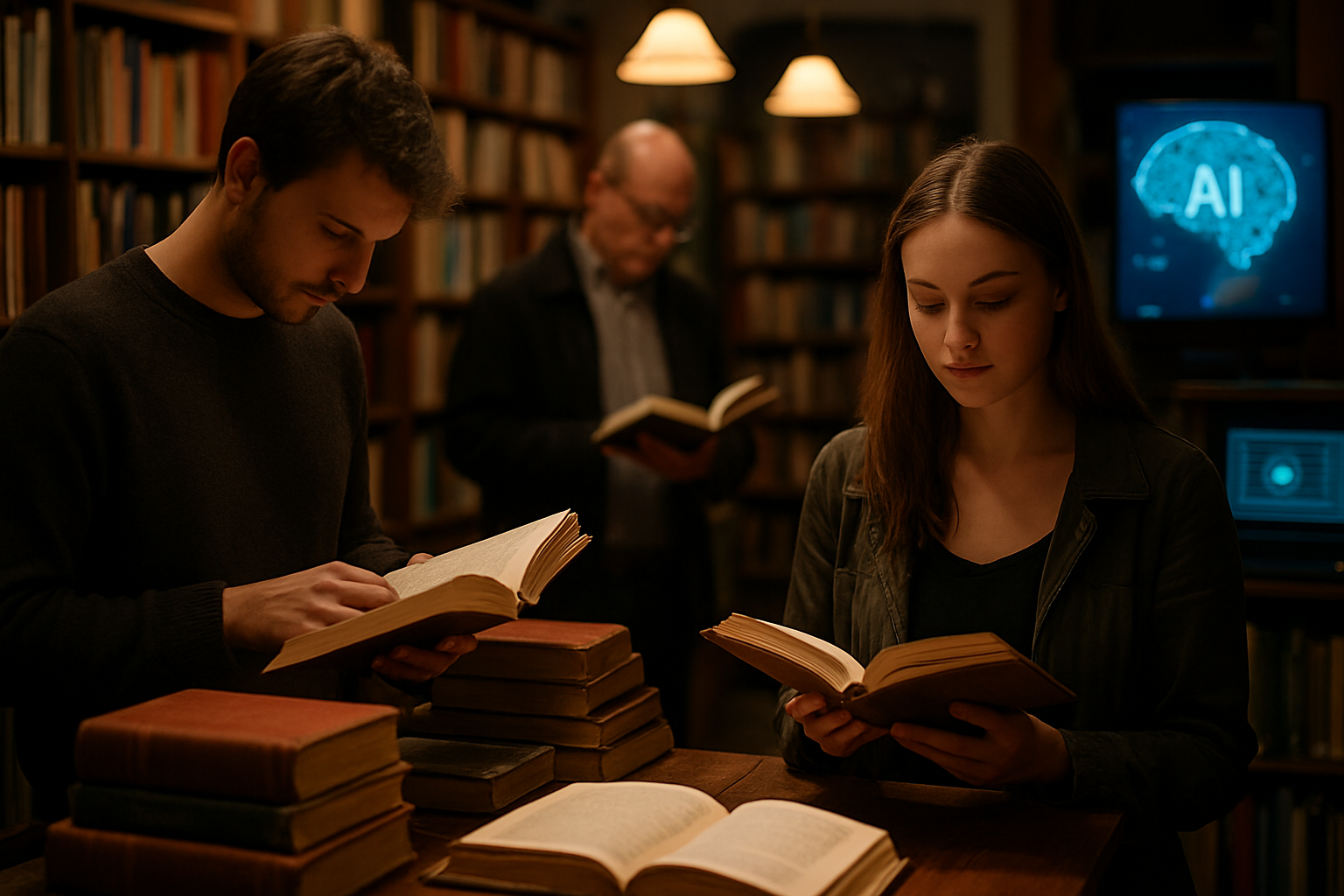
World Book Day celebrations across Spain have taken on new significance this year as Swedish research reveals readers overwhelmingly reject AI-generated literature, with two-thirds expressing negative attitudes toward artificial intelligence in book creation while embracing authentic human storytelling traditions.
The timing of these findings coincides with vibrant Sant Jordi festivities throughout Spain, where books emerged from homes, libraries, and bookstores to "take the streets" in a celebration of literature's enduring power. From prestigious stands along Barcelona's Paseo de Gràcia to tables lining Zaragoza's Paseo de la Independencia, the day reinforced literature's role as a source of "civic pride and festivity."
Swedish Research Exposes AI Literature Rejection
Fresh data from Sweden's comprehensive Bokbarometern survey reveals the stark reality facing AI-generated literature in the marketplace. According to the study, an overwhelming 67% of Swedish readers expressed negative attitudes toward AI-created books, while only 3% showed explicitly positive sentiments toward artificial literature.
"Readers don't want to discover after the fact that it was a computer that wrote the novel they enjoyed," said literature professor Ann Steiner, commenting on the survey results.
— Ann Steiner, Literature Professor
The findings illuminate a fundamental tension in contemporary publishing as the industry grapples with artificial intelligence capabilities while readers demonstrate clear preferences for authentic human creativity. The research indicates that reader expectations, rather than publisher policies or regulatory frameworks, may ultimately determine acceptable boundaries for AI in literature.
Spain's Literary Renaissance Amid Industry Challenges
Against the backdrop of reader resistance to artificial literature, Spain's book industry presents a complex picture of celebration and challenge. Sant Jordi Day showcased the enduring appeal of traditional literary culture, with hundreds of authors participating in book signings and the prestigious Cervantes Prize ceremony at the University of Alcalá de Henares, where Mexican author Gonzalo Celorio received the honor.
However, beneath the festive atmosphere lies a sobering industry reality. Recent analysis reveals that while sales figures show encouraging growth and reading indices remain positive, the publishing landscape faces structural challenges. Most significantly, approximately half of all printed titles fail to sell a single copy—a statistic that underscores the oversaturation plaguing contemporary publishing markets.

Global Publishing Industry Confronts AI Authentication Crisis
The Swedish research findings reflect broader global concerns about artificial intelligence in publishing, particularly following the March 2026 "Plachá dívka" controversy. In that unprecedented case, publisher Hachette withdrew a horror novel from Czech, UK, and US markets after readers accused the author of using AI to create the work—marking the first major traditional publisher retreat due to AI-related accusations.
This incident established a concerning precedent for the industry, as publishers now face the challenging task of "separating wheat from AI-generated chaff" while avoiding false accusations against human authors. Canadian analysis reveals the publishing industry's growing "conundrum" in identifying AI-generated manuscripts through increasingly sophisticated detection tools.
The Authentication Challenge
Industry experts report a "ghost work phenomenon" where AI-generated submissions flood query systems, making it increasingly difficult to identify authentic human creativity. This challenge is compounded by the "double workload effect" documented by Dr. Frank Bäumer, where publishers and editors find themselves performing their original duties plus AI supervision and correction work—often creating more labor rather than efficiency gains.
The situation is further complicated by the emergence of a generation of writers familiar with AI assistance. As part of the broader "2026 Educational Technology Renaissance," over 50% of teenagers worldwide now use AI for homework, creating a cohort of young writers who have grown up with artificial intelligence tools.
Cultural Resistance Spans Creative Industries
The literary world's resistance to AI-generated content mirrors broader patterns across creative industries. Over 4,000 French actors and filmmakers have condemned what they term AI's "systematic plundering" of creative work, while the publishing sector grapples with similar authenticity concerns.
"Reality continues to be one of literature's great subjects," noted Spanish cultural observers during this year's Book Day celebrations, emphasizing literature's role in processing authentic human experience.
— Spanish Cultural Commentary
This sentiment aligns with reader preferences demonstrated in the Swedish research, where participants showed clear preference for stories rooted in genuine human experience and creativity rather than algorithmic generation.
Regulatory Responses and Industry Standards
The publishing industry's struggles with AI authentication have prompted regulatory responses across multiple jurisdictions. Spain has implemented criminal executive liability frameworks for technology platforms, while France has conducted AI company raids targeting inadequate safety protocols. The United Nations has established an Independent Scientific Panel with 40 experts to address AI governance—the most sophisticated international technology oversight since internet commercialization.
These regulatory frameworks are emerging alongside industry efforts to develop verification systems, ethical guidelines, and transparency requirements. However, the Swedish research suggests that market forces—driven by reader preferences—may prove more effective than top-down regulation in shaping AI's role in literature.
Authentic Storytelling as Market Differentiator
The emphasis on authentic storytelling during this year's Book Day celebrations takes on particular significance given the research findings. Spanish literary events highlighted works that transform real experiences into literature, with publishers showcasing titles that demonstrate literature's capacity to process genuine human experience rather than artificial creation.
This focus on authenticity appears to resonate with readers who, according to the Swedish study, value knowing the human source behind their literary experiences. The research suggests readers form emotional connections with authors and their authentic perspectives—connections that artificial intelligence cannot replicate.

The Human Element in Literature
Literature professor Ann Steiner's observation about readers not wanting to discover posthumously that a computer wrote their favorite novel touches on fundamental questions about the nature of literary appreciation. The Swedish research indicates that readers seek more than just entertaining narratives—they desire connection with human creativity, experience, and perspective.
This finding has significant implications for publishers considering AI integration. While artificial intelligence may assist with certain publishing processes, the research suggests that complete replacement of human authorship faces substantial market resistance.
Looking Forward: Industry Adaptation Strategies
As the publishing industry navigates this complex landscape, successful adaptation appears to require sophisticated approaches that preserve human creativity while potentially leveraging AI as enhancement rather than replacement. The most promising models emerging from various sectors emphasize AI as amplification tools that serve human goals rather than substitute for human judgment.
The Canadian analysis of publishing challenges notes that successful integration requires comprehensive stakeholder engagement, cultural sensitivity, and approaches that enhance rather than replace the fundamental human elements that define meaningful literature. Success stories from other sectors suggest that human-AI collaboration, when properly implemented, can amplify capabilities while preserving the creativity, cultural understanding, and emotional resonance that readers clearly value.
Global Implications and Cultural Values
The convergence of World Book Day celebrations with research revealing reader resistance to AI literature represents a critical moment for global publishing. The Swedish findings, emerging during Spain's vibrant literary celebrations, suggest that traditional cultural values around authentic human creativity remain strong despite rapid technological advancement.
This resistance spans cultural boundaries, as similar patterns emerge across international markets. The Czech "Plachá dívka" controversy, French creative industry resistance, and now Swedish reader research all point to consistent global preference for authentic human creation over artificial generation.
As publishers worldwide grapple with AI integration questions, the message from readers appears clear: technological capability alone does not create market acceptance. The publishing industry's future success may depend on finding ways to enhance human creativity and authentic storytelling rather than replacing it with artificial alternatives.
The April 2026 literary landscape thus presents a fascinating paradox: unprecedented technological capabilities for artificial content creation coinciding with strong reader preference for authentic human storytelling. As celebrations of human literary achievement continue across Spain and worldwide, the industry faces the challenge of honoring these values while adapting to technological realities that readers themselves are actively shaping through their purchasing and reading preferences.