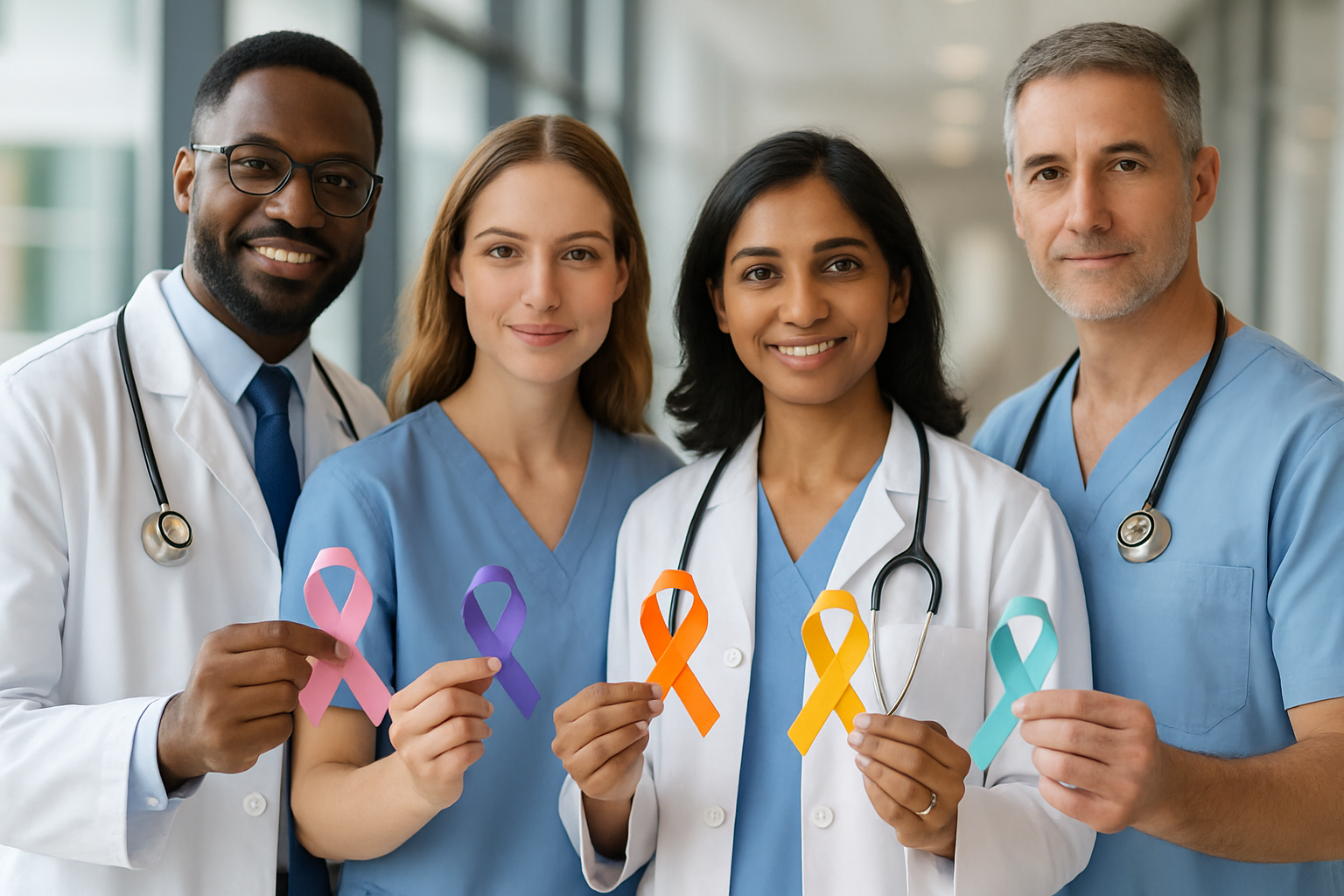
World Cancer Day 2026, observed globally on February 4th under the theme "United by Unique," highlighted both significant progress in cancer care and sobering projections for the future, as the World Health Organization warned that cancer cases and deaths could nearly double by 2050.
The annual observance brought together healthcare systems, governments, and communities across continents to reinforce commitments to cancer prevention, early detection, and improved treatment access. From Latin America to the Middle East and Africa, nations unveiled ambitious strategies while grappling with persistent healthcare inequalities.
WHO Sounds Urgent Global Warning
Dr. Catharina Boehme, Officer-in-Charge of WHO South-East Asia, emphasized that while cancer remains a global challenge, its impact varies dramatically across countries, communities, and individuals. The organization continues to call on governments, partners, and civil society to increase sustainable investment, strengthen early diagnosis capabilities, and expand partnerships for equitable access to essential services.
"Despite advances in prevention and treatment, WHO projects that cancer cases and deaths could nearly double by 2050, underscoring the urgent need for stronger and more coordinated action," according to WHO statements released for World Cancer Day.
The warning comes as global health systems face mounting pressure from rising case numbers, with projections indicating new cases worldwide could reach 22.6 million by 2030, representing a significant increase from current levels.
Regional Responses and National Initiatives
Several countries used World Cancer Day to announce major policy initiatives and funding commitments:
Bolivia's National Cancer Month Declaration
Bolivia's Ministry of Health officially declared February as National Cancer Fighting Month through Ministerial Resolution 0036, announced by Health Minister Marcela Flores. The decision responds to sustained increases in cancer cases, with more than 90,000 new cases registered between 2016 and 2024 alone.
The comprehensive approach aims to strengthen promotion, prevention, early detection, awareness, and education efforts nationwide, representing one of the most ambitious national cancer strategies announced during this year's observance.
Saudi Arabia's Remarkable Survival Success
Saudi Arabia emerged as a success story on World Cancer Day, with the Saudi Health Council highlighting achievements that placed the Kingdom among the top 10 G20 countries for cancer survival rates. The country has published 27 national reports on cancer incidence rates, contributing to impressive survival statistics:
- Breast cancer survival rate: 76 percent
- Prostate cancer survival rate: 82 percent
- Colorectal cancer survival rate: 61 percent
These high rates resulted from quality healthcare services and the registry's role in monitoring and analyzing cancer data. The Council established the National Cancer Center and developed quality standards for oncology evaluation.
Chad's Strategic Prevention Focus
Chad joined the international community with Secretary General of the Ministry of Public Health, Dr. Toralta Nodjitoloum Josephine, reaffirming the nation's commitment to improving cancer prevention and care. The ministry emphasized prevention as the first lever in fighting cancer, aligning with the Head of State's prioritization of cancer control in national health policy.
Caribbean Challenges and Coordination Efforts
The Caribbean Public Health Agency (CARPHA) used World Cancer Day to champion people-centered cancer care across the Caribbean region. However, CARPHA acknowledged significant challenges, noting that "cancer control responses across the region are uneven, with some countries lacking national cancer control plans and access to high-quality surveillance data."
This disparity highlights the global theme of "United by Unique," as different regions face distinct challenges requiring tailored approaches while maintaining coordinated international efforts.
Personal Stories of Resilience and Advocacy
Individual stories of cancer survivors and advocates added human dimensions to policy discussions. In Peru, Tatiana Balbuena's initiative "La Teta de Tati" exemplified grassroots support efforts, helping women with breast cancer through shared experiences and advocacy.
Balbuena emphasized a critical message for World Cancer Day: "An early diagnosis of cancer is useless without access to treatment." Her work highlights the gap between detection capabilities and treatment accessibility that affects millions globally.
Prevention as Economic Imperative
WHO research demonstrates that 38-40% of cancer cases are preventable through lifestyle modifications and public health measures, making prevention both a humanitarian and economic priority. The analysis of 185 countries and 30 risk factors identified tobacco as the primary preventable cause, followed by alcohol consumption, obesity, air pollution, and certain infections.
Countries are increasingly recognizing prevention's cost-effectiveness compared to treatment expenses. Jordan, for example, faces annual cancer costs of 250 million dinars, with 25% of male cases related to lifestyle factors that could be modified through public health interventions.
Technological Advances and Hope
World Cancer Day 2026 coincided with several breakthrough medical developments that offer hope for improved outcomes. Swedish researchers completed the world's first AI trial demonstrating artificial intelligence can identify more breast cancer cases during routine mammography screenings, designed to support rather than replace radiologists.
Additionally, Hong Kong Polytechnic University developed novel antibody targeting fat cell proteins for treating metabolism-related liver cancer, offering new therapeutic pathways for cancers linked to metabolic dysfunction.
These advances complement ongoing developments including Australia's mRNA brain cancer vaccine trial, Finland's same-day laser brain tumor treatment, and Spain's innovative face transplant procedures using euthanasia donors.
Addressing Healthcare Inequalities
The "United by Unique" theme particularly resonated in highlighting global healthcare inequalities that affect cancer outcomes. Crisis situations, such as Gaza's 11,000 cancer patients denied specialized treatment and Bhutan's doubled cancer cases creating healthcare access challenges in rural areas, demonstrate how geopolitical and geographic factors create life-threatening disparities.
WHO's people-centered approach emphasizes that effective cancer control requires addressing these inequalities through sustained international cooperation and resource allocation based on need rather than economic capacity.
Future Challenges and Commitments
Looking ahead, cancer control faces several interconnected challenges: aging populations in developed countries, changing lifestyle patterns in developing nations, environmental factors including air pollution, and the need for healthcare infrastructure development to match growing demand.
The integration of prevention, early detection, and treatment is becoming the standard approach, with countries developing comprehensive national cancer control plans that address the full spectrum from risk reduction to palliative care.
Precision medicine approaches are expanding with targeted therapies for specific cancer types, representing a shift from one-size-fits-all treatments to personalized care that considers individual genetic, environmental, and lifestyle factors.
International Cooperation and Coordination
World Cancer Day 2026 reinforced the importance of international cooperation in cancer control. The WHO continues to serve as a coordinating body, despite facing funding challenges from some member states' policy changes.
Regional organizations like CARPHA are working to standardize approaches within geographic areas, while bilateral cooperation agreements enable knowledge sharing and resource optimization between nations with complementary strengths.
The global response to cancer requires balancing local needs with international standards, ensuring that innovations and best practices developed in one region can be adapted and implemented elsewhere according to local contexts and resources.
As the world observes World Cancer Day 2026, the message remains clear: cancer affects everyone uniquely, but the fight against it must unite all sectors of society in a coordinated, sustained effort that prioritizes prevention, ensures early detection, and provides equitable access to quality treatment for all people, regardless of their location or economic circumstances.