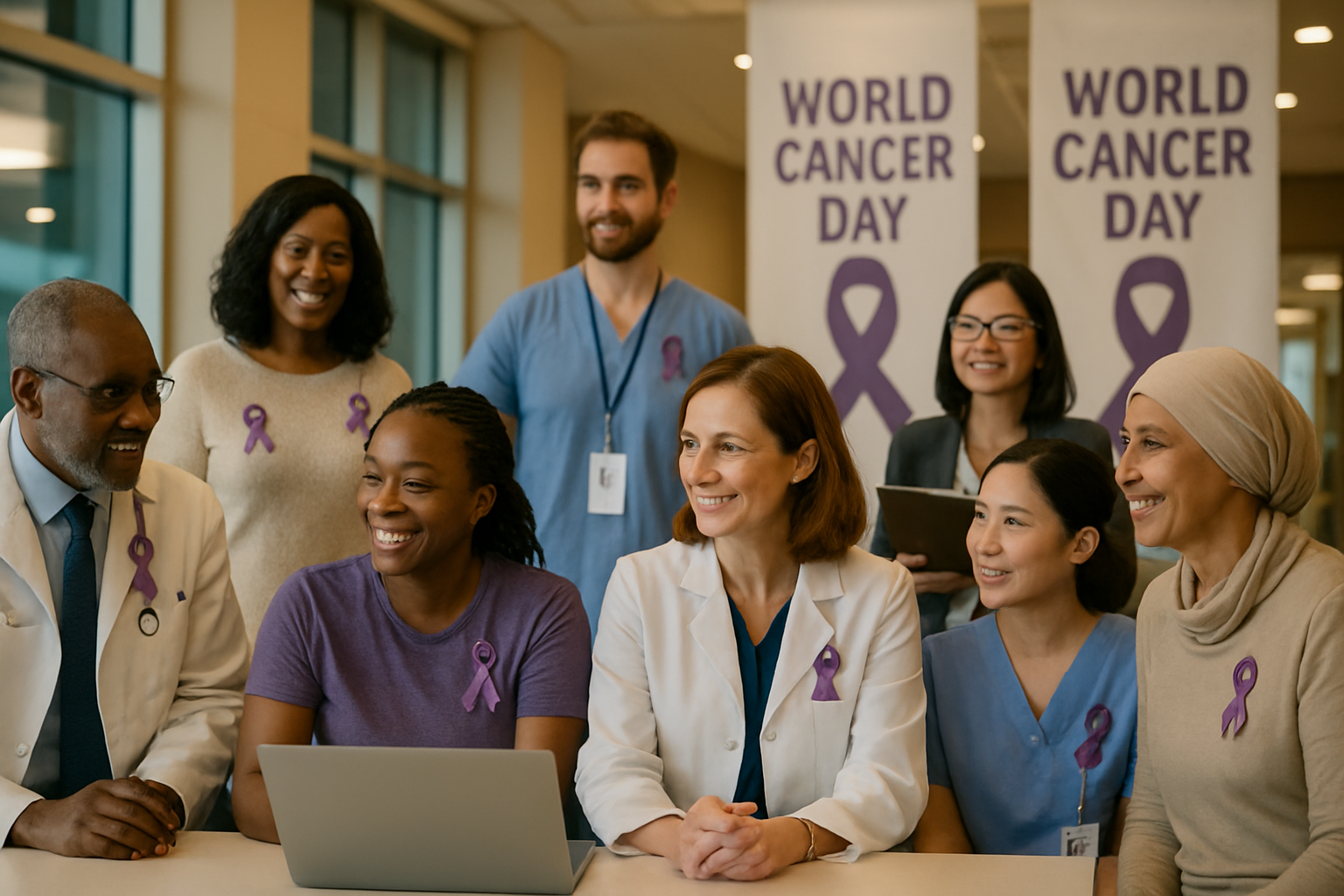
As countries across the globe commemorated World Cancer Day on February 4, 2026, the observance revealed a stark reality: while the theme "United by Unique" emphasizes individual patient journeys, healthcare systems worldwide face unprecedented challenges in delivering equitable cancer care, with thousands of patients denied treatment due to conflicts, poverty, and systemic inequalities.
From the war-torn Gaza Strip where 11,000 cancer patients remain without specialized care to rural Bhutan where cases have doubled in a decade, this year's World Cancer Day highlighted not just the personal battles against cancer, but the structural failures that determine who lives and who dies based on geography, wealth, and access to healthcare infrastructure.
Crisis in Gaza: 11,000 Patients Abandoned
The most alarming revelation came from Gaza's Ministry of Health, which confirmed that 11,000 cancer patients are completely deprived of specialized treatment and diagnostic services. The situation has deteriorated to the point where 4,000 patients referred for treatment abroad have been waiting for over two years for border crossings to open, effectively receiving death sentences through bureaucratic paralysis.
The Gaza crisis represents the extreme end of healthcare inequality, where geopolitical conflicts override basic human rights to medical care. Cancer, unlike many other diseases, demands immediate intervention—delays measured in weeks or months can determine survival outcomes.
Rural Healthcare Deserts: Bhutan's Expanding Challenge
In the mountainous kingdom of Bhutan, cancer cases have nearly doubled over the past decade, yet treatment remains centralized in the capital, Thimphu. This concentration of services has created a healthcare desert for rural populations, where geographical barriers become matters of life and death.
The human cost of this centralization was illustrated through the story of 10-year-old cancer patient whose mother, Chungdi Lhamo, had to abandon her life in Zhemgang village to seek treatment in the capital. As a single mother, she faced the impossible choice between maintaining her livelihood and saving her son's life—a dilemma no parent should face in a functioning healthcare system.
"The doctor first told me that my son had a thyroid problem, so I brought him to Thimphu. But then we discovered it was blood cancer," Chungdi Lhamo recalled.
— Cancer patient's mother from Zhemgang, Bhutan
Bhutan's health officials acknowledge that shortages of specialists, prohibitive travel distances, and limited diagnostic services outside the capital continue to delay critical care for rural populations. The challenge reflects a broader pattern seen across developing nations where healthcare infrastructure fails to match geographical realities.
Economic Barriers: The Cost of Survival
In Nigeria, foundations raised alarming concerns about preventable cancer deaths among indigent women, where poverty, stigma, and poor healthcare access create a deadly trifecta. The situation demonstrates how cancer becomes a disease of inequality, where economic status directly correlates with survival rates.
Bosnia and Herzegovina's experience illustrates how even European healthcare systems struggle with cancer care delivery. Dr. Amina Hadžibeganović and patient advocate Mirela Geko highlighted the country's alarming situation, where long waiting lists for oncological drugs and necessary therapies create barriers to timely treatment.
"Cancer does not wait for bureaucratic procedures, and no one should go through the treatment process alone without systematic state support."
— Renesansa Association, Bosnia and Herzegovina
The Bosnian case proves that healthcare inequality is not solely a developing world problem—structural inefficiencies and funding shortfalls affect cancer care delivery across different economic contexts.
Prevention vs. Treatment: The Economic Imperative
Recent WHO research published in Nature journal confirms that 38-40% of cancer cases are preventable through lifestyle modifications and public health measures. This finding has transformed the global conversation from treatment-focused to prevention-centered approaches, particularly as treatment costs become economically unsustainable.
Burkina Faso's Health Minister emphasized the country's intensified focus on breast, cervical, and prostate cancers—diseases that respond well to early detection and preventive measures. Similarly, Kuwait's participation in the global observance highlighted prevention and early detection as core strategies for reducing cancer mortality.
The economic argument for prevention has become compelling: Jordan faces annual cancer treatment costs of 250 million dinars, with lifestyle-related cancers comprising 25% of male cases. These figures demonstrate that prevention is not just a public health imperative but an economic necessity for sustainable healthcare systems.
Innovation Amid Crisis
Despite systematic challenges, medical innovation continues advancing cancer care. Australia's world-first mRNA brain cancer vaccine trial for children represents hope for personalized medicine, while Finland's introduction of laser brain tumor treatment enabling same-day discharge shows how technology can improve access and reduce costs.
The Maldives reported a "major step forward" in cancer treatment availability in atolls, suggesting that even small island nations can expand specialized care beyond capital cities through strategic planning and investment.
The Rural-Urban Divide
A consistent pattern emerges across countries: cancer care remains concentrated in major urban centers, creating systematic disadvantages for rural populations. This geographic inequality affects not just individual patients but entire communities who must choose between seeking treatment and maintaining economic stability.
Niger's commemoration of World Cancer Day emphasized regular screening, but the practical question remains: how can rural populations access screening when basic healthcare infrastructure remains inadequate? The challenge requires systemic solutions that go beyond awareness campaigns to address fundamental accessibility issues.
Healthcare System Transformation Required
Zimbabwe's participation in World Cancer Day used the theme "United by Unique" to emphasize personalizing cancer care, but personalization becomes meaningless when basic care remains inaccessible. The global observance revealed that while medical science advances rapidly, healthcare delivery systems lag significantly behind.
The WHO's funding crisis, with major donor withdrawals from the United States and Argentina, compounds these challenges by reducing institutional capacity precisely when global coordination becomes most critical. Cancer knows no borders, yet healthcare responses remain frustratingly national and unequal.
Moving Forward: Systematic Solutions
World Cancer Day 2026 demonstrated that addressing cancer requires more than medical breakthroughs—it demands systematic healthcare transformation that prioritizes equity alongside innovation. The day's observances across multiple continents revealed common challenges: inadequate rural healthcare infrastructure, economic barriers to treatment access, and the need for prevention-focused approaches.
Success stories like Kuwait's comprehensive awareness programs and Burkina Faso's targeted prevention strategies show that progress is possible when governments prioritize cancer care as a public health imperative rather than a luxury service.
The theme "United by Unique" ultimately calls for healthcare systems that recognize individual patient needs while ensuring universal access to care. Until geographical location, economic status, and political circumstances stop determining cancer survival rates, the global fight against cancer remains incomplete.
As countries continue implementing cancer control strategies throughout 2026, the lessons from this World Cancer Day observance are clear: unity in purpose must translate into equity in access, and uniqueness in patient care cannot coexist with systematic exclusion from treatment opportunities. The cancer crisis is ultimately a healthcare system crisis, demanding solutions that match the scope and urgency of the challenge.