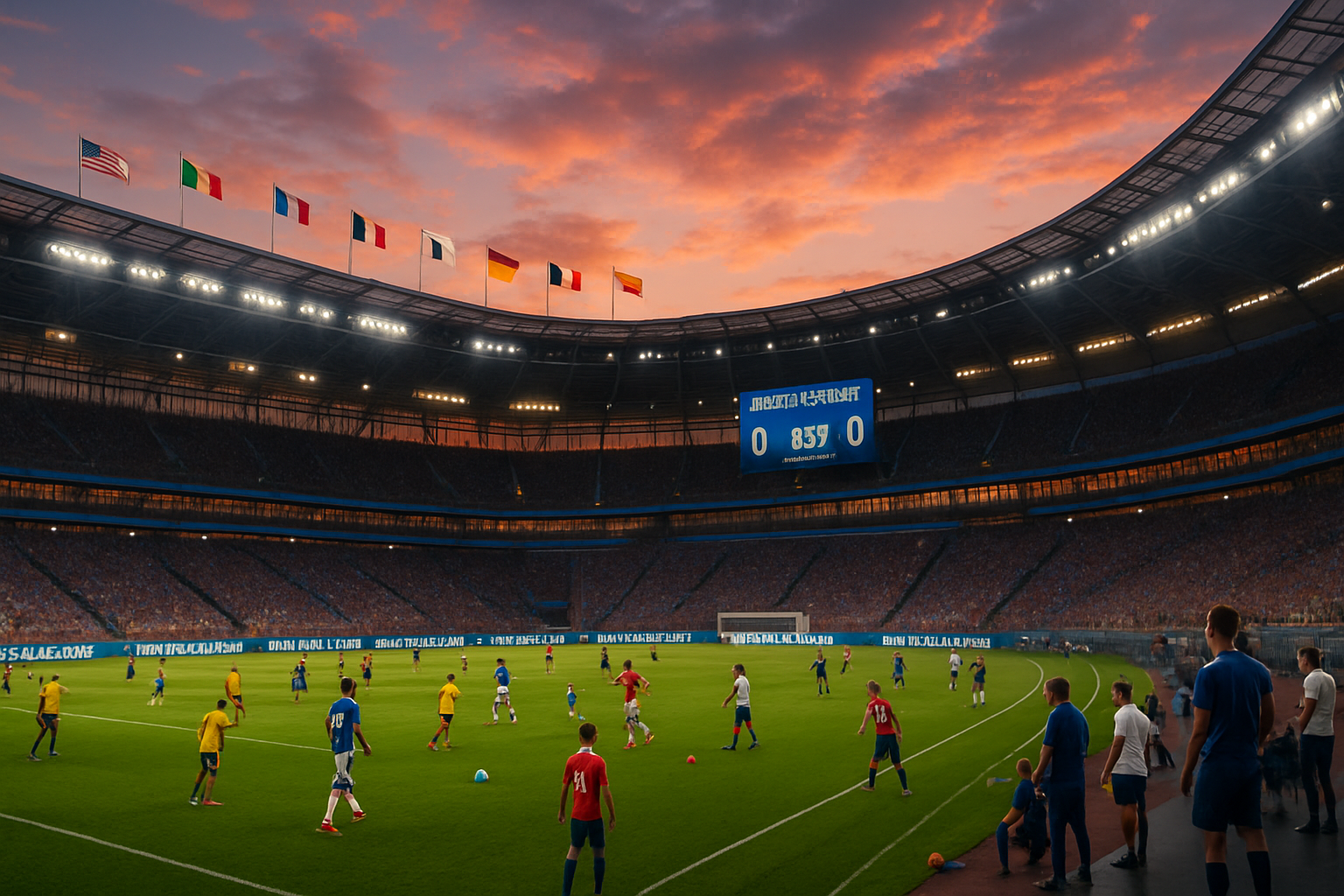
As the FIFA World Cup 2026 countdown enters its final phase, nations across five continents are engaged in dramatic qualification battles and intensive preparations for what promises to be the most expansive and challenging tournament in football history.
The expanded 48-team format, set to begin June 11, 2026, across the United States, Canada, and Mexico, has created unprecedented opportunities for emerging football nations while maintaining the competitive intensity that has defined the world's most prestigious sporting event.
Historic Qualification Breakthroughs
The Democratic Republic of Congo achieved a remarkable milestone, securing their first World Cup qualification in 52 years after defeating Jamaica 1-0 in extra time during the intercontinental playoff final. The victory, sealed by Axel Tuanzebe's 100th-minute goal, sparked celebrations across Kinshasa as President Félix Tshisekedi declared April 1 a national holiday.
The Léopards' journey to the 2026 tournament represents more than just sporting achievement. It symbolizes the democratization of international football, where systematic development and investment have enabled traditionally underrepresented nations to challenge established hierarchies.
"This qualification represents 52 years of hope and dreams finally realized for the Congolese people."
— Félix Tshisekedi, President of Democratic Republic of Congo
Iraq similarly ended a 40-year World Cup drought, defeating Bolivia 2-1 in their intercontinental playoff with goals from Ali Al-Hamadi and Aymen Hussein. Coach Graham Arnold's mission to "shock the world" came to fruition as celebrations erupted in Baghdad despite ongoing regional challenges.
European Drama and Upset Results
Perhaps no result captured the tournament's unpredictable nature more than Bosnia-Herzegovina's stunning penalty shootout victory over Italy. The 4-1 penalty triumph, following a 1-1 draw at Zenica's Bilino Polje Stadium, eliminated the defending European champions and sent the Balkan nation to just their second World Cup.
Italy's exclusion marks their third consecutive World Cup miss (2018, 2022, 2026), a devastating blow for the four-time champions that triggered a political crisis within Italian football. The Azzurri's elimination, despite winning Euro 2020, demonstrates how the expanded format paradoxically increases competition intensity even as it provides more opportunities.
Turkey ended their own 24-year World Cup absence with a 1-0 victory over Kosovo, while Sweden secured qualification after Viktor Gyökeres' match-winning performance against Poland. These results reflect a broader shift in international football, where systematic development and coaching improvements have enabled previously excluded nations to compete at the highest level.
Preparation Challenges and Innovations
Australia's preparations have been marked by unique circumstances, including dual loyalties among players. Ersan Gulum, who chose to represent Turkey over the Socceroos, now faces the prospect of playing against his birth nation in the tournament opener. Such narratives highlight the global nature of modern football and the complex identity questions facing players in an interconnected world.
Canada, as co-host nation, faces the pressure and opportunity of home advantage. The cancellation of 70-80% of FIFA hotel reservations in Vancouver and Toronto, affecting approximately 15,000 room nights, reflects the complex logistics of organizing the largest World Cup in history.
Geopolitical Complexities
The tournament has not been immune to global political tensions. Iran's withdrawal due to ongoing conflicts marked the first time in World Cup history that a qualified nation has been excluded for geopolitical reasons. The decision affects not only the tournament format but also the 200,000+ Iranian-Americans in Los Angeles who had anticipated supporting their homeland team.
Mexico's extensive security preparations, involving the deployment of 100,000 personnel—the largest operation in the country's history—demonstrate the extraordinary measures required to ensure the safety of millions of international visitors across the tri-national hosting arrangement.
Continental Representation and Global Reach
Africa's representation includes traditional powers like Senegal, who find themselves grouped with France and Norway in what promises to be a competitive Group I. The continent's growing football infrastructure and coaching development programs have paid dividends, with multiple nations qualifying for their first World Cups in decades.
Bosnia-Herzegovina's ranking at FIFA 65 positions them among the tournament's lower-ranked participants, but their qualification journey demonstrates that FIFA rankings don't always reflect a team's tournament potential. Their penalty shootout victory over Italy serves as a reminder that football's greatest stage often produces the most unexpected heroes.
Tournament Innovation and Legacy
The 2026 World Cup represents more than expansion—it embodies a fundamental evolution in how global sporting events are conceived and executed. The tri-national hosting model, featuring 104 matches across 16 cities, requires unprecedented coordination across borders, currencies, and legal systems.
With nearly 2 million tickets already sold and comprehensive legacy programs planned including infrastructure development, youth academies, and permanent training facilities, the tournament aims to leave lasting impacts across North America's football landscape.
Final Countdown
As teams finalize their preparations and complete their qualification campaigns, the expanded format has achieved its primary objective: democratizing opportunity while maintaining competitive excellence. Traditional powerhouses like Italy and the Netherlands face exclusion, while emerging nations like Iraq, DR Congo, and Bosnia-Herzegovina prepare for their moments on football's biggest stage.
The countdown to June 11, 2026, when Mexico City's Estadio Azteca hosts the opening match, represents more than just the beginning of another World Cup. It marks the start of a new era in international football, where geographic and political boundaries matter less than sporting merit, systematic development, and the universal language of the beautiful game.
"This World Cup will demonstrate that football truly belongs to the world, not just traditional powers."
— Gianni Infantino, FIFA President
As nations across continents continue their final preparations, from qualification playoffs to tactical adjustments and infrastructure completion, the 2026 World Cup stands poised to deliver on its promise of being the most inclusive, competitive, and globally representative tournament in football history. The beautiful game's capacity to transcend boundaries and create dreams has never been more evident than in these final weeks before the world's greatest sporting spectacle begins.