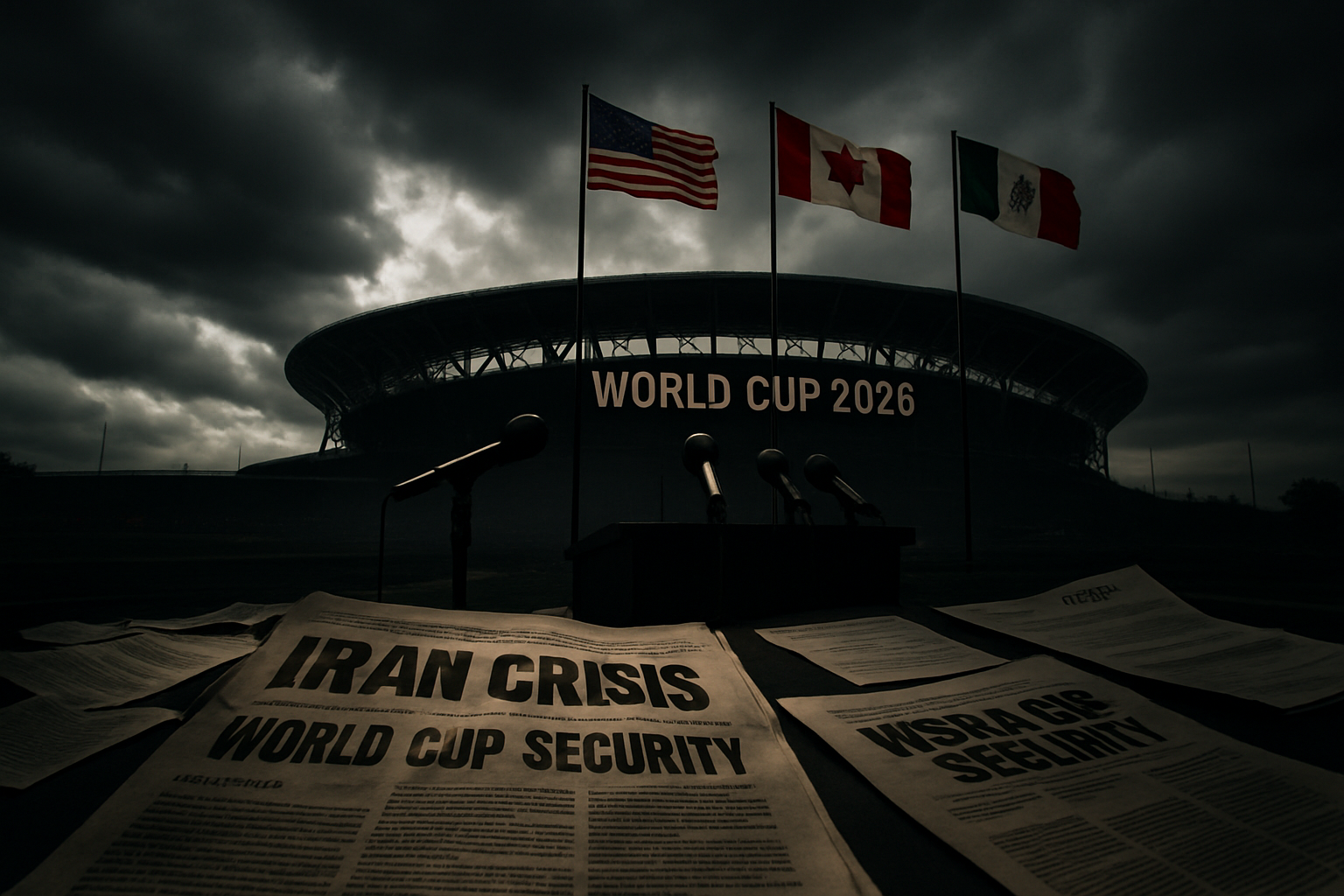
As the countdown to the 2026 FIFA World Cup reaches its final 100 days, what should be a period of mounting excitement has instead become overshadowed by unprecedented geopolitical tensions, with Iran's participation now hanging in the balance following the recent escalation in Middle East conflicts.
The Iranian Football Federation president Mehdi Tadj delivered a stark warning to local sports media, stating there is "no clarity" whether Team Melli will be able to participate in the tournament scheduled to begin in June across the United States, Canada, and Mexico. This uncertainty comes as the tournament faces its most serious crisis since FIFA awarded the expanded 48-team competition to North America.
Iran's World Cup Participation in Doubt
Iran finds itself drawn in Group G alongside Belgium, New Zealand, and Egypt, with matches scheduled across three American cities. The team is set to face New Zealand on June 15 in Inglewood, California, take on Belgium on June 21 in the same venue, and conclude group play against Egypt on June 26 in Seattle.
However, following recent military actions between the United States and Iran, including what sources describe as coordinated strikes, the participation of the Iranian national team has become increasingly uncertain. The situation has been further complicated by reports of significant casualties among Iranian leadership, creating a constitutional crisis that could directly impact sporting decisions.
"The challenge is enormous. We simply don't know if we'll be on those planes to America," a source close to the Iranian Football Federation told local media, speaking on condition of anonymity.
— Iranian Football Official
Security Concerns Mount for Host Nations
The uncertainty surrounding Iran is just one of several major security challenges facing the 2026 World Cup. The tournament, which will be the first to span three countries, already faces significant logistical complexities that have been exacerbated by recent global tensions.
Mexican authorities are still grappling with security concerns following the violent aftermath of cartel leader El Mencho's death in February. The crisis saw unprecedented violence across multiple Mexican states, including Guadalajara, which is set to host four World Cup matches. Despite FIFA President Gianni Infantino's repeated assurances of "complete confidence" in Mexico's hosting capabilities, the situation highlighted vulnerabilities in the tournament's security framework.
Meanwhile, the United States faces its own challenges with the Trump administration's immigration policies creating visa complications for fans from multiple qualified nations. Reports indicate that supporters from countries including Haiti, Senegal, Côte d'Ivoire, and Iran face significant barriers in obtaining travel documentation to attend matches.
European Nations Concerned About Travel
The crisis extends beyond participating teams to include concerns from European football federations and their supporters. Dutch travel associations report that bookings for trips to the United States are significantly lagging despite the World Cup approaching, citing security concerns and visa complications.
German football officials have expressed cautious optimism while acknowledging the "completely absurd" nature of potentially excluding Iran from the tournament. Berlin's Olympic Commissioner Kaweh Niroomand emphasized that any exclusion would be unprecedented and contrary to FIFA's principles of political neutrality in sport.
French media coverage has focused on security preparations in Guadalajara, where recent violence has raised questions about the city's readiness to host international visitors. The Mexican city's temporary "red code" emergency status, though lifted, has created lasting concerns about infrastructure and safety protocols.
FIFA's Dilemma
FIFA finds itself in an increasingly difficult position as the governing body attempts to maintain its stance of political neutrality while managing unprecedented geopolitical pressures. The organization has requested detailed security reports from all three host nations and continues to monitor the evolving situation.
The potential exclusion of Iran would create significant logistical challenges for Group G, potentially requiring last-minute tournament restructuring. Such a scenario would be unprecedented in World Cup history and could set a concerning precedent for future tournaments.
Preparation Challenges Across Host Cities
Beyond the Iran crisis, the 2026 World Cup faces multiple operational challenges that reflect the complex nature of hosting across three countries:
- Transportation Infrastructure: Cross-border travel coordination between the US, Canada, and Mexico requires unprecedented logistical planning
- Security Coordination: Three separate national security apparatuses must work in harmony to ensure consistent safety standards
- Visa Processing: Multiple immigration systems must process millions of applications from global visitors
- Currency and Payment Systems: Financial infrastructure must accommodate three different currencies and banking systems
Teams Continue Preparations Despite Uncertainty
While geopolitical tensions dominate headlines, national teams continue their World Cup preparations. Algeria has scheduled a crucial friendly against the Netherlands on June 3 at Rotterdam's Feyenoord Stadium, serving as their final preparation match before the tournament.
Norway's Ståle Solbakken continues to evaluate his squad options, with Oscar Bobb's strong form for Fulham being described as "a gift" for the national team coach. VG's World Cup barometer suggests Norway remains optimistic about their prospects despite the surrounding uncertainty.
Media coverage has intensified as former Manchester United midfielder Magnus Wolff Eikrem joined NRK's expert team for World Cup coverage, bringing veteran insight to what promises to be a tournament unlike any other.
Economic Impact of Uncertainty
The mounting concerns are already impacting the tournament's economic projections. Tourism industry analysts warn that continued uncertainty could significantly affect visitor numbers and related revenue streams. Mexico's hospitality sector, already facing workforce shortages with an estimated 500,000 job deficit, could see further complications if security concerns persist.
Sponsors and broadcasters are closely monitoring the situation, with contingency plans being developed for various scenarios. The expanded 48-team format was expected to generate record revenues, but organizers now face the possibility of reduced attendance and compromised commercial partnerships.
Looking Ahead: Three Months to Resolution
With approximately 100 days remaining until the tournament's opening ceremony, FIFA and the host nations face mounting pressure to resolve these challenges. The next few weeks will be crucial in determining whether the 2026 World Cup can proceed as planned or will require significant modifications.
The Iran situation, in particular, represents a test case for how international sporting events navigate increasingly complex geopolitical realities. The resolution - or lack thereof - could establish precedents that influence major tournaments for years to come.
As preparations continue across training facilities from Los Angeles to Toronto to Mexico City, the football world watches nervously to see whether the beautiful game can transcend the political tensions that threaten to overshadow what should be its greatest celebration.
"Football has always been about bringing people together, regardless of politics or borders. The 2026 World Cup will test that principle like never before."
— FIFA Official, speaking anonymously
The coming weeks will determine whether the 2026 FIFA World Cup can fulfill its promise of being the most inclusive and expansive tournament in history, or whether geopolitical realities will force unprecedented compromises in the world's most popular sporting spectacle.