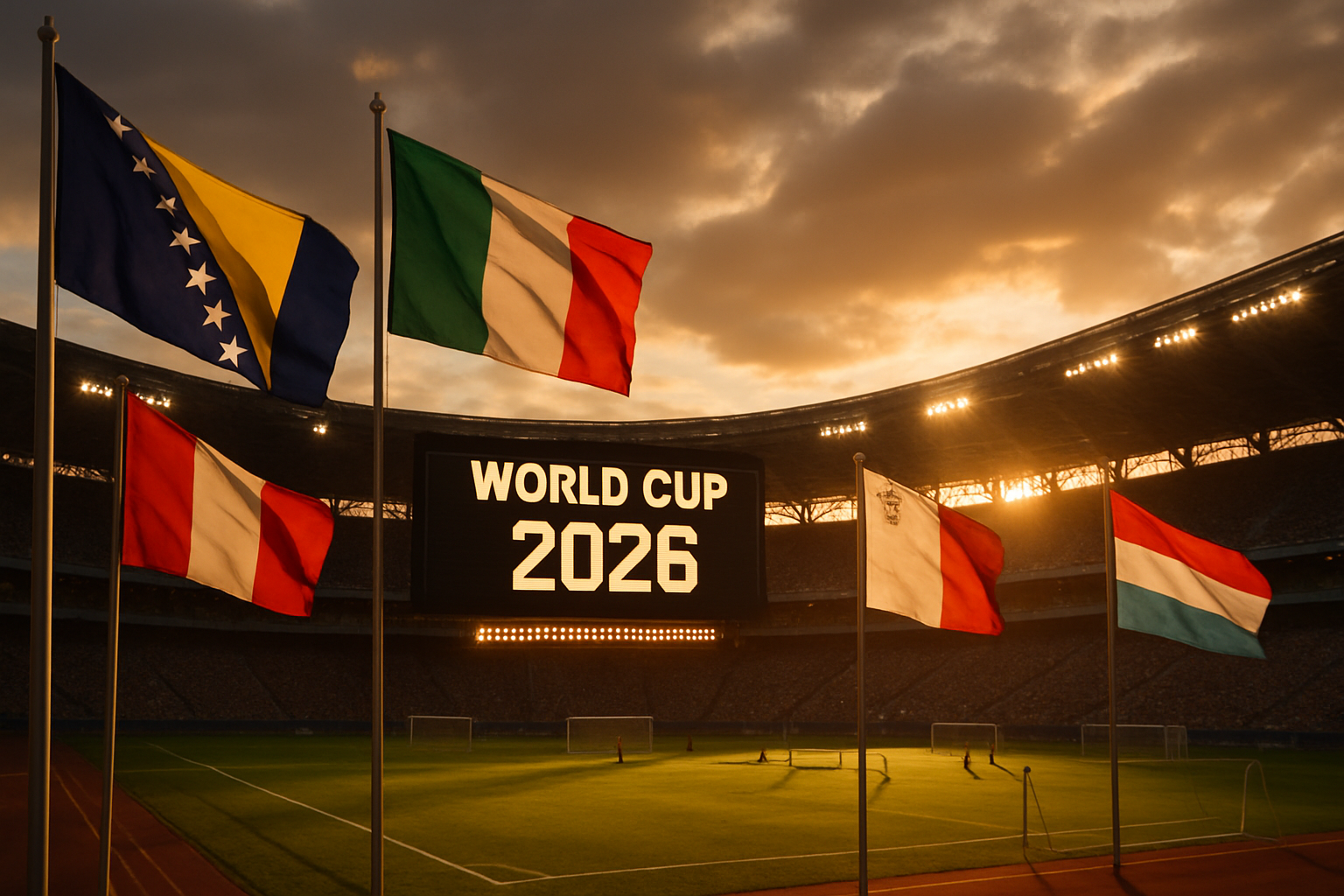
As the countdown to FIFA World Cup 2026 enters its final phase with less than 100 days remaining until June 11, nations across the globe are engaged in the most dramatic and challenging World Cup preparation period in tournament history, marked by crucial playoff battles, unprecedented expansion to 48 teams, and complex geopolitical developments.
European Playoff Finals Determine Final Qualifiers
The most compelling storylines emerge from Europe, where historic playoff finals scheduled for March 31 will determine the continent's final World Cup representatives. Bosnia and Herzegovina faces Italy in Zenica in what represents the biggest match in the nation's independent football history, following their dramatic penalty shootout victory over Wales after Edin Džeko's 86th-minute equalizer secured a 1-1 draw and his 74th international goal.
Italy's participation remains uncertain as the defending European champions face the prospect of missing their third consecutive World Cup. The Azzurri's arrival in Bosnia has been described as that of a "four-time world champion hungry for the World Cup," having missed the 2018 and 2022 tournaments despite their continental success. Novak Djokovic's presence at the crucial match highlights the regional significance of Bosnia's potential breakthrough.
"This represents Mount Everest for us - the biggest challenge we could face,"
— Gennaro Gattuso, acknowledging the scale of Bosnia's achievement
Meanwhile, Sweden faces Poland in Stockholm after Viktor Gyökeres's hat-trick secured a 3-1 victory over Ukraine, continuing his exceptional 2026 form that makes Sweden a dangerous proposition for any opponent.
Intercontinental Playoff Drama
Beyond Europe, the intercontinental playoffs have provided their own compelling narratives. Bolivia's dramatic comeback against Suriname, featuring goals from Moisés Paniagua and Miguel Terceros's penalty, has set up a final against Iraq for March 31. This represents Bolivia's opportunity to end a 32-year World Cup absence, their longest drought since becoming a FIFA member.
The expanded 48-team format has created additional qualification pathways, providing opportunities for traditionally underrepresented nations while maintaining the tournament's competitive intensity through these crucial playoff matches.
Host Nation Preparations and Challenges
The tri-national hosting arrangement across the United States, Canada, and Mexico presents unprecedented logistical challenges. Mexico has deployed 100,000 security personnel in the largest security operation in the country's history, responding to concerns following February's cartel violence that particularly affected Guadalajara, a designated host city.
Luxembourg's plans for public viewing areas demonstrate the global enthusiasm for the tournament, with Mayor Lydie Polfer confirming giant screens will be installed at Glacis for special World Cup viewing events, continuing a tradition from previous tournaments.
International Friendlies and Final Preparations
Teams worldwide are utilizing the March FIFA window for crucial preparation matches. Peru faces Honduras at Estadio Municipal Butarque, while Panama takes on South Africa in Cape Town, providing vital international experience ahead of the tournament.
These matches serve as final tune-ups for squads preparing for what promises to be the most geographically expansive and logistically complex World Cup in history, spanning over 4,000 kilometers across North America.
Digital Revolution and Fan Experience
The tournament's impact extends beyond traditional football boundaries into digital commerce and fan engagement. Industry analysis indicates that millions of supporters will simultaneously make purchases and consume digital content during matches, creating unprecedented demands on payment systems and digital infrastructure.
This phenomenon, intensifying during major tournaments, requires payment systems to respond immediately and reliably, avoiding delays that could affect the user experience during crucial moments of the competition.
Geopolitical Complexities
The 2026 World Cup faces unique challenges stemming from global geopolitical tensions. Iran's official withdrawal from the tournament in March 2026 marked the first time in World Cup history that a qualified nation has been excluded due to geopolitical conflict, creating precedent-setting implications for international sporting events.
This development particularly affects the Iranian-American community in Los Angeles, known as "Tehrangeles," which represents over 200,000 residents who had anticipated supporting their national team on home soil.
Tournament Innovation and Legacy
The 2026 World Cup represents more than expansion in numbers – it embodies fundamental evolution in how global sporting events are conceived and executed. The tournament begins at Mexico City's Estadio Azteca on June 11 and concludes at New York New Jersey Stadium on July 19, featuring 104 matches across 16 host cities.
FIFA President Gianni Infantino has maintained "complete confidence" in the hosting arrangements despite various challenges, emphasizing the tournament's role as a transformative event for football in North America with lasting legacy benefits including infrastructure development, youth programs, and permanent academies.
Economic and Cultural Impact
The economic implications extend far beyond the six-week competition period. Strong ticket sales, with nearly 2 million tickets sold in the first two phases, demonstrate global interest in the expanded format. Mexico particularly counts on the tournament for post-pandemic tourism recovery and international marketing benefits.
The cultural significance cannot be understated, as the tournament celebrates regional diversity and collaboration while testing whether the "beautiful game" can transcend political boundaries in an increasingly multipolar world.
The Road Ahead
With the final playoff matches determining the last qualifiers, the coming weeks will complete the 48-nation field for football's greatest spectacle. The tournament promises to establish new benchmarks for international sporting events while navigating unprecedented challenges in security, logistics, and global coordination.
Success will depend on resolving remaining security concerns, finalizing complex cross-border logistics, and managing visa and immigration processes for millions of expected visitors. The ultimate measure of achievement will be determined not just over the final 100 days of preparation, but during the six-week competition that promises to reshape the landscape of international football.
As nations make their final preparations and the last qualification spots are determined, the 2026 World Cup stands as testament to football's enduring power to unite diverse cultures and nations, even amid the complex realities of 21st-century geopolitics.