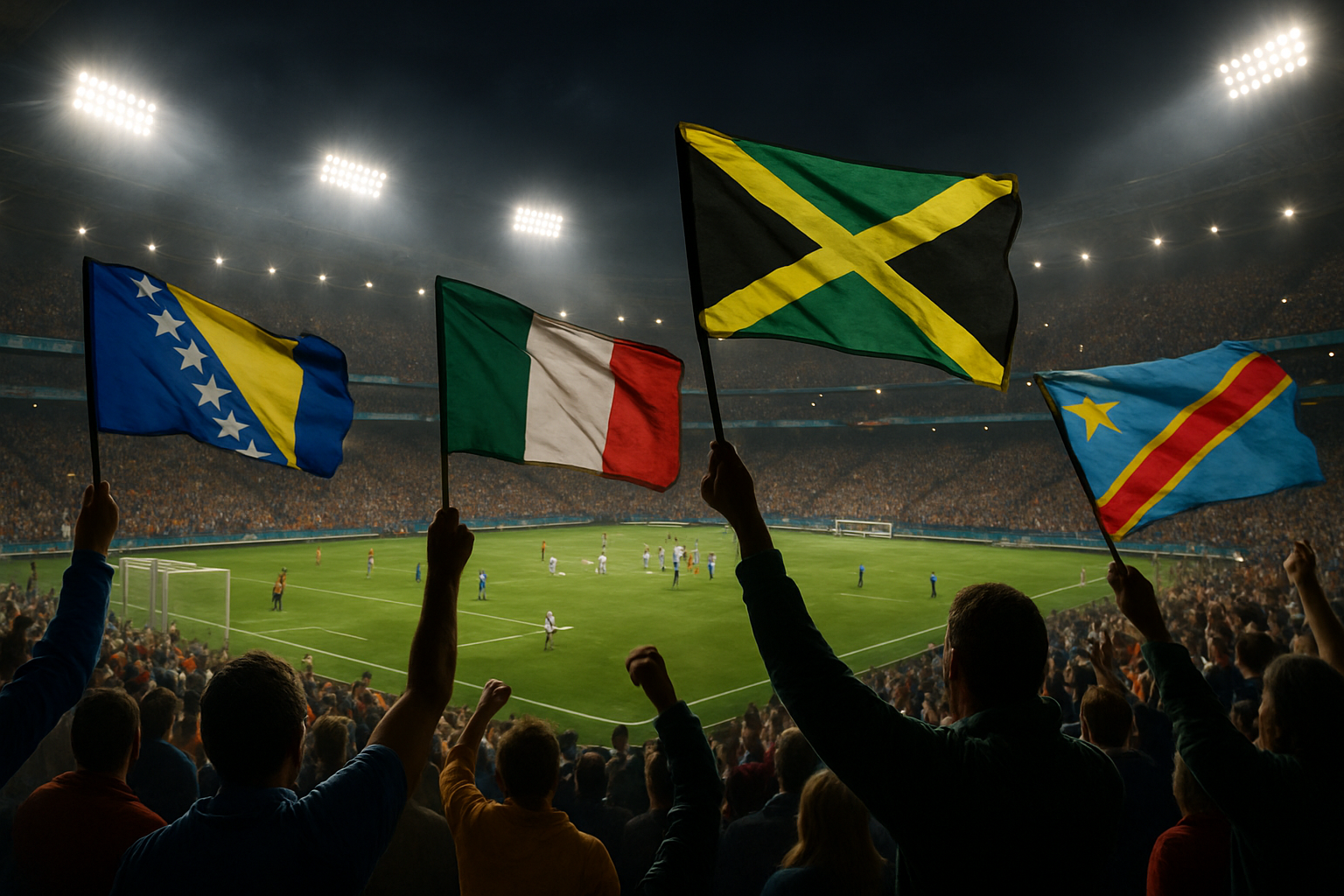
The road to FIFA World Cup 2026 reaches its dramatic climax on March 31, 2026, as decisive qualifying matches across multiple continents determine the final participants for the expanded 48-team tournament set to begin June 11 in North America.
The most anticipated clash will see Bosnia and Herzegovina host Italy at the Bilino Polje stadium in Zenica at 20:45 local time, representing what Bosnian media are calling "the biggest match in the country's independent history." Simultaneously, the Democratic Republic of Congo faces Jamaica at the Estadio Akron in Guadalajara, Mexico, in an intercontinental playoff final that promises to deliver historic qualification for either nation.
Bosnia's Historic Opportunity Against European Champions
Bosnia's journey to this pivotal moment began with their dramatic penalty shootout victory over Wales, where captain Edin Džeko scored his 74th international goal to equalize Daniel James's opener before the Dragons triumphed 4-2 in the shootout. The victory sparked nationwide celebrations, with fireworks illuminating the sky in Stolac and emotional scenes in the team's dressing room as players sang together in unity.
Former player and pundit Sinan Sinanović expressed the nation's sentiment: "These boys have shown in Wales and before Wales that they can have quality, that they can make great things. I'm really happy that the cult of the national team has been created again." The match has transformed Zenica into a focal point of European attention, with the city experiencing what local media describe as "total chaos" as supporters and international visitors converge for the historic encounter.
"Ovi momci ponovo su počeli da bivaju idoli našoj djeci. Jako je bitno to da mi ovdje imamo igrače i da uzori našoj djeci budu igrači koji igraju za našu reprezentaciju."
— Sinan Sinanović, Former Bosnia International
For Italy, the stakes could not be higher. The defending European champions face the prospect of missing their third consecutive World Cup, a catastrophic outcome for a footballing powerhouse that lifted the European Championship trophy just five years ago. Manager Roberto Mancini acknowledged the challenge ahead, with former coach Gennaro Gattuso describing Bosnia as a "Mount Everest" obstacle for the Azzurri.
DR Congo's Presidential Support
Half a world away, the Democratic Republic of Congo prepares for their own moment of destiny against Jamaica. President Félix Tshisekedi personally galvanized the Léopards just hours before their crucial match, remitting the national flag to captain Chancel Mbemba at the Stade des Martyrs in Kinshasa with a clear mission: qualify for the 2026 World Cup.
The support extends far beyond ceremonial gestures. Radio Okapi reports that "the fervor rises throughout the country" as Congolese citizens dream of a historic qualification. The last time the nation participated in a World Cup was in 1974 when the country was known as Zaire, making this potential qualification a 52-year journey back to football's biggest stage.
Italian sports media have taken note of Congo's remarkable journey, with Repubblica.it highlighting the historical significance: "This evening, against Jamaica, the Africans seek a historic qualification after that obtained when the Country was called Zaire. Unforgettable, in that edition, an episode that occurred in the match with the Brazilians."
Jamaica's Financial and Sporting Stakes
For Jamaica, the match represents both sporting glory and substantial financial rewards. The Jamaica Observer reports that victory would deliver "at least US$10.5 million — just over $1.6 billion" to the Jamaica Football Federation, making this "one of the most financially significant matches in the country's football history."
The Reggae Boyz have waited 10,362 days to see their countrymen qualify for a second FIFA World Cup, with their last appearance dating back to France 1998. However, they enter the contest as underdogs against the world number 48 DR Congo, who have lost just once in their last 10 matches, including impressive results against African Cup of Nations champions Senegal and Nigeria.
Jamaica's recent record against African opposition adds to the concern, with just two wins in 22 matches against teams from the continent. The pressure is immense, but the potential rewards — both financial and emotional — provide powerful motivation for a squad seeking to reset their World Cup qualification counter to zero.
Tournament Context and Global Impact
These matches occur against the backdrop of the most complex World Cup preparation in tournament history. The 2026 edition will be the largest ever held, featuring 48 teams competing across 104 matches in a tri-national format spanning the USA, Canada, and Mexico. The tournament begins June 11 at the iconic Estadio Azteca in Mexico City and concludes July 19 at the New York New Jersey Stadium.
The expanded format has created additional qualifying opportunities, enabling nations like Bosnia and Congo to reach this final stage through various playoff pathways. However, the tournament has also faced unprecedented challenges, including Iran's withdrawal due to geopolitical tensions — marking the first time in World Cup history that a qualified nation has been excluded for political reasons.
FIFA President Gianni Infantino maintains "complete confidence" in the hosting arrangements despite logistical challenges that include coordinating security across three countries, managing visa processing for millions of fans, and ensuring smooth transportation across a 4,000-kilometer span. The organization has already sold nearly 2 million tickets in the first two phases, demonstrating global enthusiasm for the expanded format.
European Playoff Finals Complete the Picture
The Bosnia-Italy clash is part of a broader European playoff system that also features Sweden hosting Poland at Friends Arena in Stockholm. Sweden advanced through Viktor Gyökeres's hat-trick performance against Ukraine, while Poland overcame Albania in their semifinal. These European playoffs represent the final opportunities for traditional football powers to secure their places in what many consider the most democratized World Cup in history.
Historical Significance and Legacy
The March 31 matches represent more than just qualification — they embody the changing landscape of international football. Bosnia's potential breakthrough would mark the first World Cup appearance for a nation that gained independence only in 1992. For DR Congo, success would demonstrate the rising strength of African football development and the power of sustained investment in sporting infrastructure.
Italy's presence in a playoff final highlights how even established footballing nations cannot take World Cup qualification for granted in an increasingly competitive global environment. The expanded 48-team format, while providing more opportunities, has paradoxically increased competition for the final spots as more nations invest seriously in football development.
These qualifying matches occur during what football historians are already calling a "democratization period" in international football, where traditional hierarchies face constant challenges from emerging nations that have invested systematically in coaching, facilities, and youth development programs.
Final Countdown
With less than 100 days remaining until the tournament begins, March 31 represents the final act of a qualification process that began over two years ago. The winners will join 44 other nations in North America for a tournament that promises to redefine the global football landscape.
For Bosnia and Herzegovina, DR Congo, Jamaica, and Italy, March 31, 2026, will be remembered as either the day dreams came true or the moment when World Cup aspirations ended in heartbreak. In Zenica and Guadalajara, nations will hold their breath as their footballing futures hang in the balance during 90 minutes that could change everything.
The beautiful game continues to demonstrate its power to unite nations, create heroes, and provide moments of pure sporting drama that transcend borders and cultures. Whatever the results, March 31, 2026, will mark another chapter in the rich tapestry of World Cup qualification history, with the expanded tournament format ensuring that football's global reach continues to grow and inspire new generations of players and fans worldwide.