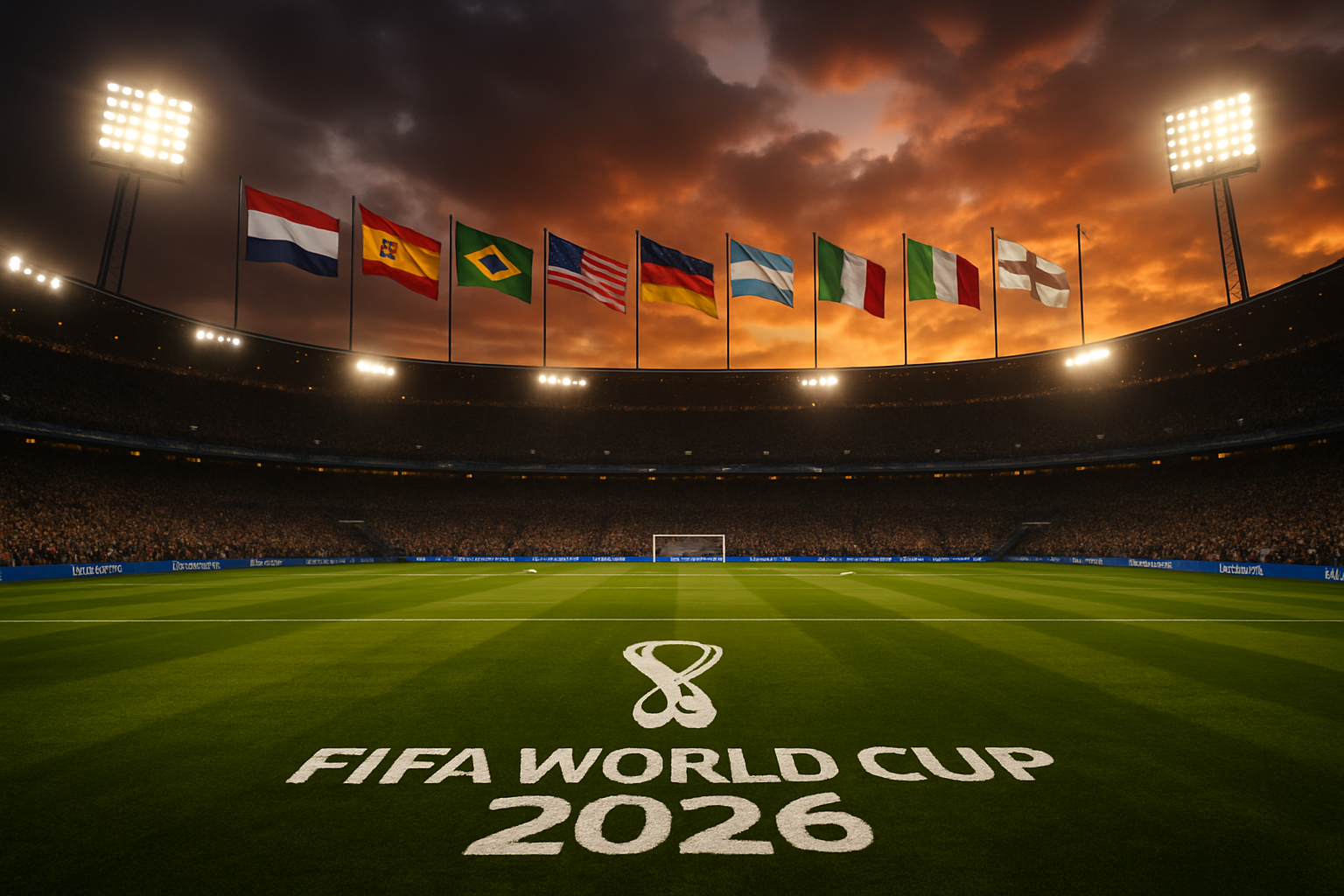
With just over two months remaining until the FIFA World Cup 2026 kicks off across the United States, Canada, and Mexico, the final qualification battles are reaching fever pitch as nations across multiple continents fight for the remaining spots in football's premier tournament.
The intercontinental playoffs have delivered dramatic results, with Bolivia and Jamaica securing crucial semifinal victories that have brought them tantalizingly close to ending decades-long World Cup droughts. Meanwhile, Australia and Algeria are using international friendlies to fine-tune their preparations for what promises to be the most challenging World Cup in history.
Bolivia's Emotional Comeback Keeps World Cup Dreams Alive
In perhaps the most emotionally charged match of the qualification campaign, Bolivia staged a remarkable comeback to defeat Suriname 2-1 in their intercontinental playoff semifinal at Monterrey's Estadio BBVA. The victory marked a watershed moment for Bolivian football, bringing the nation within one match of ending a 32-year absence from the World Cup.
Liam van Gelderen's 48th-minute opener had given Suriname the advantage, but Bolivia responded with characteristic resilience. Moisés Paniagua's equalizer in the 72nd minute sparked wild celebrations, before Miguel Terceros converted a penalty in the 79th minute to complete the comeback and secure passage to Tuesday's final against Iraq.
"We had a lot of possession, but unfortunately no goals at first. Then we made an important tactical adjustment and the players showed their character - they didn't give up. We have a squad that doesn't consider anything lost, that didn't crumble at 1-0 and found strength from within."
— Óscar Villegas, Bolivia Head Coach
The scenes of celebration that followed the final whistle told the story of a nation desperate to return to football's biggest stage. Bolivia's last World Cup appearance came in 1994, and the prospect of joining Group I alongside France, Senegal, and Norway has energized a country where football represents far more than mere sport.
Jamaica's Reggae Boyz Edge Closer to Historic Return
Jamaica's quest to end their 28-year World Cup drought continued with a hard-fought 1-0 victory over New Caledonia in their intercontinental playoff semifinal at Guadalajara's Estadio Akron. Bailey Cadamarteri's 18th-minute strike proved decisive, setting up a final showdown with the Democratic Republic of Congo for a place in Group K alongside Portugal, Colombia, and Uzbekistan.
Under interim head coach Rudolph Speid's guidance, Jamaica fielded a transformed lineup featuring debutants Ephron Mason-Clark and Andre Brooks, part of a new generation of English-born players who have committed their international futures to the Reggae Boyz. The tactical gamble paid dividends as Jamaica controlled the match from the early goal onward.
The significance of reaching another playoff final cannot be understated for Jamaican football. Having missed automatic qualification after finishing behind Curaçao in CONCACAF Group B, this represents their second chance in as many months to secure passage to the expanded 48-team tournament.
Australia Fine-Tunes for World Cup Challenge
Already qualified for the World Cup, Australia used their international window to address areas of concern ahead of the tournament. The Socceroos managed a 1-0 victory over Cameroon in Sydney, though the performance highlighted work still needed before their opening match.
Jordy Bos struck late to secure the win, but Australia's display was largely uninspiring, with clear-cut chances few and far between. The match served as a reality check for coach Graham Potter's side, who will need significant improvements when they face Curaçao in Melbourne next week.
Perhaps most encouragingly for Australian football, 18-year-old Lucas Herrington impressed on his international debut, providing a glimpse of the youth talent emerging from the domestic system. However, missed opportunities, including Ajdin Hrustic's saved penalty, demonstrated the fine margins that will separate success and failure in the unforgiving environment of a World Cup.
Algeria's Final Preparations Amid Tournament Controversy
Algeria's national team faced Guatemala in their latest preparation match, with coach Vladimir Petkovic using the fixture to assess player readiness and integrate new faces into his squad. The friendly represented crucial preparation time for a team that has benefited from the tournament's expansion to 48 teams.
The match provided opportunities for newcomers including Union Algeria defender Ashraf Abada, Rennes goalkeeper Killian Belazzoug, and Mastil Malvin, as Petkovic continues to build squad depth ahead of what could be a lengthy tournament campaign.
However, Algeria's preparations unfold against the backdrop of unprecedented tournament challenges, including Iran's confirmed withdrawal from the competition - the first time in World Cup history that a qualified nation has been excluded due to geopolitical conflict.
The Shadow of Geopolitical Turmoil
The 2026 World Cup, set to begin June 11 across three host nations, faces challenges unlike any previous tournament. Iran's withdrawal following the ongoing military conflict with the United States and the death of Supreme Leader Ali Khamenei has created a historic precedent, potentially requiring FIFA to restructure Group G or invite Iraq as a replacement.
The tournament's tri-national format, spanning the United States, Canada, and Mexico, already presented logistical complexities. Recent security concerns in Mexico, particularly around Guadalajara's hosting capabilities following cartel violence, have prompted FIFA to request detailed security reports from all host nations. Despite these challenges, FIFA President Gianni Infantino maintains "complete confidence" in the tournament's delivery.
The Expanded Tournament Format
The 2026 World Cup represents the most significant evolution in tournament history, expanding from 32 to 48 teams and requiring 104 matches across 16 host cities. This expansion has created additional qualification opportunities, allowing nations like Bolivia and Jamaica realistic chances of reaching their first World Cup in decades.
The format change reflects FIFA's commitment to global representation while maintaining competitive standards. For smaller football nations, the expanded tournament provides unprecedented opportunities to showcase their development and challenge traditional powerhouses on the world's biggest stage.
Looking Ahead to the Finals
As the qualification drama reaches its climax, Tuesday's intercontinental playoff finals will determine the final participants in football's greatest spectacle. Bolivia faces Iraq for their Group I spot, while Jamaica meets DR Congo for the right to join Group K.
For Australia and Algeria, the focus shifts to tactical refinement and squad preparation. Both nations understand that reaching the tournament represents only the first step - success will be measured by their ability to compete with the world's elite once the competition begins.
The path to the 2026 World Cup has been marked by unprecedented challenges, dramatic comebacks, and geopolitical complications that have tested FIFA's governance capabilities. As the tournament approaches, the beautiful game's capacity to transcend political boundaries while navigating an increasingly complex world will face its ultimate test.
With the expanded format promising more opportunities for breakthrough performances and the tri-national hosting model setting new precedents for international cooperation, the 2026 World Cup may prove to be the most significant tournament in the competition's storied history - assuming the remaining qualification battles can conclude without further disruption.