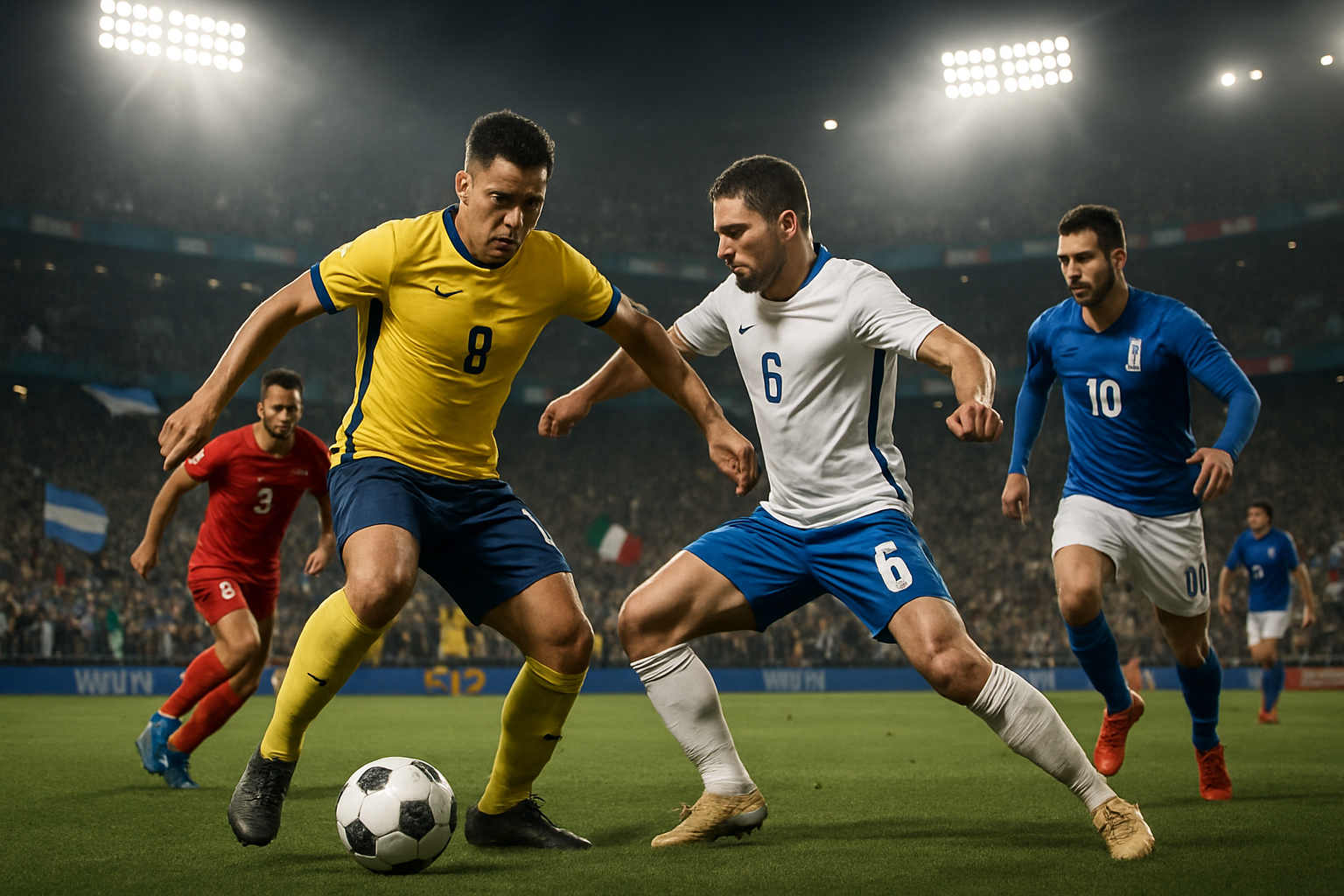
With less than 24 hours remaining before the most decisive day in World Cup 2026 qualification, four playoff finals on March 31 will determine the last spots in the expanded 48-team tournament, featuring dramatic storylines from Bolivia's quest to end a three-decade absence to Italy's desperate battle to avoid a third consecutive World Cup exclusion.
The intercontinental and European playoff finals represent the culmination of an unprecedented qualification process that has already been marked by geopolitical drama, stunning upsets, and inspiring comebacks. As the tournament approaches its June 11 kickoff across the United States, Canada, and Mexico, these final qualification battles will complete the field for the largest World Cup in history.
Bolivia's Historic Opportunity Against Iraq
At the BBVA Stadium in Monterrey, Bolivia will face Iraq at 23:00 local time in what represents the nation's best chance to reach the World Cup since 1994. The Bolivian team, led by striker Miguel Terceros, has captured the imagination of 11 million compatriots who dare to dream of World Cup participation after 32 years in the wilderness.
"Es un momento lindo el que está viviendo el país. Tanto ellos (los aficionados) como nosotros (los futbolistas) nos merecemos estar en la próxima Copa del Mundo," declared Terceros, whose eight goals have been instrumental in Bolivia's remarkable qualification run.
Bolivia's path to this final has been one of resilience and character. After defeating Suriname 2-1 in the playoff semifinal with a dramatic comeback featuring goals from Moisés Paniagua and Terceros himself, coach Óscar Villegas praised his team's mental fortitude. The victory marked a significant milestone for a nation that has struggled to compete at the highest level of international football for over three decades.
The winner of this encounter will join France, Senegal, and Norway in Group I, providing Bolivia with an opportunity to test themselves against some of world football's elite nations. For Iraq, this represents their chance to capitalize on Iran's dramatic withdrawal from the tournament – the first qualified nation in World Cup history to withdraw due to geopolitical conflict.
European Drama: Italy's World Cup Survival at Stake
Perhaps even more shocking is the precarious position of Italy, the defending European champions, who face Bosnia and Herzegovina in Zenica in what could determine their World Cup fate. A potential third consecutive World Cup absence for the Azzurri would represent one of the most stunning failures in international football history.
Bosnia and Herzegovina earned their place in this final through a magnificent penalty shootout victory over Wales, with Edin Džeko scoring his 74th international goal in the 86th minute to force extra time. The Dragons' qualification for this final has been hailed as the biggest match in Bosnia's independent football history, offering them their first-ever opportunity to reach a World Cup.
Italian coach Gennaro Gattuso acknowledged the magnitude of the challenge, describing Bosnia as a "Mount Everest" obstacle. The pressure on Italy is immense, particularly given their status as defending European champions and their recent success in continental competition.
Additional European Battles
The European playoff drama extends beyond the Italy-Bosnia encounter. Sweden, powered by Viktor Gyökeres' exceptional form including a hat-trick against Ukraine, will face Poland in Stockholm. The Swedish striker's evolution into a world-class performer has transformed Sweden's World Cup prospects after missing the previous two tournaments.
Gyökeres' remarkable season with Sporting CP has translated seamlessly to the international stage, providing Sweden with the clinical edge they have long sought. His partnership with coach Graham Potter has revitalized Swedish football, offering hope for a return to major tournament participation.
Tournament Context and Challenges
These playoff finals occur against the backdrop of unprecedented challenges for the 2026 World Cup. Iran's withdrawal due to military conflict with the United States has created complications for FIFA, while Mexico continues to address security concerns following recent cartel violence in Guadalajara, one of the host cities.
Despite these challenges, FIFA President Gianni Infantino maintains "complete confidence" in the tournament's success. The expanded 48-team format has created additional opportunities for nations like Bolivia and Bosnia to challenge traditional powerhouses, representing a democratization of world football that could reshape the sport's global landscape.
The Stakes for Emerging Nations
For countries like Bolivia and Bosnia, these playoffs represent more than just qualification – they symbolize the breaking down of traditional football hierarchies. Bolivia's potential qualification would inspire a generation of players and fans who have never witnessed their country at a World Cup, while Bosnia's success would validate years of infrastructure investment and youth development.
The Democratic Republic of Congo also features in the playoff drama, with supporters in Kisangani confidently predicting victory over Jamaica in their qualification battle. These matches demonstrate how the expanded World Cup format is providing opportunities for nations that have historically struggled to break through to the tournament's final stages.
Media Coverage and Global Interest
The global significance of these matches is reflected in extensive media coverage across Latin America and Europe. Peruvian broadcasters are providing comprehensive coverage of Bolivia's historic opportunity, while Bosnian media has declared the Italy match as the most important in their football history.
Television coverage includes Bolivia TV, DirecTV, and Tigo Sports for the Bolivia-Iraq encounter, while European broadcasters are preparing for what could be decisive moments in their nations' football narratives. The coverage reflects the global nature of modern football and the universal appeal of World Cup qualification drama.
Historical Significance
These playoff finals represent a watershed moment for international football. The success or failure of traditional powers like Italy, combined with the potential breakthrough of nations like Bolivia and Bosnia, could signal a fundamental shift in world football's power structure.
The matches also serve as a precursor to what promises to be the most competitive World Cup in history. With 48 teams participating across three countries, the tournament will test not only the participating nations but also FIFA's ability to manage the logistical complexities of the largest World Cup ever organized.
Looking Ahead to 2026
As these final qualification battles approach, the excitement builds for a World Cup that promises to break new ground in terms of scale, diversity, and competitive balance. The tournament, beginning June 11 at Mexico City's Estadio Azteca and concluding July 19 at the New York New Jersey Stadium, will feature innovations in technology, fan engagement, and international cooperation.
The success of nations like Bolivia and Bosnia in reaching these playoffs demonstrates that football's future belongs to those willing to invest in systematic development, tactical innovation, and player education. Their stories provide inspiration for emerging football nations worldwide and suggest that the beautiful game's democratization is accelerating.
With qualification dreams hanging in the balance, March 31 will be remembered as a pivotal day in World Cup history – a moment when the past meets the future, and traditional hierarchies face their greatest challenge in the modern era of international football.