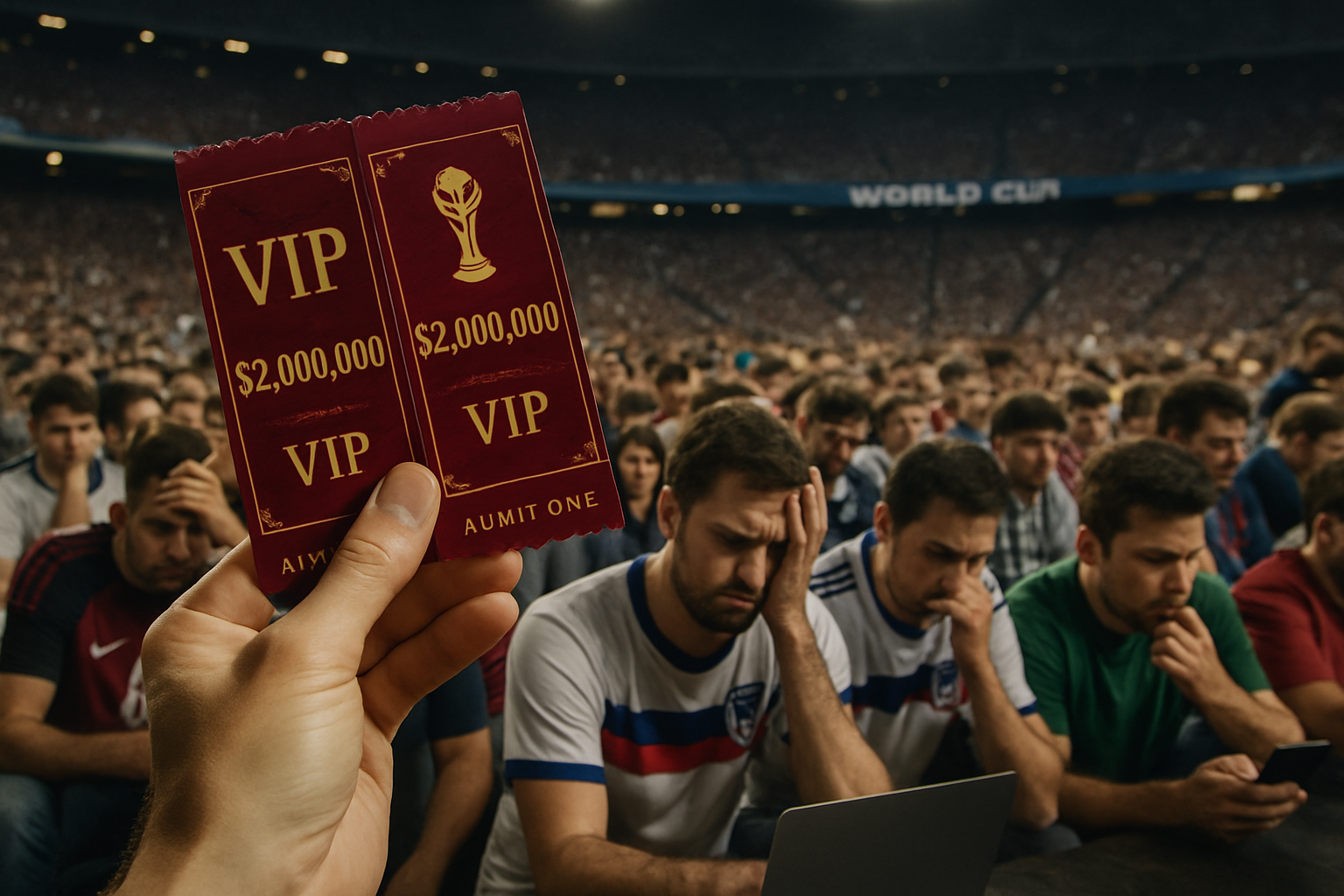
FIFA World Cup final tickets are being offered at astronomical prices exceeding $2.29 million each on the organization's official Resale/Exchange Marketplace, representing the most extreme example yet of football's growing accessibility crisis ahead of the 2026 tournament.
The eye-watering prices appeared on FIFA's official resale platform for the July 19, 2026 final at New York New Jersey Stadium, with four-seat packages reaching over $9 million total. The listings have sparked international outrage over the tournament's transformation from a celebration of global football into an elite luxury commodity beyond the reach of ordinary supporters.
Official Platform Enables Extreme Speculation
Unlike unauthorized secondary markets, these inflated prices appear on FIFA's own Resale/Exchange Marketplace website, lending official legitimacy to what critics describe as predatory pricing. The platform, designed to provide a secure alternative to black market sales, has instead become a vehicle for extreme speculation that dwarfs even the most expensive sporting events in history.
The $2.29 million individual ticket price represents more than 250 times the original face value of premium World Cup final seats, which typically range from $8,000-$11,000. Four seats at this price would cost approximately $9.16 million - enough to purchase a luxury mansion or fund an entire youth football academy.
Historical Context of World Cup Pricing Controversies
The 2026 World Cup has already generated significant controversy over its pricing structure. Planet News previously reported that ticket prices reached record levels, with opening matches starting at $900 and final tickets exceeding $8,000 - the highest in tournament history even before resale markups.
"This represents a fundamental shift away from football's traditional accessibility," said Dr. Sarah Mitchell, a sports economics researcher at Cambridge University. "We're witnessing the transformation of the World Cup from a global celebration into an exclusive financial instrument."
— Dr. Sarah Mitchell, Sports Economics Expert
The pricing escalation reflects multiple factors unique to the 2026 tournament: the first expansion to 48 teams, tri-national hosting across the United States, Canada, and Mexico, and location in major metropolitan markets with substantial hospitality and premium package demand.
Tournament Logistics Compound Pricing Pressure
The 2026 World Cup represents the most ambitious tournament in FIFA history, spanning 104 matches across 16 cities and three countries over six weeks. This expanded format has created unprecedented demand while complicated logistics drive up operational costs across the tournament infrastructure.
FIFA cancelled 70-80% of hotel reservations in Vancouver and Toronto alone, affecting approximately 15,000 room nights and creating additional accommodation scarcity. The tri-national hosting model requires complex visa processing, cross-border transportation, and security coordination across a 4,000-kilometer span.
Mexico has deployed 100,000 security personnel - the largest operation in the country's history - following cartel violence concerns in Guadalajara, one of the host cities. These security investments, while necessary, contribute to overall tournament costs that ultimately affect ticket pricing across all venues.
Economic Multiplier Effects
Industry projections suggest the tournament will boost restaurant prices by up to 29% in host cities, creating a cascade of increased costs for traveling fans. The combination of limited accommodation, inflated hospitality prices, and now extreme ticket costs threatens to exclude all but the wealthiest supporters from experiencing football's premier event.
Global Accessibility Crisis in Football
The ticket pricing controversy reflects broader tensions in modern football between commercial optimization and sporting accessibility. Working-class fans who form the cultural foundation of football communities worldwide find themselves increasingly priced out of major competitions.
The situation is particularly stark given football's global popularity and FIFA's stated mission to develop the game worldwide. The organization has sold nearly 2 million tickets across the first two sales phases, demonstrating sustained demand despite the pricing controversy.
Fan advocacy groups have condemned the extreme resale prices as evidence that FIFA's regulatory framework fails to protect supporters from exploitation. The official platform's role in enabling these transactions raises questions about the organization's commitment to accessibility principles.
International Response and Regulatory Gaps
Several countries have expressed concern about their citizens' ability to attend matches, with travel advisories issued regarding both security and financial considerations. The Iranian-American community of over 200,000 in Los Angeles, nicknamed "Tehrangeles," faces additional uncertainty following Iran's withdrawal from the tournament due to geopolitical tensions.
Consumer protection advocates argue that FIFA's resale platform lacks adequate price controls that exist in other major sporting events. While some jurisdictions have anti-scalping legislation, the international nature of World Cup ticket sales creates regulatory gaps that enable extreme speculation.
Corporate Hospitality Dominance
Industry sources suggest that corporate hospitality packages now comprise the majority of premium ticket inventory, effectively removing seats from general public availability. These packages, marketed primarily to multinational corporations and ultra-wealthy individuals, create artificial scarcity for individual supporters.
Implications for Future Tournaments
The success of extreme pricing strategies in 2026 will likely influence FIFA's commercial approach for future World Cups. Hosting nations and cities bid partly based on revenue projections that increasingly depend on premium positioning rather than broad accessibility.
Sports economists warn that this trajectory could fundamentally alter the World Cup's character, transforming it from a global celebration into an elite spectacle similar to luxury entertainment events. The precedent set by $2+ million tickets may normalize previously unthinkable price points for future tournaments.
"We're at a crossroads for international football," noted football governance expert Professor James Henderson. "The choices made around 2026 pricing will determine whether the World Cup remains a tournament for global fans or becomes exclusively the domain of financial elites."
— Professor James Henderson, Football Governance Specialist
FIFA's Response and Organizational Position
FIFA President Gianni Infantino has maintained "complete confidence" in the tournament's organization despite various challenges, though the organization has not directly addressed the extreme resale pricing on its official platform. FIFA's silence on price controls contrasts with its vocal promotion of football development and global accessibility initiatives.
The organization faces a fundamental tension between maximizing commercial revenue and preserving football's inclusive character. The official platform's role in facilitating million-dollar ticket sales suggests that commercial considerations have taken precedence over accessibility concerns.
Technical Platform Considerations
FIFA's resale platform operates with minimal price restrictions, allowing market forces to determine ticket values without intervention. This laissez-faire approach differs significantly from other major sporting events that implement dynamic pricing caps or transfer restrictions to prevent excessive speculation.
Broader Impact on Global Football Culture
The extreme pricing controversy extends beyond individual tournaments to affect football culture worldwide. Local clubs and national associations increasingly model their pricing strategies on FIFA's commercial approach, creating accessibility challenges throughout the football pyramid.
Youth football organizations report difficulty inspiring young players when professional football's pinnacle appears financially unattainable for ordinary families. The aspirational value of the World Cup - traditionally a tournament that any supporter might realistically attend - faces erosion through extreme commercialization.
The controversy also highlights growing inequality in global sports consumption, where geographical location and economic status increasingly determine access to major sporting experiences. This trend threatens football's traditional role as a unifying global culture that transcends economic boundaries.
Looking Toward June 2026
With less than 100 days remaining until the tournament begins on June 11, 2026, at Mexico City's Estadio Azteca, the pricing controversy shows no signs of resolution. FIFA's continued silence on regulatory intervention suggests that extreme resale prices will persist throughout the tournament period.
The situation represents a critical test for FIFA's governance philosophy and its commitment to football's traditional values. Success in managing the world's most commercially ambitious World Cup while preserving accessibility will influence international football's direction for decades to come.
As the football world prepares for this unprecedented tournament, the $2.29 million ticket prices serve as a stark reminder of the ongoing tension between commercial success and sporting accessibility - a conflict that will ultimately determine whether the beautiful game remains beautiful for everyone or becomes the exclusive preserve of the global elite.