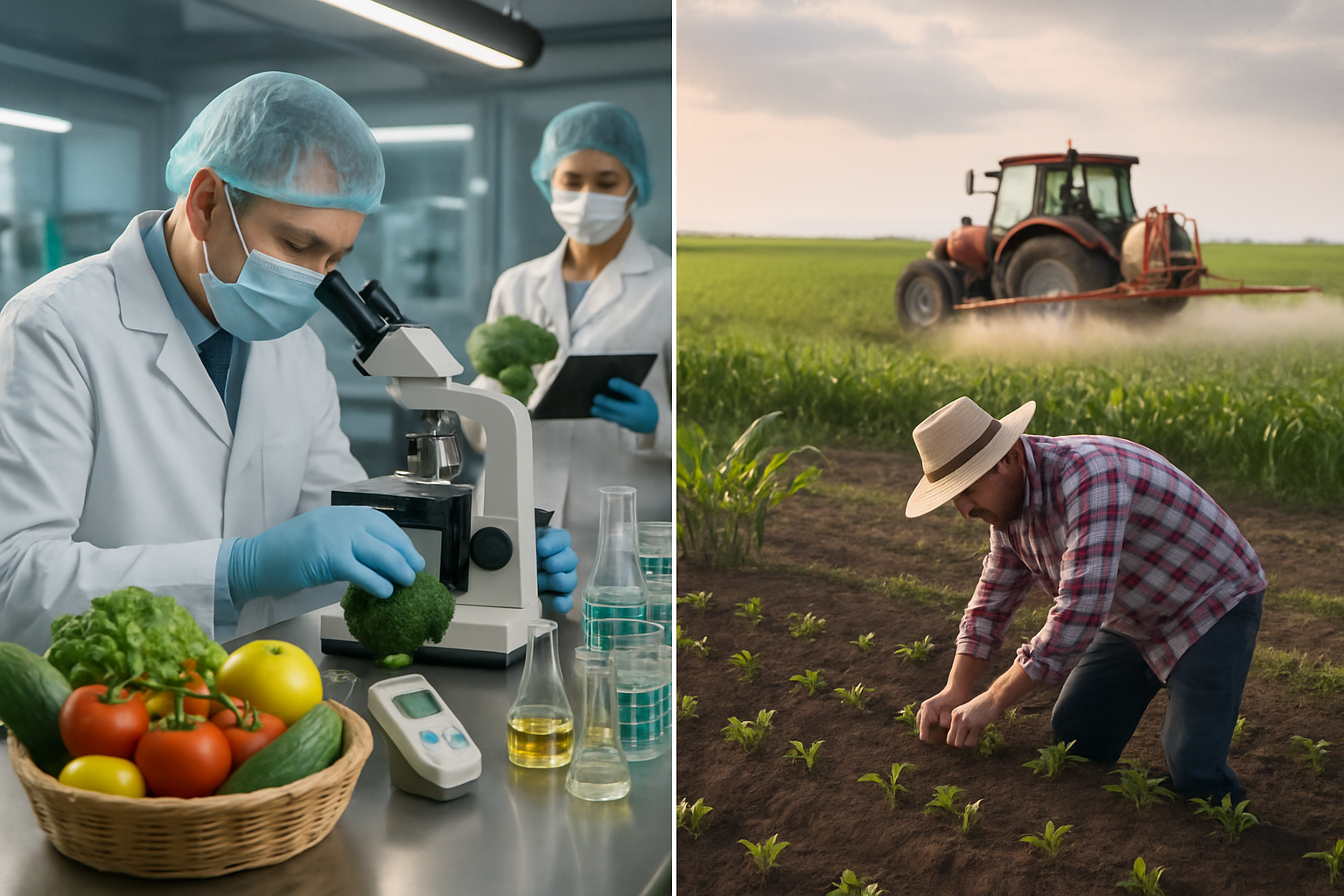
A global convergence of agricultural disease outbreaks, food contamination incidents, and illegal agricultural practices is threatening food security worldwide as nations struggle to maintain safe and stable food supplies amid unprecedented climate pressures.
From Algeria's seizure of 1,000 kilograms of smuggled contaminated liver to Cyprus's ongoing battle with foot-and-mouth disease, the latest developments across four continents reveal the mounting challenges facing global food systems during the 20th consecutive month of record-breaking temperatures.
Foot-and-Mouth Disease Prevention Shows Mixed Results
In Botswana, vaccination efforts against foot-and-mouth disease (FMD) have achieved remarkable success rates, with Zone 6b north of Bisoli Farm reaching 95.5% coverage and Zone 3c in Maitengwe achieving 96% vaccination rates. However, health officials report that a small number of cattle still show symptoms of the disease, highlighting the ongoing challenges in completely eradicating the outbreak.
The Botswana success story contrasts sharply with the crisis unfolding in Cyprus, where the foot-and-mouth outbreak has escalated to 46 infected livestock units with over 23,000 sheep and goats culled since February. As documented in our previous investigations, the Cyprus outbreak has spread beyond initial containment zones, threatening the island's crucial halloumi industry which accounts for 80% of milk production.
"This represents the most severe agricultural crisis Cyprus has faced in decades, with our disease-free status—crucial for agricultural exports—now under serious threat."
— Agriculture Ministry spokesperson
Massive Food Contamination Seizures Expose Safety Failures
Algeria's customs services conducted a major operation during the final week of Ramadan, seizing 1,000 kilograms of smuggled liver of foreign origin that was being transported in an unsuitable vehicle and destined for illegal marketing. The seizure represents the latest in a concerning pattern of food safety violations that have plagued the region throughout 2026.
This incident builds on our extensive documentation of food safety crises across multiple countries, including the European infant formula contamination that affected over 36 infants with cereulide toxin, and Saudi Arabia's confiscation of 1,671 tons of contaminated food products earlier this year.
The operation involved coordination between the multi-tasked customs brigade in Khenchela and the mobile customs brigade in Oum El Bouaghi, demonstrating the complex enforcement networks required to combat illegal food smuggling operations.
Illegal Agricultural Inputs Threaten Bolivia's Farming Sector
Bolivia faces a different but equally serious threat as agricultural associations warn of the sustained growth in illegal agricultural inputs affecting productivity, crop health, and competitiveness. The Association of Seed Producers (Asosemillas), working with the Association of Agricultural Input Providers (APIA) and the Bolivian Association of Agricultural Suppliers (Aprisa), has raised alarms about this mounting crisis.
According to a study by the Economic Studies Center (Cebec) of the Chamber of Industry and Commerce (Cainco), the illegal pesticide market—including falsified and adulterated products—ranges between $108 million and $151 million in Bolivia. This represents a significant portion of the agricultural economy and poses serious risks to both crop yields and environmental safety.
The proliferation of illegal inputs creates a cascading effect throughout the agricultural supply chain, undermining legitimate producers and creating unfair competition while potentially compromising food safety standards.
Cross-Border Cooperation in Disease Prevention
Meanwhile, Cyprus continues to demonstrate the importance of international cooperation in disease management. Greek Cypriot and Turkish Cypriot political parties have called for stronger cooperation and reinforcement of joint mechanisms to protect the environment and public health amid the ongoing foot-and-mouth disease outbreak.
In a joint statement issued after their regular bicommunal meeting at the Ledra Palace hotel in Nicosia, party leaders emphasized the need for "full and effective implementation of EU regulations across the entire island." This cooperation transcends traditional political divisions, recognizing that disease outbreaks pose shared threats requiring coordinated responses.
The European Commission has provided crucial support, including 500,000 foot-and-mouth disease vaccine doses to Turkish Cypriot areas through the Bicommunal Technical Committee for Health, demonstrating how health cooperation can bridge political divides.
Climate Change Amplifies Food Safety Challenges
These incidents occur within the broader context of unprecedented climate stress, with January 2026 marking the hottest month in recorded history and extending the streak to 20 consecutive months of temperatures exceeding 1.5°C above pre-industrial levels. This sustained warming creates optimal conditions for pathogen growth while disrupting traditional food preservation methods.
Our ongoing investigation has documented how climate change functions as a "threat multiplier," allowing pathogens that typically peak at different times to co-circulate, overwhelming systems designed for sequential rather than simultaneous challenges. The result is a perfect storm of agricultural vulnerabilities that traditional food safety protocols struggle to address.
Economic and Social Impact
The economic implications of these converging crises are substantial. Cyprus faces potential loss of its disease-free status, which is crucial for agricultural exports and the tourism industry ahead of peak season. Algeria's customs operations, while necessary for public health, highlight the ongoing economic losses from illegal trade networks.
Bolivia's illegal input crisis undermines the competitiveness of legitimate agricultural producers and threatens the sustainability of the country's farming sector. These challenges are compounded by rising insurance costs, mandatory molecular testing investments, and declining consumer confidence in multinational food corporations.
Innovation in Agricultural Practices
Despite these challenges, some regions are demonstrating innovative approaches to agricultural development. Our research has documented successful technology-tradition integration across multiple countries, where modern agricultural science combines with traditional ecological knowledge to create more resilient food systems.
The diversity of challenges—from disease outbreaks to illegal inputs to contamination—requires equally diverse solutions. Success factors consistently include community ownership, transparent governance, sustained political commitment, and adaptive management that can respond to rapidly changing conditions.
Looking Forward: Critical Action Needed
The convergence of these crises represents a critical juncture for global food security. The window for building resilient and equitable food systems is rapidly narrowing as environmental pressures accelerate and population growth increases demand on agricultural resources.
International cooperation has proven essential, as demonstrated by the EU's support for Cyprus and the cross-border coordination in disease prevention. However, current efforts remain insufficient given the scale of the challenges. Enhanced coordination, increased funding for prevention-focused approaches, and recognition of food security as a global public good requiring unprecedented international cooperation are urgently needed.
As we move forward, the agricultural community must balance immediate crisis response with long-term resilience building. The tools and knowledge exist for comprehensive responses to these challenges, but success depends on sustained political commitment, adequate funding, and effective coordination that integrates traditional wisdom with modern safety science.
The stakes have never been higher, as the choices made in 2026 regarding agricultural adaptation, international cooperation, and innovation investment during this critical climate action decade will determine whether food production systems can keep pace with accelerating environmental change while serving growing global populations.